Garo Madenlian BY GARO R. MADENLIAN, ESQ. For more than a century, the Armenian Diaspora has carried an extraordinary responsibility to preserve a nation whose people were scattered across the world due to years of oppression, massacres and the Genocide, while simultaneously building new lives and contributing meaningfully to the societies that welcomed them. The Armenian reality is one of the clearest examples of how a refugee and immigrant community transformed adversity into organization, institutions, leadership, education, philanthropy, political advocacy, youth movements and cultural vitality. The Armenian Diaspora is not merely a collection of Armenians living outside the homeland. It is an organized extension of the Armenian nation. It is the guardian of Armenian identity, the defender of Armenian national rights, a force advancing the Armenian Cause, a living bridge between generations, and a source of support for Armenia. The past 100 plus years demonstrate that the survival of the Armenian people was carefully planned and established through institutions and organizations, hard work and sacrifice, education, faith, political organization, and an unwavering belief that being Armenian carries responsibilities as well as privileges. From Genocide to Organized Community/National Life The modern Armenian Diaspora was born from hardships and catastrophes. The Armenian Genocide of 1915 and the destruction of the Armenian communities of the Ottoman Empire transformed the geography of the Armenian nation. Survivors arrived in the Middle East, Europe, the Americas, and elsewhere with little more than the clothes on their backs and their memories, their culture and heritage, their language, their determination to survive, their drive for justice, and their willingness to help each other and the greater Armenian nation. The Armenian Revolutionary Federation, founded in 1890, had already developed a tradition of political organization, national self-defense, social responsibility, and struggle for Armenian rights. After the fall of the First Republic of Armenia in 1920 and its subsequent Sovietization, the ARF and thousands of its collaborators, sympathizers and supporters found themselves in exile. It became one of the principal forces organizing Armenian national and community life throughout the Diaspora. It helped build the educational, cultural, religious, youth, philanthropic and sociopolitical structures through which Armenian identity could survive, thrive and continue the struggle for justice. One of the central achievements of the Armenian Diaspora over the past century is that it transformed displacement into organization, despair into hope, confusion into direction, chaos into purpose, insecurity into confidence, and complacency into action. The Armenian Diaspora did not simply preserve memories of the homeland. They built churches, schools, newspapers, political organizations, youth groups, charitable institutions, cultural associations, and community centers. They raised families, educated professionals, entered public life, and became productive citizens of their host countries while maintaining a distinct Armenian national consciousness with a coordinated and unified effort to wrong the rights. The ARF and the Architecture of the Diaspora The strength of the Diaspora has always depended upon organized community life. In this context, ARF’s broader legacy lies in community organization and institution-building. Through hard work and sacrifice they also reinforced and advanced a unified pan-Armenian national agenda to advance the Armenian Cause which culminates in the establishment of a free, independent and united Armenia from Artsakh to Western Armenia. ARF understood that national survival requires functioning institutions capable of transmitting Armenian identity and passing the torch of the Armenian Cause from one generation to the next. That vision produced and functioned with what can be described as a family of complementary organizations. Armenian Revolutionary Federation provided political organization and national advocacy; the unifying and organizing powerhouse. Armenian Relief Society translated national responsibility into humanitarian service, education, social welfare, scholarships, and assistance to communities in crisis. Armenian Youth Federation and Juniors gave younger generations a vehicle for camaraderie, leadership, activism, and service to the nation including eventual membership in the ARF. AYF Camp established a weekly summer camp for youth to learn, have fun, and remain connected to their brothers and sisters, to the Armenian Cause and the Armenian nation. Armenian National Committee of America developed the political advocacy component of the Armenian Cause in the American political system and in host countries throughout the world. Homenetmen provided an Armenian boys and girls scouts community and served as the athletic organization for Armenian youth. Hamazkayin successfully took on the difficult task of maintaining, developing and enhancing Armenian culture outside the Homeland on foreign soil. Together with churches, schools, cultural organizations, athletic associations, newspapers such as Asbarez, professional organizations, and community centers, they created a parallel ecosystem in each host country where Armenian identity could be lived rather than just remembered, and with a shared purpose and national agenda. The Armenian Church The Armenian Church played a vital role in the survival of the Armenian Diaspora. The Catholicosate of the Holy See of Cilicia has a particularly important place in the history of organizing the Diaspora. After the Armenian Genocide the Catholicosate of the Holy See of Cilicia relocated to Antelias, Lebanon, where it became an important spiritual and institutional center for Armenians scattered throughout the Middle East and the wider Diaspora including here in the United States, especially during the soviet years (1920-1991) when much of diaspora building took place. As a result of the Genocide, what was left of Armenia was Sovietized in 1920. The Mother See of Holy Etchmiadzin remained within the Soviet Union under strict scrutiny until 1991 when Soviet Armenia declared its independence. Thereafter it became more of a partner in community building and advocacy. Of Course, the Armenian Catholic and Protestant Churches also played a crucial role in the partnerships that developed to preserve the Armenian Nation. The significance of the Armenian Church is therefore both spiritual and historical. It represents continuity after dispossession and oppression. Their mission to preserve Armenian faith, heritage, traditions, culture, and national values illustrates how the Armenian Church has functioned as much more than a place of Sunday worship. Thus, the Armenian Churches also share a historical responsibility to keep the Armenian spiritual and cultural inheritance alive outside of Armenia. Armenian Schools The Armenian school has always been about more than learning the Armenian language. It teaches children that Armenian history is their history, Armenian culture is their inheritance, and service to the community is a responsibility. The Prelacy Armenian Schools, just like many others, explicitly combine academic excellence with Armenian language, history, religion, culture, and national values. They prepare students to become responsible Armenian-American citizens and ambassadors of the Armenian people. An Armenian school makes Armenian identity normal, confident, contemporary, and intellectually meaningful. Every classroom also represents a victory over the forces that once sought to erase the Armenian people. The challenge is not simply to prevent assimilation, but to provide young Armenians a compelling reason to remain connected to their community and nation, something that is further reinforced by Armenian organizations and individual families. Political Activism, Advocacy and the Armenian Cause The Armenian Diaspora has also turned historical memory into sustained political advocacy, an achievement that few dispersed peoples have accomplished. The Armenian Cause is Hye Tahd. In addition to remembrance and recognition of the Genocide, it also encompasses justice, reparations, the defense of Armenian national rights, support for Armenia’s sovereignty and security, unification of Western Armenia with the Republic, and the mobilization of the Diaspora’s political and civic potential for the national agenda and local community issues. Organizations such as the ANCA and its regional and local bodies have developed a sophisticated advocacy network. Armenians have become active participants in American civic life, serving as elected officials, attorneys, physicians, educators, entrepreneurs, journalists, military personnel, academics, artists and entertainers, business owners and community leaders. A community that arrived largely as survivors of a genocide, and later waves of those fleeing other regional conflicts, is now a community capable of shaping public policy and developing public opinion. This remarkable achievement includes successful congressional resolutions and legislative victories, and the normalization of Armenian participation in American public life, and the widespread coordination of its activism and advocacy. Armenians are fully engaged in American society while being deeply conscious of Armenian history and their responsibility to the Nation and its Cause. This combination of American civic participation with Armenian national consciousness has been one of the great strengths of the Diaspora community. Youth and the continuation of identity and service Every Diaspora eventually faces the issue of whether the next generation can maintain their identity. For Armenians and the survival of the Nation it is an imperative to do so. It has been and continues to be much more than simply recognizing that a grandparent was Armenian. Identity must be renewed and lived. A collective purpose must be shared and worked towards, such as advancing the Armenian Cause together in a coordinated manner. This is why ARF, its sister organizations and youth movements, remain so important. Organizations such as the AYF/Juniors and Homenetmen provide young Armenians with opportunities to build friendships, develop leadership skills, participate in community service, discuss national issues, and experience Armenian life outside the home. A Century of Achievement and Continued Responsibilities The Armenian Diaspora’s achievements over the past century have been extraordinary. Armenians devastated by genocide established new communities. Refugees became citizens. Survivors built businesses. Children of survivors became professionals and public servants. ARF organized communities. Communities established churches. Churches helped establish schools. Schools educated generations. ARF and its sister organizations-built institutions and Community Centers. ARS cared for the vulnerable. Hamazkayin nurtured the culture. Youth organizations such as AYF and Homenetmen developed new leaders. ANCA and other advocacy organizations gave the Armenian Cause a voice in Washington, Sacramento, and local governments. And the Armenian people maintained a national consciousness despite living thousands of miles from their homeland, most of which remains occupied by Turkey. The Diaspora’s greatest achievements are that Armenians survived, organized and flourished, while continuing the struggle for justice. No Time to Celebrate. There is Much Work to do… The conditions facing Armenians today demand a renewed understanding of the Diaspora’s purpose. The loss of Artsakh and political prisoners held captive in Baku, the continuing security challenges facing Armenia, demographic pressures, an Armenian government that placates to Turkey and Azerbaijan while distancing itself from the Diaspora, assimilation, Armenian-language proficiency, and changing patterns of immigration all require institutions and organizations to adapt without abandoning principles; to strengthen Diaspora institutions and organizations; to refocus and revitalize; to prepare for the long and arduous journey to secure justice. Revitalizing community life, strengthening sister organizations and youth movements, preserving national identity, expanding Armenian Cause advocacy, and addressing the needs of a growing community are the priorities. The previous generations transformed survival into service, memory into activism, displacement into community, and tragedy into a continuing national mission. The task now is to preserve what they built and build something worthy of what they sacrificed to preserve, maintain and advance, all while taking the Armenian Cause (Hye Tad) to the next level. Next: Part 2 – The Sociopolitical Importance of the Armenian Diaspora The post The Armenian Diaspora: Over a Century of Survival, Service and National Purpose (Part 1) appeared first on Asbarez.com .
Free: opens Google Translate with the text filled in. Long articles are split into numbered sections.
Premium: read the translation right here, without leaving HyeNews. Try free for 7 days.
Already in English.
The Armenian Diaspora: Over a Century of Survival, Service and National Purpose (Part 1)
For more than a century, the Armenian Diaspora has carried an extraordinary responsibility to preserve a nation whose people were scattered across the world due to years of oppression, massacres and the Genocide, while simultaneously building new lives and contributing meaningfully to the societies that welcomed them.

Comments
No comments yet — be the first to comment.
More from Asbarez
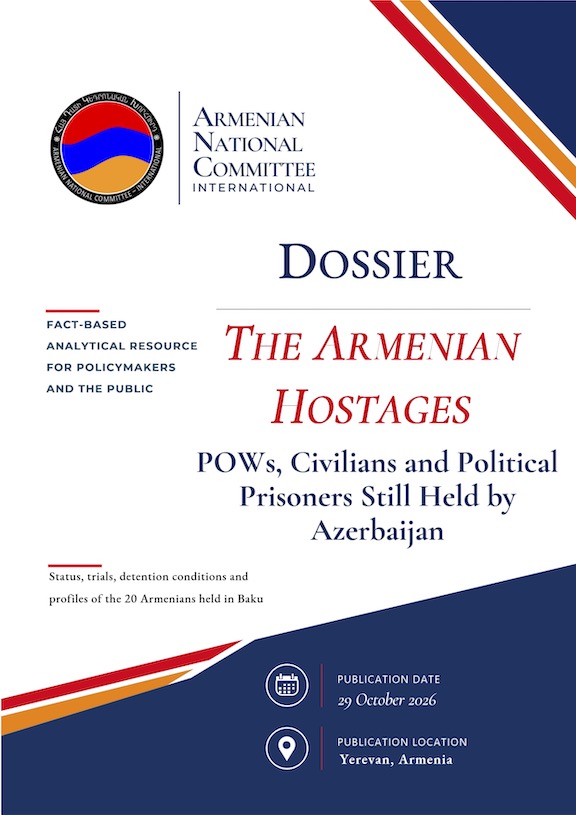
ANC–International Publishes Dossier on 20 Armenian Hostages Being Held by Azerbaijan
Asbarez / 2 hours ago
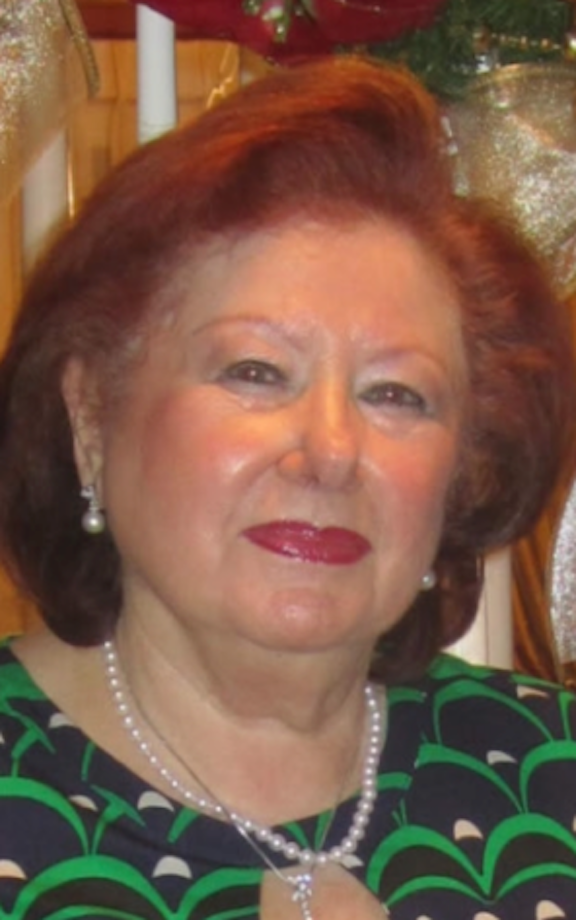
Death Notice: Anahid Pomakian
Asbarez / 4 hours ago

NAASR Announces Winners of 2026 Dr. Sona Aronian Armenian Studies Book Prizes
Asbarez / 5 hours ago

Telling Our Love Stories: A Queer Armenian Workshop with Bestselling Author Taleen Voskuni
Asbarez / 5 hours ago
Related coverage

The Armenian Nose
The California Courier / 5 hours ago

Armenia’s twin education crises: Learning deficits, historical amnesia
The Armenian Weekly / Oct 29

Les médias turcs et azerbaïdjanais réagissent à mon article sur la diaspora face à Pachinian
The California Courier / Oct 29
Թրքական Եւ Ազրպէյճանական Լրատուամիջոցներ Կ՛արձագանգեն Սփիւռք- Փաշինեան Հակադրութեան Վերաբերող Յօդուածիս
The California Courier / Oct 29