Listen to the AI generated audio article. Protests erupted in Azerbaijan after the Cabinet of Ministers approved new school uniform rules on September 21, 2026, banning clothing that “contradicts the principle of secularism in education.” Though the hijab is not mentioned in the decision, schools began enforcing the rules on October 12, turning away hijab-wearing pupils . On October 6, a separate cabinet decision extended the same requirement to teachers, and shortly afterward, teachers in Baku and Sumgayit were instructed to remove their headscarves. Soon after the protests began, access to Instagram and TikTok, and reportedly X, was restricted for Azerbaijani users as videos of the demonstrations spread. Reports emerged that 88 people had been detained in the Azerbaijani village of Nardaran, a settlement near Baku known for its religious conservatism, amid protests against the restrictions. But the government’s response suggests that this is about more than school uniforms or the principle of secularism. During its October 12 broadcast, Azerbaijani state television , AzTV, declared: “The state will block every step by those who want to mix Arab-Persian values into this identity; that is, those who try to change and corrupt the worldview of our infant children right from their school years.” The language is revealing. By framing the hijab as an intrusion of “Arab-Persian values,” the government has recast a dispute over religious expression as a question of national identity and foreign influence. The issue, in other words, reaches well beyond what students and teachers are permitted to wear. It raises a more consequential question: why has Aliyev chosen to manufacture this confrontation now, and what geopolitical calculations might lie behind it? The contradictions have not gone unnoticed by protesters. In one widely circulated video , a woman dressed in traditional Muslim attire invokes the legacy of Heydar Aliyev, arguing that both he and his son supported girls’ education: “Both Ilham Aliyev and the great leader Heydar Aliyev […] said that girls must be educated too. Education is a free right. Not a single article of our Constitution contains any ban on the hijab.” The Aliyev regime’s use of religious conservatism as a political threat is not new. For years, it has invoked the specter of radical Islam to present itself as the guarantor of Azerbaijan’s secular statehood, while using that narrative to legitimize increasingly authoritarian practices. In 2019, Azerbaijani researcher Murad Ismayilov wrote : “By continuously reinforcing the representation of Islam as an imminent danger to the stability and secular nature of Azerbaijani statehood and positioning themselves, in the eyes of the ‘liberal,’ ‘democratic’ West and the secularized population at home, as the sole force capable of staving off the Islamic threat, the ruling elite have used the radical Islamist card to justify their increasingly illiberal regime and authoritarian practices.” It is noteworthy that, in October 2026, the updated list of political prisoners compiled by the union “For the Freedom of Political Prisoners of Azerbaijan” included 322 people. According to the list, 178 of the 322 individuals, more than 55%, were classified as “believers,” underscoring the extent to which religious identity features in Azerbaijan’s political prisoner landscape. About 16 years ago, one of the biggest confrontations between Aliyev’s regime and people perceived as Islamists took place in Nardaran. The issue dates back to December 2010, when Azerbaijan’s education minister announced restrictions on wearing the hijab in public schools, triggering protests across the country, including in the religiously conservative settlement of Nardaran. Hundreds of residents protested , demanding the right to wear the headscarf, while subsequent demonstrations in 2011 and 2012 were followed by arrests and criminal prosecutions of participants. The Nardaran protests thus demonstrated that restrictions on the hijab were not a new development, but part of a longstanding state policy that has repeatedly brought religious freedom and the government’s interpretation of secularism into conflict. What was new about the recent eruption of the hijab controversy was that the protesters were mostly female teachers and schoolgirls. Some even recorded videos appealing to Vice President and First Lady Mehriban Aliyeva to support their right to education. Strains Beneath the “One Nation, Two States” Alliance The recent hijab controversy has brought another dimension to increasingly visible tensions between Azerbaijan and Turkey. Although their relationship is frequently described through the formula “one nation, two states,” public disagreements between the two countries have become harder to ignore. The friction had already become apparent in September, when delegations from nearly 70 countries walked out of the UN General Assembly hall, or left their seats vacant, as Israeli Prime Minister Benjamin Netanyahu began his address. The Azerbaijani delegation, however, remained in the room. This sparked widespread dissatisfaction , particularly among Turkish users on X. In response, the Temporary Commission of Azerbaijan’s Milli Majlis on Countering Foreign Interference and Hybrid Threats announced that the campaign was aimed at undermining friendly relations between Azerbaijan and Turkey through targeted advertisements and both real and fake social media accounts. The hijab controversy has added another layer to this dispute. Turkey’s strong reaction to the restrictions prompted demonstrations against Aliyev in Ankara, while an Azerbaijani MP further inflamed sensitivities by declaring that “Ilham Aliyev is the political successor not only of Heydar Aliyev but also of Mustafa Kemal Atatürk.” Invoking Atatürk’s legacy in this way was particularly provocative given its significance in Turkey. Thus, this was just the beginning of a much broader and more significant public debate between two states that share deep political, military, economic, historical, and cultural ties in the region. They effectively formalized their military alliance by signing the “Shusha Declaration on Allied Relations between the Republic of Azerbaijan and the Republic of Turkey” on June 15, 2021, shortly after the 2020 Artsakh War. Yet, over the past five to six years, Aliyev has increasingly sought to position himself as a regional power in his own right, demonstrating that he is willing to take steps that Turkey may not necessarily welcome. One of the main factors behind his growing ambitions has been his success in Nagorno-Karabakh, including the outcome of the 2020 war and the 2023 military offensive, which resulted in the ethnic cleansing of the Armenian population following a nine-month blockade . With no meaningful accountability imposed on Azerbaijan for its actions, including by Armenia, Aliyev sees an opportunity to capitalize on these gains to the fullest, both domestically and in his foreign relations. This is where the relationship becomes more complicated. Aliyev owes much of his military success to the support of two key players, Turkey and Israel. Yet, as he seeks to expand Azerbaijan’s regional influence, he may increasingly find himself navigating the competing interests of these two players. It is no secret that Turkish military officers played a significant role in the Azerbaijani military command during the 2020 war. Najmeddin Sadikov, Chief of the General Staff of the Azerbaijani Armed Forces and First Deputy Minister of Defense, suddenly “disappeared” from public view, while Turkish officers, particularly two generals, Lt. Gen. Sheref Ongay, Commander of the 3rd Army, and Maj. Gen. Bahtiyar Ersay of the Special Forces Command, reportedly took over key command responsibilities as de facto replacements. Aliyev himself has openly acknowledged Turkey’s involvement in his speeches, repeatedly expressing immense gratitude for Ankara’s substantial assistance. Although he has spent the past six years personalizing the outcome of the 2020 Artsakh War and presenting it as his own achievement, in 2021 he publicly admitted that “Turkey has provided us with all-round support, not only attack UAVs…” Moreover, Turkish President Recep Tayyip Erdogan stood beside Aliyev at the so-called “ Victory Parade ” on December 10, 2020, marking the outcome of the 44-day war against Nagorno-Karabakh. In his speech, Erdogan even invoked the names of figures associated with the organization of the Armenian Genocide in the Ottoman Empire, declaring that “today is the day when the souls of Nuri Pasha, Enver Pasha, and the brave soldiers of the Islamic Army of the Caucasus are blessed…” Thus, the two leaders publicly shared the political symbolism and celebrated the claimed victory of the 2020 war. However, Aliyev has recently shown increasing reluctance to accept assistance from or acknowledge the extent of the assistance he received from Turkey or other states. “Everyone has a powerful backer behind them, so to speak. Some even have several. But we stood alone,” he noted in his speech at the 8th Congress of the New Azerbaijan Party on October 2. By dismissing Turkey’s role, Aliyev seems to be pursuing a calculated logic: rejecting external backing and assistance today may be his way of avoiding the price he could be asked to pay tomorrow, when those who supported him expect something in return, whether in the form of political concessions or military involvement. This calculation becomes significant when viewed in a broader regional context, particularly against the backdrop of Israel’s growing ambitions in the South Caucasus and its attacks on Iran. Between Two Strategic Backers: Israel, Turkey and Aliyev’s Calculations Israel has been an important strategic partner for Azerbaijan, particularly since the 2020 Artsakh War, when it provided Baku with substantial military and political assistance. As Tbilisi-based defense and security expert Eugene Kogan observes , the war underscored the importance of Azerbaijani-Israeli relations for Baku. Israel proved to be a reliable source of advanced weaponry even during active hostilities. In addition to supplying arms, Elta Systems, a subsidiary of Israel Aerospace Industries, carried out digital mapping of Karabakh, assisting Azerbaijani forces in their battlefield operations: This extensive assistance was, of course, not simply an act of goodwill. Israel had its own strategic calculations. As Sergei Melkonyan, a research fellow at the Applied Policy Research Institute, notes in an interview with the Carnegie Middle East Center, Israel gained access to the “Iranian border and to a strong ally on that border, which it can use to put pressure on Tehran.” In 2020, Turkey and Israel, despite their competing regional ambitions, had little difficulty supporting Azerbaijan simultaneously. Their interests converged around Baku. But that arrangement may be becoming more complicated as tensions between the two countries intensify. Israeli officials and other figures have increasingly issued warnings directed at Turkey, with Diaspora Affairs Minister Amichai Chikli, a member of Netanyahu’s Likud party, reportedly declaring during a television interview: “After Iran, [Turkey] should be next…” Thus, against the backdrop, Ankara has little reason to welcome further escalation involving Iran, particularly when Israel is openly signaling that Turkey could be its next target. Sooner or later, Azerbaijan may be expected to take a position between its two key strategic backers, something Aliyev would clearly prefer to avoid. The tensions between Baku and Ankara over the hijab controversy meanwhile continued to unfold. Turkish President Erdogan dismissed his chief adviser, Oktay Saral, who had publicly criticized Azerbaijan, and even spoke with Aliyev in an apparent effort to ease tensions. Nevertheless, Aliyev ultimately declined to travel to Ankara to attend the 13th summit of the Organization of Turkic States (OTS). Throughout the history of OTS summits, there had been only one previous occasion when Aliyev did not attend in person: in 2012 . For the following 14 years, he never missed a single summit. His decision to stay away now, amid increasing public tensions with Turkey and growing friction between Ankara and Tel Aviv, was therefore difficult to dismiss as routine. It could be read as a pointed signal that Aliyev was no longer prepared to defer to his country’s closest ally. The Azerbaijani state-linked APA news agency offered its own explanation when asked why Aliyev had not travelled to Turkey. In a commentary, it described the criticism directed at Azerbaijan in Turkey as an “unfounded and vile campaign,” arguing that the dispute had begun well before the hijab controversy and was primarily driven by Azerbaijan’s cooperation with Israel: “While Azerbaijan expected this attack from Iran, it received a blow in the worst possible form from Turkey—a country it calls ‘brother.’ Those who dealt this blow were the ruling AKP and its allies, the Islamist-Nurcu groups.” The explanation is revealing. By explicitly identifying Azerbaijan-Israel cooperation as the underlying source of the dispute, the commentary suggests that the tensions with Turkey extend well beyond the hijab controversy. It also exposes the growing discomfort in Baku with criticism from a country it has long described as its closest ally. Despite Aliyev’s decision to skip the OTS summit, Erdogan visited him on November 8 in Nagorno-Karabakh. During the visit, Erdogan emphasized that “the liberation of Karabakh is a source of pride for the entire Turkic world. The victory achieved in Karabakh has been inscribed in golden letters in the history of the Turkic world and our shared history.” The contrast is telling. Even as tensions between the two countries are becoming increasingly visible, Erdogan’s remarks once again framed the political and military achievements in Nagorno-Karabakh as a shared achievement of the Turkic world, emphasizing the brotherhood between the two states and Turkey’s special role in Aliyev’s success, something Aliyev has recently been trying to downplay. Conclusion: A Domestic Dispute with Regional Consequences This is where we begin to see why the hijab issue became merely a pretext for escalating tensions and exchanging mutual accusations. While Turkey initially sought to remind Aliyev of his limits and expose his vulnerability through strong reactions, it later appeared to make concessions to de-escalate the situation, even at the cost of dismissing a few officials. Aliyev, meanwhile, seems determined to demonstrate his own political standing and ambition to join the ranks of major regional powers, showing that he can afford to defy Erdogan without jeopardizing the broader relationship. That said, it would be premature to interpret these developments as evidence of a fundamental rupture between the two countries. Their relationship is deeply rooted in political, military, economic and cultural ties that extend far beyond the current dispute. As Mark Twain famously put it, “The report of my death was an exaggeration.” The same may well be true of the much-publicized tensions between these two self-proclaimed “brotherly” states. To sum up, two main conclusions can be drawn from the hijab controversy in Azerbaijan. First, Aliyev may be seeking to manufacture an internal enemy where none genuinely exists. With no meaningful opposition or opposition leader free to challenge his rule, regimes like his often need to simulate constant confrontation to keep society under control. The hijab issue could serve this purpose while posing little political risk to Aliyev, given the largely secular character of Azerbaijani society. In the absence of identifiable leaders or organizers, the protests are likely to lose momentum, and, indeed, demonstrations have ceased. Second, the controversy should be viewed within a broader regional and geopolitical context. Aliyev appears to be seeking to strengthen his position as a major regional player while avoiding being forced to choose sides between Israel and Turkey, particularly amid growing tensions surrounding Iran. The consequences could extend well beyond Azerbaijan’s borders, with implications for the regional balance of power and, in turn, Armenia’s relations with both Azerbaijan and Turkey. Statecraft & Governance Armenia’s Political Culture Problem: Benevolent Nepotism and Underdevelopment Nerses Kopalyan Oct 22, 2026 Post-Soviet cultural syndromes have reproduced a political culture in Armenia marked by benevolent nepotism, low institutional trust, disregard for the law and weak civic responsibility which has produced an unhealthy political culture, writes Nerses Kopalyan. He argues that reconciling Hayastantsi cultural norms with the demands of a modern state is essential to overcoming political underdevelopment. Read more State of Play Politics Armenia and Azerbaijan at UNGA81: Two Visions of Peace and Regional Order Sossi Tatikyan Sep 28, 2026 At the UN General Assembly, Armenia and Azerbaijan presented two visions of a changing regional order. Sossi Tatikyan examines their approaches to multilateralism, foreign policy, peace, connectivity and the conflict’s legacy, highlighting growing convergence alongside persistent differences in how the two countries frame the future. Read more Trade Before Politics: Armenia and Turkey’s Quiet Path to Normalization Beatriz Arslanian Sep 11, 2026 For more than three decades, the Armenia-Turkey border has been closed but trading continued through indirect routes. Beatriz Arslanian examines Turkey’s decision to authorize direct trade, its economic implications for Armenia, and whether incremental economic ties can help advance long-delayed political normalization. Read more One Year After the Washington Accords Sossi Tatikyan Sep 3, 2026 One year after the Washington Accords, Armenia and Azerbaijan have largely moved beyond military confrontation, but the foundations of peace remain fragile. Sossi Tatikyan examines the unresolved agreement, territorial and humanitarian issues, TRIPP, emerging economic asymmetries and the challenges of making peace durable. Read more Why Azerbaijan Still Shapes Armenia-Turkey Normalization Hranoush Dermoyan Jul 15, 2026 Five years into the latest normalization process, Armenia and Turkey have expanded dialogue and technical cooperation, yet the border remains closed. Hranoush Dermoyan examines why Azerbaijan continues to shape Ankara's policy, and how Turkey's domestic politics and economic interests complicate normalization. Read more Beyond Symbolism: Israel, the Armenian Genocide and Gaza Davit Khachatryan Jul 14, 2026 Israel's move to recognize the Armenian Genocide is neither a legal judgment nor a purely moral act. As Israel faces genocide allegations over Gaza, the decision raises difficult questions about law, politics, memory and the consistency of state recognition. Davit Khachatryan examines what that recognition can, and cannot, accomplish under international law, and why Israel's decision carries both legal and political significance. Read more The post More Than a Hijab Ban: Aliyev’s Geopolitical Calculations appeared first on EVN Report .
Free: opens Google Translate with the text filled in. Long articles are split into numbered sections.
Premium: read the translation right here, without leaving HyeNews. Try free for 7 days.
Already in English.
More Than a Hijab Ban: Aliyev’s Geopolitical Calculations
Tatev Hayrapetyan examines how Azerbaijan's hijab restrictions have become more than a domestic controversy, exposing tensions with Turkey and the competing strategic interests of Ankara and Tel Aviv. At the center is Aliyev's ambition to assert Azerbaijan's regional power, she argues.
Comments
No comments yet — be the first to comment.
More from EVN Report

More Than a Hijab Ban: Aliyev's Geopolitical Calculations | Audio Article
EVN Report / 10 hours ago

The Duty of Transmission: Hrayr Eulmessekian on Oshagan and Nichanian | Audio Article
EVN Report / Nov 9
The Duty of Transmission: Hrayr Eulmessekian on Oshagan and Nichanian
EVN Report / Nov 9
September on View 2026
EVN Report / Nov 9
Related coverage
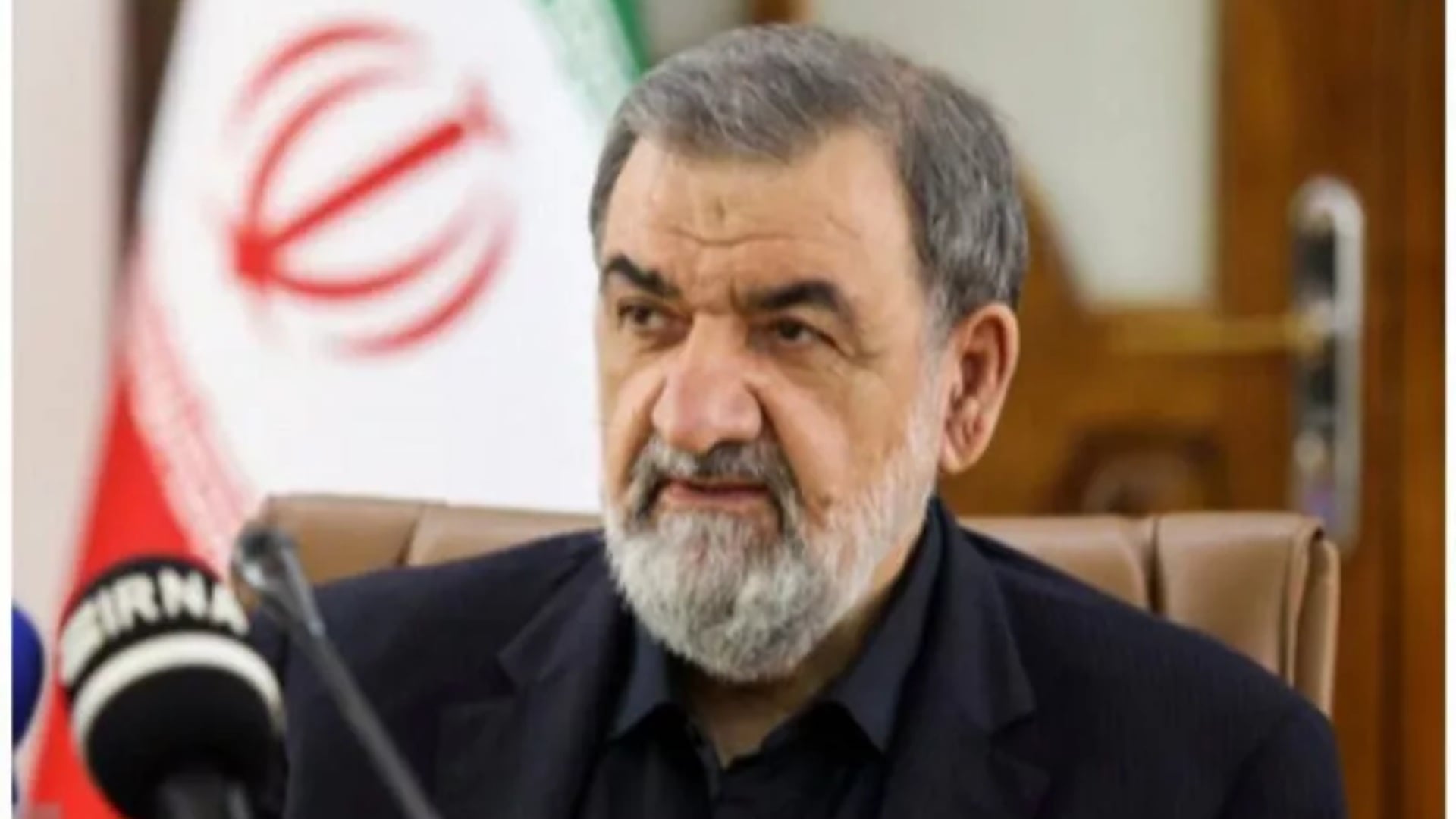
Իրանը հերքել է ԱՄՆ-ի հետ բանակցությունների մասին տեղեկությունները
168 Jham / 3 hours ago
ԱՄՆ-ն 166 հազար դոլար կհատկացնի Խորեն Տեր-Հարությանի ստեղծագործությունների պահպանությանը
24TV / 24News / 3 hours ago
Նուբարաշենն է. այստեղ մարդիկ կորցնում են իրենց կյանքը
Azg / 3 hours ago
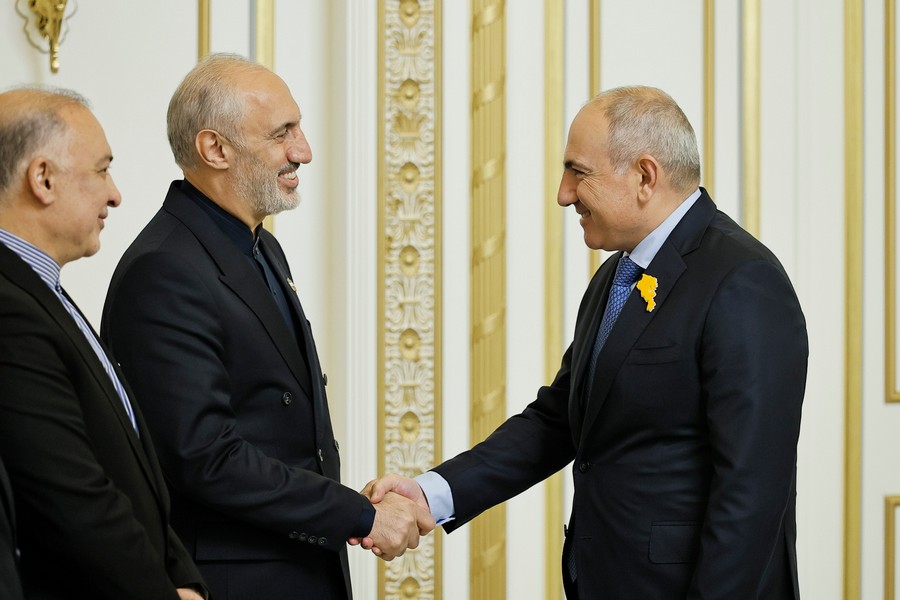
Iranian Vice President Calls Armenia, Pashinian ‘Trustworthy’
Aravot / 3 hours ago