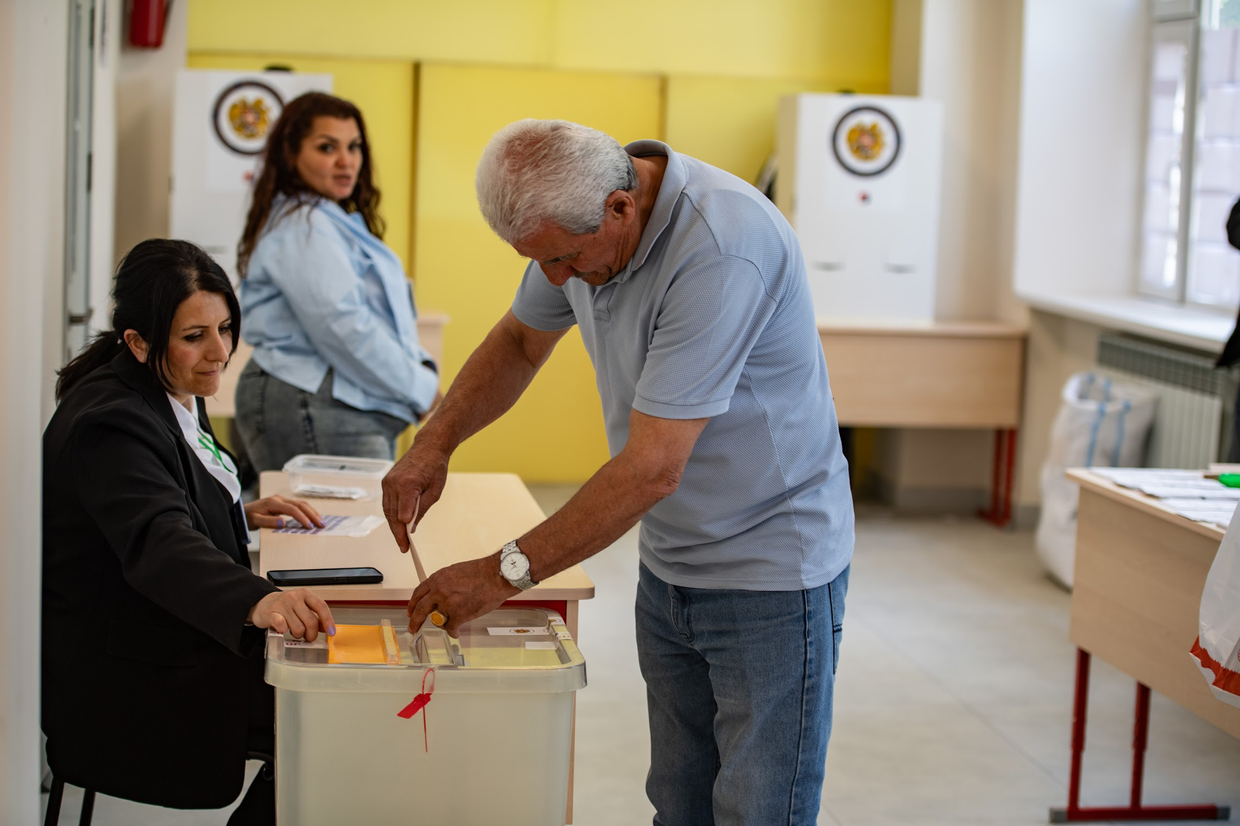
Armenia’s ruling Civil Contract party has won most local elections held in 21 communities on Sunday. The opposition contested 14 communities but won only in Stepanavan. Several members and supporters of the opposition Strong Armenia party were detained ahead of the vote in Stepanavan. In the local elections this autumn, Civil Contract dominated the polls, running uncontested in some communities and recruiting popular former opposition candidates in others. Besides having almost no competition in the local elections, the ruling Civil Contract was criticised for oppressing opposition supporters and initiating criminal cases against its opponents ahead of the elections. Local elections in Armenia are held every five years using two systems , depending on the size of the community. Larger communities with over 4,000 voters use a proportional system, where each voter casts one vote to elect a council. This council then elects the head of the community. Prior to 2020, the mayors and councils of Yerevan, Gyumri, and Vanadzor were the only ones elected using proportional party lists. In smaller communities with fewer than 4,000 voters, the community head and council are elected using the first-past-the-post system. In the elections on Sunday, only two communities elected heads and councils with first-past-the-post systems. As of Monday afternoon, the Central Electoral Commission (CEC) published the results of 19 communities — Atashat, Armavir, Araks, Gavar, Martuni, Vardenis, Artik, Akhuryan, Hrazdan, Tsakhadzor, Garni, Goris, Meghri, Yeghegnadzor, Vayq, Jermuk, Ijevan, Dilijan, and Stepanavan. Of those, Civil Contract only lost Stepanavan. There, the Entrepreneur Party received 41.54% of the vote, while Civil Contract received 35.32%. Stepanavan was also the only community where the parliamentary opposition Strong Armenia fielded a candidate. However, on 21 October, ahead of the local elections, the Investigative Committee reported the arrest of 14 individuals from Stepanavan, including Strong Armenia’s candidate for community head, Arsen Gevorgyan, on charges of giving, assisting in, and receiving electoral bribes for the party. He has been detained for two months. On 23 October, 10 more Strong Armenia supporters were arrested in Stepanavan. Strong Armenia received only 19.68% of the votes there. Although Civil Contract was defeated in Stepanavan, the Entrepreneur Party does not appear to be its most fierce opponent. Ahead of the Goris elections, the party’s local leader, Arush Arushanyan, allied with Civil Contract under the Solidarity Alliance. The newly formed bloc received 96.11% of the votes in Goris. Arushanyan is an erstwhile vocal critic of the government who accused Pashinyan of losing Nagorno-Karabakh to Azerbaijan, and is standing for re-election as mayor. Before the election, Pashinyan announced Civil Contract would form an electoral alliance with Arushanyan’s Entrepreneur Party. While Goris voters backed Civil Contract in the 2021 parliamentary election, they elected Arushanyan as mayor in the local vote that same year. Pashinyan said that the voting pattern reflects a wish to avoid renewed tensions in the community and added that a similar model could work in other communities. Ahead of the elections, a group of politicians who had previously represented Armenia’s opposition Republican Party had switched allegiance and ran as members of Civil Contract in the local elections. Civil Contract ran uncontested in five out of the 19 communities. The same was true for the previous wave of local elections on 27 September as well. The CEC’s Situation Analysis Centre has said it responded rapidly to 42 reports they received via media and phone calls, mostly involving voter list problems, technical issues with voting-room cameras, and questions about voting procedures. Shortly after the results were published, Civil Contract was accused of authoritarianism for celebrating its victories in some communities where they claimed to have received 90–100% of the votes. On Monday morning, Pashinyan published a video reflecting on the results of the local elections and restating his commitment to ‘uprooting’ the ‘four-headed war party’ — a term he has been using since early 2026 to refer to the opposition in Armenia. Despite the victory in the majority of polling stations, he stated that he is ‘not happy that Civil Contract won 90% plus’ and highlighted three remaining problems. ‘Firstly, how can we ensure that the election results do not give the impression of dictatorship and authoritarianism? Second, how can we establish an objective public control mechanism in the communities where we have high levels of trust? Thirdly, how can we form a state-centred, young, intellectual, objective, and genuine opposition that is governed and directed only by their electorate and citizens?’, Pashinyan said . On election day, the Akanates observation mission recorded 217 violations in 137 polling stations, including accessibility issues, gatherings of an unauthorised number of people, cases of violation of voting secrecy, campaigning, and other administrative issues. The Independent Observer recorded cases of people attempting to vote on behalf of others, directing voters, removing the ballot without placing it in an envelope, the presence of more than one party representative at the station, and other issues. However, the most significant concerns were over the lack of transparency in legal actions during the pre-election period. Independent Observer urged the authorities to ensure an accountable and transparent legal process that would not create the impression of political persecution or interference in the elections. ‘Considering that electoral processes are highly politically sensitive, any legal action must be carried out on the principle of ensuring public trust’, they wrote . The representative of the Independent Observer, Artur Sakunts, said that there were cases of people being directed towards voting for specific candidates. ‘There were many communities where only one party was nominated — the ruling political force — and in that sense, unfortunately, we cannot consider the local government elections competitive’, Sakunts told FactorTV .
Free: opens Google Translate with the text filled in. Long articles are split into numbered sections.
Premium: read the translation right here, without leaving HyeNews. Try free for 7 days.
Already in English.
Pashinyan’s party wins all local elections bar one amid arrests of some opposition members
The independent observation missions raise concerns over the criminal cases against opposition members and supporters ahead of the elections.
Comments
No comments yet — be the first to comment.
More from OC Media

Could Armenia be about to outlaw discrimination based on sexual orientation?
OC Media / 21 minutes ago

Kadyrov calls Chechens who left for Europe ‘despicable traitors’
OC Media / 2 hours ago

Outcry after Tehran invites Azerbaijani girls facing hijab ban to study in Iran
OC Media / 2 hours ago
Prosecutors recommend Justice Ministry suspend Georgia prison director amid beating investigation
OC Media / 2 hours ago
Related coverage
Անհասկանալի է Շիրակի մարզպետի հրապարակման մեջ «Իվանների» մասին հիշատակումը․ ՌԴ դեսպանատուն
24TV / 24News / 9 minutes ago
ԼՂ–ից տեղահանվածների բնակապահովման ծրագրում փոփոխություներ կլինեն. Թորոսյան
Sputnik Armenia / 11 minutes ago
Վերաքննիչ հակակոռուպցիոն դատարանն արդարացման որոշում է կայացրել Մամիկոն Ասլանյանի նկատմամբ
24TV / 24News / 11 minutes ago

Տիգրանաշենի խաղահրապարակը սարքելու համար իշխանությունը մեզ սպառնում է դատի տալ. Աշոտ Մարկոսյան
168 Jham / 20 minutes ago