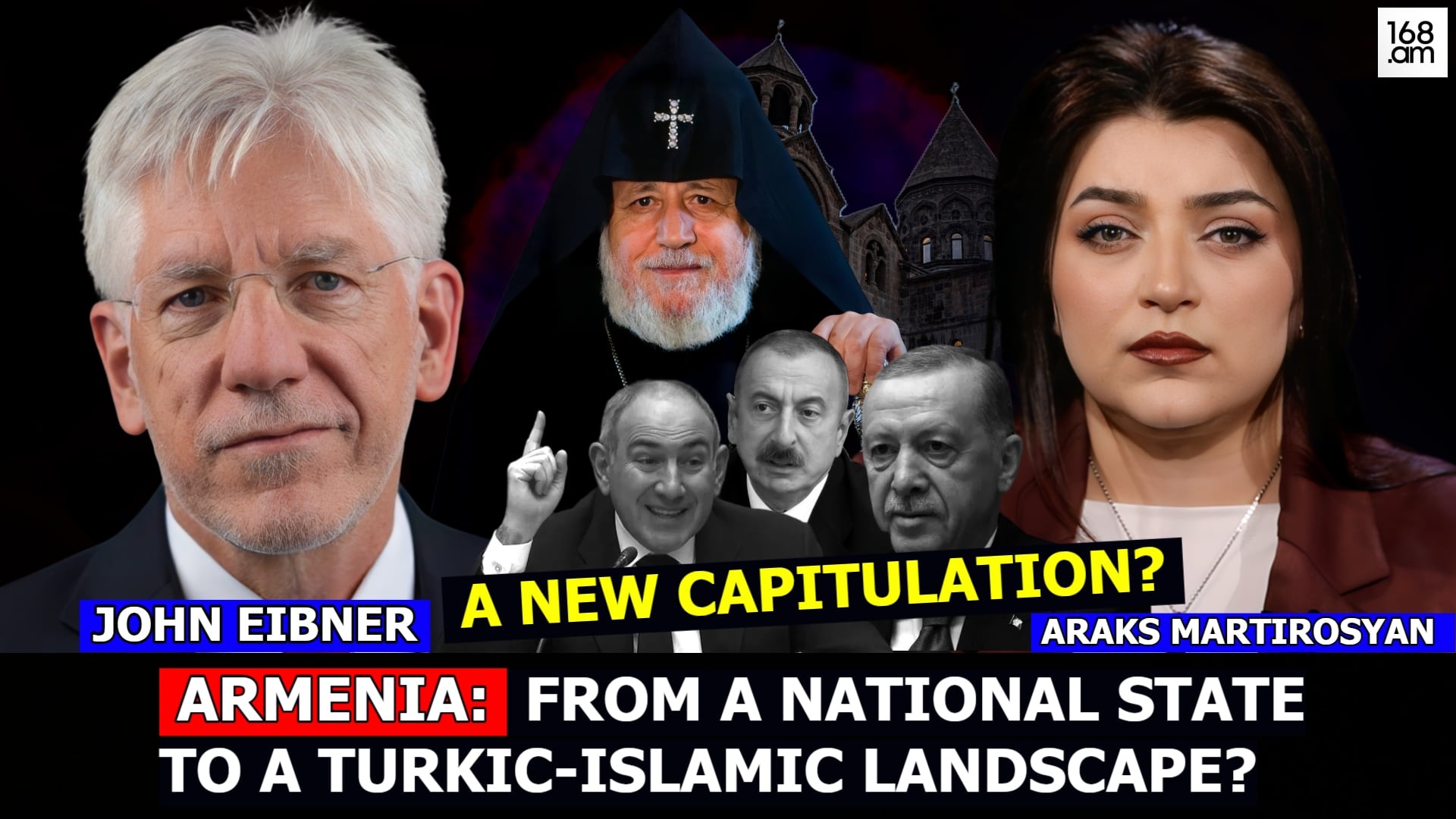
The guest of the Diplomat program is Dr. John Eibner, President of Christian Solidarity International (CSI), discussing the ongoing crisis surrounding the Armenian Apostolic Church, geopolitical pressures, and the future of Armenia’s statehood. -Dr. Eibner, since our last interview, the situation surrounding the Armenian Apostolic Church has not been resolved. On the contrary, it has entered a new phase with increasingly institutional and legal dimensions. Nikol Pashinyan hasn’t abandoned his political agenda of removing the Catholicos of All Armenians, and this agenda is now part of the plan of the government. How do you assess this situation and especially the fact that the head of the government is turning this objective into a state policy? -Well, it’s very clear that the government and the Prime Minister wish to seize political control of the Armenian Apostolic Church. And they do so because the character of the regime, the government in Armenia, is essentially autocratic, not democratic. We see how it tries to seize control of all elements of society, but especially the Church, because the Church is a fundamental pillar of the Armenian nation. The Prime Minister seems not to believe in the democratic principle of checks and balances in government. And, of course, the Armenian Apostolic Church is in some ways a check on the power of the state. We see that there’s a political conflict. The Prime Minister is pushed into this direction by his peace partners in Azerbaijan and Turkey, and those that stand behind this process. He is moving forward, and he’s moving forward with energy and determination, because for him, it is a political, existential question. He cannot survive unless he wins. All of those who are supporting him—Turkey, Azerbaijan, and other powers—will find a way to dispose of him. He will not be able to survive politically without their support, so he is determined to go as far with this as he possibly can. – In September, at Pashinyan’s initiative, the government published a report on what it described as a crisis within the Armenian Apostolic Church and proposed ways to resolve the situation. Your organization, CSI, strongly criticized this report. What is the exact danger of this kind of report? – Well, we don’t take the report, the content of the report, altogether seriously, because it’s full of rumor, unproven allegations. The fact that they’re taken from many open sources means actually nothing. There is so much that isn’t true that is out there in open sources, and I think probably an awful lot of this was planted by the government itself. So the government cites itself when it claims that it’s referring to open-source documents. Yes, so I mean, it really means nothing. If there is criminal activity by anybody in society, the government, the state, has an obligation to pursue that legally. None of this in this report has been presented to a court. There’s been no opportunity for those who have been accused of various things to reply, and they have not been given platforms by the state. So it’s a part of an autocratic, authoritarian effort to weaken the Church, and for the state to be able to impose its authority over this ancient institution of the Armenian nation. -His Holiness Karekin II, the Catholicos of All Armenians, is now facing criminal proceedings related to the case of Archbishop Gevorg Saroyan. But the remarkable thing is that recently the court decided that whatever the Catholicos has done, he did right. This accusation is falling apart. But anyway, how do you assess these proceedings from the perspective of international law and religious freedom? – Well, these proceedings are really, you know, a nonsense. The state has no right to interfere with the canon law and the operations of the Church. The Catholicos defrocked a priest, and it’s not within the competence of the state to say that, you know, this is somehow illegal. And so the court case is even falling apart. It seems that even in Armenia, where the government exercises inordinate power over the judiciary, and the judiciary pays great attention to what the government says, it begins to fall apart. Judges have recused themselves; they don’t want to sit and preside over this trial. And we see the beginning of the falling apart of this legal action. However, I must say that the state will continue in this vein, because whether it gets a conviction or not is not the most important thing. It wants to tie up the Church in legal proceedings to keep it on the defensive. So, what you see now in Armenia being used against the Church is what has a name—in the United States, it is called “lawfare.” You simply use the law against your opponents, and it makes no difference whether you get a conviction or not, because you are absorbing all of their energies to defend themselves. Their financial resources and their energies are going into this kind of defense, and we see this practice now in Armenia. -Dr. Eibner, as you have correctly mentioned, we cannot rule out that they will try to start another case, maybe . If these proceedings continue and the Catholicos of All Armenians faces a genuine risk of imprisonment, what legal and international consequences could such developments have? – It depends on what he would be convicted and imprisoned for, but based on the allegations that the government makes against him, there would be no grounds at all for that. Now, that does not mean the government will not do it. It may be contrary to all human rights and religious freedom norms internationally, and actually against the constitution of the Armenian state, but powerful states do this. And the question is what kind of reaction there will be. It’s a political question, not a legal question. We know that Azerbaijan and Turkey push for this. Their media organs, their statesmen, speak against the Catholicos. They accuse him of being an obstacle to peace, an obstacle to good relations. They publicly press for his removal. So we know that this will be applauded, and it’s actually supported by them. And the question is: will the rest of the international community bother about it? Will the Europeans? Will the Americans? And so far, we see very little sign that Western governments are ready to intervene in a serious way, with one little exception. There is a little ray of hope here, and that is: the bishops who were imprisoned earlier in this process are no longer in prison—they are under house arrest, not allowed to travel. There are various restrictions that they have to live under. It is very likely that the United States, in particular, has tried to encourage the Pashinyan government to lay off some of these more draconian measures, so that they can keep pressure on the Church without placing bishops in high-security prisons. I mean, I visited Archbishop Bagrat Srabanyan in prison; it was really quite horrible—the same kind of prison where the Soviets executed Armenian bishops in the 1930s. So there’s a sign that they take a step back, but it seems to be largely cosmetic. They have too many difficulties when they actually put bishops, archbishops, and priests behind bars in high-security prisons. -Why are we seeing such low international reaction to this kind of situation in Armenia? -Well, I think the answer is quite simple: human rights and religious freedom have a much lower priority than they once did in the foreign policies of Western governments. I read recently—it’s just been published, actually—a very fascinating transcript of a conversation between President Reagan and Gorbachev in Reykjavik. And it was fascinating because at the very onset, at the very beginning of Reagan’s dialogue, he raised the issue of human rights. He said that the American people will only agree to some kind of settlement or end of this Cold War if there’s an improvement in the human rights situation. He put that at the top of the agenda, not down at the bottom of the agenda for lower-level people to have discussions about. This seems to be lacking today. And this is the fundamental problem: that the American political establishment, and probably the American political culture generally, does not esteem human rights and religious freedom for others as they once did. This is a very serious problem, which will rebound negatively on Western countries—and Europeans also. -Europeans also. -Of course, but the United States has been the leader in this process. It’s the United States that really put human rights on the agenda of European countries. And the tradition of human rights and religious freedom, of course, is much weaker in Europe than it is in the United States, where you’ve had a long tradition. In Europe, it has been largely a post-World War II phenomenon in the Western part of Europe, and then a post-Cold War phenomenon in the former Warsaw Pact states. And we see there are great struggles, great difficulties in applying these principles to the post-Soviet states—Ukraine, Moldova, Armenia. Even the Baltic states are having some serious religious freedom issues. -In this period, mustn’t we expect some reaction from the international community? – Well, you know, we can encourage them to do so. I’m just saying that the conditions are not right for the kind of interventions that President Reagan and the United States made during the Helsinki process and then during the negotiations that led to the end of the Cold War. You look at the OSCE, which was once like the pillar, the framework for European security, including human rights, and it’s barely functional today. This is something that we have to work on and address. And we do so in Washington and Brussels and with the general public. But it is not something that only the external powers can deal with. Armenians have to do their part—homework, homework. That’s right, they have to care about this. If the Armenian nation does not care about it sufficiently, then there’s not very much that anybody from the outside world can do. But what we see today is a kind of battle over the character of the Armenian nation. The Prime Minister’s ideology of the “real Armenia” is: Armenia is the state, full stop. Armenia is the state within the borders that he has agreed to. And the rest of what traditionally was called the Armenian nation is somehow politically irrelevant. And so it’s not only the diaspora that becomes irrelevant—the many more Armenians that live outside Armenia than live inside Armenia—but the Church is part of that Armenian nation, which is marginalized by this ideology of the “real Armenia,” which has all of the characteristics of being a totalitarian or certainly authoritarian, totalitarian ideology where the state controls everything. -Dr. Eibner, the next step in this ideology is the change of the constitution that the authorities want to make. And this is the demand from Azerbaijan and Turkiye. How do you assess this part of the situation? -Well, these are demands from Turkey and Azerbaijan because they expect Armenia to sign a capitulation treaty. The treaty that everybody calls a peace treaty is, in fact, a capitulation treaty. They believe that Armenia has lost the war, and they can place whatever conditions they wish on Armenia, and they expect Armenia to sign. So this change of the constitution, which comes from Azerbaijan and Turkey—the demand comes from there. It’s very obvious that’s where it comes from; it doesn’t come from within Armenia itself. The government in Yerevan is a transmission belt for the wishes of Azerbaijan and Turkey. So we see this instinct in the demand for a change to the constitution and the changes that are publicly known. Some of them are known, some of them are not known, but those that are known conform to this notion of the “real Armenia” and of excluding others—a part of the broader Armenian nation—from having a significant role in public life, where the state manages everything. -We see a list of preconditions by Azerbaijan, but our authorities insist that after the constitution they will bring guarantees from Azerbaijan that they won’t demand other things from Armenia. Will Azerbaijan stop on this? -Well, I don’t think that they will. I mean, it’s very clear what President Aliyev has to say about “Western Azerbaijan” and giving place names, Azeri place names, even to Yerevan, where you’re sitting today, and the talk about the return of Azerbaijanis. The agenda has been stated very, very clearly and repeatedly. So there is no reason to think that when there is zero resistance from the Armenian government and a lack of support from the international community—or if the international community doesn’t care well enough—why he should stop with a change of the constitution. And, yes, there’s nothing to stop him. -And now even Azerbaijan and Allahshukur Pashazadeh are speaking about the so-called “Yerevan Kaziat.”, they are developing this discourse now. -They’re developing the discourse with a view to a mass migration of Azeris to what is today the Armenian Republic, or what they call “Western Azerbaijan.” That is the plan, that is the notion. And they will raise all kinds of human rights objections if Armenia does not go along with this. -What will face Armenia if it accepts all these demands and if the process goes on? – Well, Armenia will cease to be an Armenian national state in due course. You may have your borders, your so-called “real Armenia.” But the question is: what is inside that state? And the next step will be—and they’ve already hinted at this—freedom not only of goods, but of people, freedom of movement. And so this is the question: is the Republic of Armenia to become globalized? Which means in that part of the world, it means being fully integrated into a Turkic-Islamic landscape, a political landscape. Or will it remain an Armenian national state? This is the fundamental question. And to exist as a bastion, as a defense for a nation that has experienced genocide, been wiped out in Turkey, and has been under pressure for centuries… Armenia faces the prospect of returning to that past if there is not an Armenian national state that is able or willing to defend its national interest. -Eibner, you know maybe that one of the recent developments is that the authorities replaced Samvel Karapetyan’s house arrest with detention once again. And in this process regarding the constitution, the opposition wants to unite. How do you assess this process of the opposition? – Well, I’m not a party to the discussions that take place between the leaders of the opposition, and I don’t really know what they have in mind. But obviously, when you’re faced with a regime that has totalitarian instincts—and you can see it through, we’ve talked about the Church, but also the political persecution of the opposition—its instincts are clear, and it’s very obvious that the more united an opposition is, the better they are able to withstand those tendencies. But whether they will unite, and to what extent, I really don’t know. So far, they have not presented a very united picture. Some factions unite with each other, others stand on the sidelines, and so there is a fragmented opposition. And it’s really a question that has to be put to the leaders of the opposition, far more than to me. I have no party-political interest in whether it’s the Civil Contract Party or any other party that’s on top. What interests me is that there’s a government in Armenia that defends the nation, the national interest, including the rights of the Apostolic Church and other faith communities—not only the Apostolic Church, but it is that Church that is under threat, because it is strong and powerful and has the potential of standing in the way of the government’s agenda. -How is this situation influencing the international reputation of Armenia? -Well, I mean, people who are aware of what is going on and who care about human rights and religious freedom are not impressed with this. It damages Armenia’s reputation as a democratic country where there is the rule of law and that would wish to adhere to Western norms, as suggested by its wish to join the European Union. But as I alluded to earlier, many people in the West don’t really care very much about that. It’s money. Can they make money out of Armenia? Can they make money out of the transport corridor? Is Armenia going to be helpful to them as they are continually in conflict with Russia and Iran? So these are the things that many in the West care far more about than human rights and religious freedom. Unfortunately, that’s the case today, and I would encourage Western leaders to look back at the time of, say, President Reagan and his predecessor, Jimmy Carter, who highlighted human rights and religious freedom as fundamental principles of American foreign policy. And they were serious about trying to further those rights, especially in countries where the United States has good, respectful relations. There are some countries that are not going to listen to the United States; the United States has no leverage with them. But that’s rather different with Armenia today. Armenia needs the West. -Dr. Eibner, can Armenia be a part of the European Union, taking into consideration what is going on in Armenia—all opposition leaders are under arrest, and the situation surrounding the Armenian Apostolic Church? How do you see this question? -Well, I see it in the sense that if Europe upholds its own standards, then Armenia will not qualify as long as it proceeds in the way that it is proceeding, with the arrest of opposition figures, the legal actions against the Church, and moving in a very blatantly anti-democratic way. But the real question is: what are the real norms and principles of the European Union when it is itself under threat of compromising its own democratic values? And so when there’s discussion in Armenia about joining the EU, it’s not very clear, actually, what you will be joining. And there are many questions that have yet to be resolved about the EU, and to what extent it will defend its own principles of human rights and religious freedom. And we see some very negative trends within the EU sphere these days. Araks Martirosyan
Free: opens Google Translate with the text filled in. Long articles are split into numbered sections.
Premium: read the translation right here, without leaving HyeNews. Try free for 7 days.
Already in English.
ARMENIA WILL CEASE TO BE AN ARMENIAN STATE։ JOHN EIBNER’S WARNING: John Eibner
The guest of the Diplomat program is Dr. John Eibner, President of Christian Solidarity International (CSI), discussing the ongoing crisis surrounding the Armenian Apostolic Church, geopolitical pressures, and the future of Armenia's statehood.
Comments
No comments yet — be the first to comment.
More from 168 Jham
Իրանը հերքել է ԱՄՆ-ի հետ բանակցությունների մասին տեղեկությունները
168 Jham / 3 hours ago

Ինչո՞ւ են Հարավային Կորեայում երիտասարդները հրաժարվում ամուսնությունից և երեխաներ ունենալուց․ ժողովրդագրական ճգնաժամի պատճառները
168 Jham / 3 hours ago
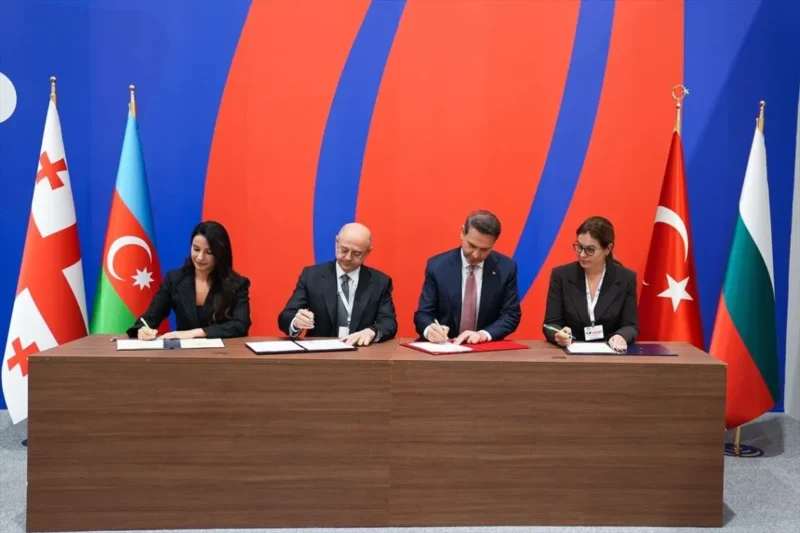
Թուրքիան, Ադրբեջանը, Վրաստանն ու Բուլղարիան համաձայնագիր են կնքել
168 Jham / 3 hours ago
Առաջին ամենամեծ տագնապը 2020թ. հոկտեմբերի 1-ին էր՝ Ստեփանակերտում… Թող կողմնորոշվի՝ իր հայրենիքը Թուրքիա՞ն է, Հայաստա՞նը, թե՞ Ադրբեջանը. Տիգրան Աբրահամյան
168 Jham / 3 hours ago
Related coverage
Արցախի հարցը լուծելուց հետո վաղ թե ուշ Արևմտյան Հայաստանն ենք ազատագրելու. Վարդան Ոսկանյան
Azg / 4 hours ago

Հիշատակի երթ և մոմավառություն Գլենդելում՝ հաջակցություն արցախահայության
Alpha News / 5 hours ago
Մոսկվայի չկատարած խոստումը
1in.am / 5 hours ago

Ամալյա Հովհաննիսյան. «Այդ օրվա Արցախը մոխրագույն էր»
Aravot / 5 hours ago