Azerbaijan and Turkey are currently embroiled in an unusually public dispute, one exposing differences beneath years of carefully cultivated fraternity. The dispute stems from a controversy over religious attire in Azerbaijani schools after Baku amended its general education legislation to make the country’s public education system secular. Over the course of the last month, however, the disagreement has become a test of sovereignty, political influence, and the expectations attached to a relationship described as ‘one nation, two states’. The broader deterioration of relations The disagreement did not emerge in isolation. Rather, it followed mounting friction over Azerbaijan’s strategic partnership with Israel amidst widespread international criticism of Israel’s actions in Gaza. While Turkish President Recep Tayyip Erdoğan has forcefully condemned Israel’s military campaign, Baku has preserved its relationship with Israel. That contrast had already made Azerbaijan a target of criticism within Turkey before the hijab controversy intensified. Yet, the headscarf issue appears to have become a tipping point for parts of Erdoğan’s religious and conservative constituency already dissatisfied with Baku’s ties to Israel. It brought together two emotionally powerful causes: solidarity with Palestinians and the right of Muslim women to wear religious attire. Turkish pro-government commentary explicitly linked them, with the conservative newspaper Yeni Şafak portraying Azerbaijan’s school restrictions as a gesture toward Israel. The accusation illustrates how the controversies became intertwined, rather than establishing any Israeli role in the policy. The public dispute gathered momentum after Erdoğan’s 22 September address to the UN General Assembly, where he condemned school headscarf bans without naming any countries. His remarks came the day after Azerbaijan tightened its school dress regulations. On 2 October, Azerbaijani President Ilham Aliyev delivered his own pointed message: Azerbaijan needed neither outside interference nor anyone’s patronage. He also named no country. All the same, his remarks were interpreted as a warning to Ankara, although neither president explicitly acknowledged an exchange over the restrictions. Within Azerbaijan, the rules triggered a heated debate over secularism, religious freedom, and access to education. Although the regulations did not explicitly mention the hijab, their enforcement resulted in girls and teachers wearing headscarves being denied entry to schools. In an overwhelmingly Muslim country with a deeply rooted secular tradition, the restrictions divided opinion and prompted protests. Explainer | Why are schoolchildren protesting a hijab ban in Azerbaijan? The protests against the hijab ban in schools appear to be some of the largest public demonstrations in years. OC Media Rafig Shahbazov The confrontation became more direct when Erdoğan’s adviser Oktay Saral and ruling party lawmakers, including Leyla Şahin Usta and Muhammet Müfit Aydın, criticised the restrictions. In turn, Azerbaijan’s ruling New Azerbaijan Party accused them of interference and irresponsible rhetoric. Government-aligned media amplified the exchange, bringing an unusual degree of tension between the allies into public view. Baku reportedly went further. According to Middle East Eye , Azerbaijani officials sought Saral’s dismissal. Azerbaijani prosecutors also brought charges against Turkish columnist Celal Çiftçi, alleging calls for the violent overthrow of the government and religious extremism. Separate reporting identified entry bans against 31 Turkish citizens, though these were distinct measures and should not be conflated into a single criminal case against all those concerned. At the centre of the confrontation are different understandings of what fraternity permits. Turkish critics framed their interventions as a defence of religious rights. Azerbaijan’s ruling party treated them as an infringement of sovereignty. Its response also explicitly defended Azerbaijan’s relationship with Israel, showing that the disagreement had expanded beyond education policy to encompass Baku’s freedom to choose its partners. Azerbaijan argues that its strategic partnership with Israel does not imply endorsement of every Israeli action in Gaza, pointing to its repeated support for a two-state solution. The divergence lies in how Ankara and Baku manage their relations with Israel and the political costs each is willing to bear. Despite Baku’s forceful assertions of sovereign independence, its geopolitical constraints remain. Situated between three substantially stronger regional powers — Russia, Iran, and Turkey — Azerbaijan needs reliable partnerships to safeguard its interests. Tensions with Moscow and Tehran, now exacerbated by friction with Ankara, underscore that need. Baku’s ability to pursue an independent foreign policy depends partly on the external support it can secure. Building new ties with the UAE All of this context gives Azerbaijan’s deepening strategic relationship with the UAE particular significance. It also deserves attention in the context of the expanding UAE–Israel partnership following the Abraham Accords. Abu Dhabi has maintained that relationship through regional turmoil and strengthened its ties with Israel following attacks on the UAE during the Iran war. Baku is therefore building closer relations with two partners that are themselves moving closer together. UAE President Mohamed bin Zayed’s January 2024 trip marked the first official visit by a UAE president to Azerbaijan. At the time, Aliyev welcomed him as his ‘dear brother’, reflecting the personal warmth of their relationship. More substantively, the two countries elevated their ties to a comprehensive strategic partnership in September 2025. Economic cooperation gives that partnership considerable substance. Masdar’s renewable energy projects, ADNOC’s deal for a 30% stake in the Absheron gas field, and a $1 billion joint investment fund illustrate the UAE’s expanding economic presence. Cooperation also extends into defence: the countries held Peace Shield–2026 in Abu Dhabi in February, followed by the Falcons Meet–2026 joint air exercise in Azerbaijan in October. Analysis | As Azerbaijan and Armenia reset relations, Baku looks to the Middle East Azerbaijan’s stature as a regional player has significantly increased in recent years. OC Media Nicholas Castillo These developments point towards closer strategic alignment among Azerbaijan, Israel, and the UAE, although a coordinated alliance has yet to emerge. Their bilateral partnerships also fall short of the formal mutual-defence commitments Turkey is developing with Saudi Arabia and Pakistan under the Mecca Joint Defence Agreement. Azerbaijan enjoys excellent bilateral relations with both Turkey and Pakistan , and there are strong reasons to expect those relationships to endure. Close friendships, however, do not require identical choices about regional security. Baku can preserve both relationships while developing partnerships that give it additional options and different priorities. Israel’s defence relationship with Azerbaijan and the UAE’s growing economic and military engagement may help Baku reduce its dependence on any single partner. Neither replaces Turkey nor provides an automatic security guarantee. Together, however, they broaden the support available to Azerbaijan as it pursues an independent course. The question is whether these partnerships will remain complementary to Azerbaijan’s relationship with Turkey or gradually produce competing commitments. Closer cooperation with Israel and the UAE could lead Baku and Ankara to pursue different priorities on regional issues, particularly during a crisis. For now, the evidence supports diversification more clearly than realignment. Decisions during a regional crisis would provide a stronger test of whether these relationships amount to a distinct strategic orientation. The headscarf dispute shows how domestic sensitivities and foreign-policy disagreements can reinforce one another. Discontent over Baku’s relationship with Israel appears to have created a receptive audience for criticism of its school restrictions. Azerbaijan’s forceful response then turned that criticism into a confrontation over sovereignty and the limits of Turkish influence. The foundations of the relationship remain strong. Turkey provides Azerbaijan with a critical route to global markets, while Azerbaijani natural gas helps Turkey diversify its energy supplies. Their strategic security partnership adds another powerful incentive to preserve close ties. What the confrontation challenges is the assumption that fraternity guarantees automatic alignment. By deepening its partnerships with the UAE and Israel, Baku is also signalling to Ankara that it has options and room to maneuver. The relationship’s durability will depend on both governments’ ability to accommodate independent choices without treating disagreement as betrayal.
Free: opens Google Translate with the text filled in. Long articles are split into numbered sections.
Premium: read the translation right here, without leaving HyeNews. Try free for 7 days.
Already in English.
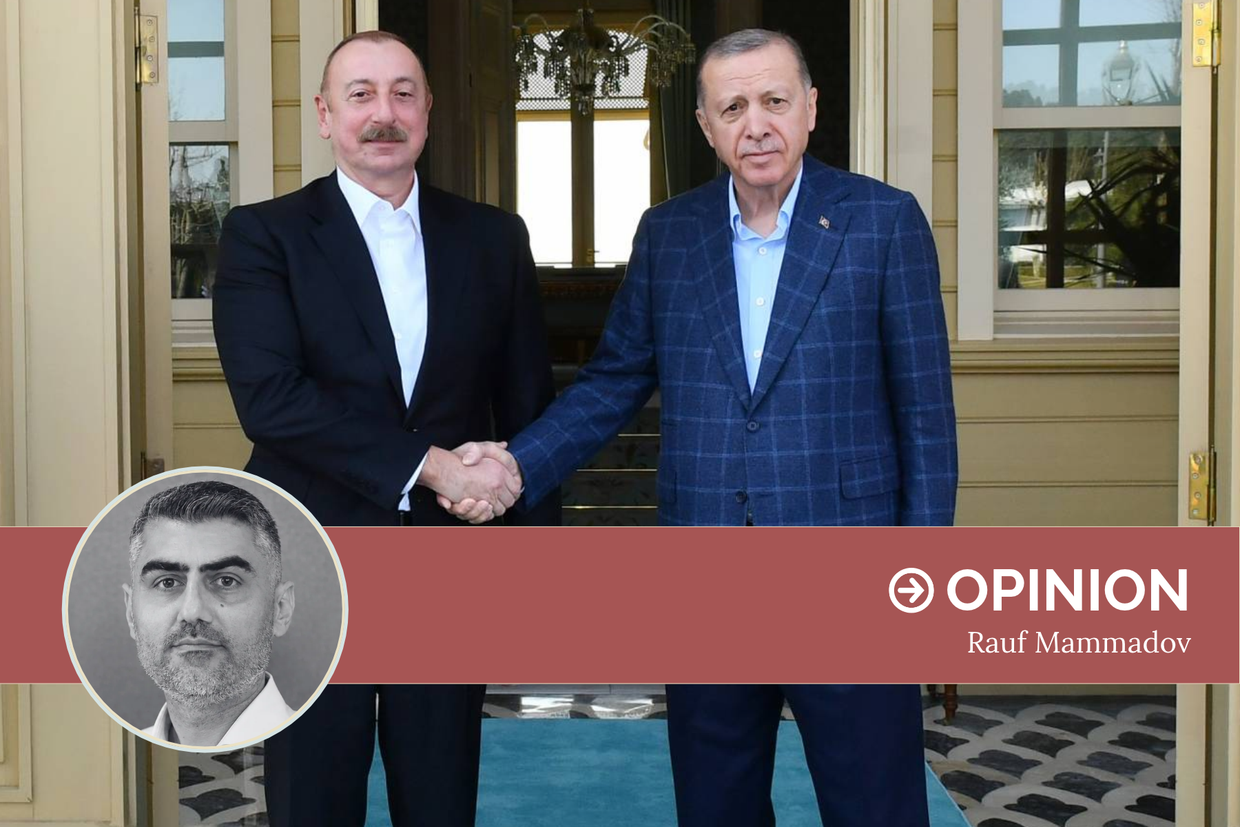
Opinion | The Azerbaijan–Turkey hijab feud is testing the limits of strategic solidarity
While the foundations of the relationship remain strong, the feud is challenging the assumption that fraternity guarantees automatic alignment.
Comments
No comments yet — be the first to comment.
More from OC Media

Armenian FM says Azerbaijani presidential aide’s apology demand ‘does not contribute to peace’
OC Media / 2 hours ago

Putin calls Azerbaijan a ‘good partner’ for Russia
OC Media / 3 hours ago

Installation of six wind turbines completed at Vento Energy’s 43.2 MW Breti Wind Power Project
OC Media / 22 hours ago

South Africa opens criminal case over baobab trees reportedly destined for Georgia
OC Media / 23 hours ago
Related coverage

SLAPP- ները չեն լռեցնի. Վարդահովիտում տեղաբնակների կարծիքը կարևոր է. գնդակը լիազոր մարմնի դաշտում է
Noyan Tapan TV / 7 minutes ago

Минздрав Армении не подтвердил факт загрязнения ртутью воды в приграничном селе Цав
Sputnik Armenia / 1 hour ago
Փաշինյանն այլեւս դեմ չէ՞ «ռսի սապոգին»
Aravot / 3 hours ago
Is Pashinyan No Longer Opposed to the “Russian Boot”?
Aravot / 3 hours ago