The Naghash Ensemble of Armenia performs original music set to the poems of Mkrtich Naghash, a medieval Armenian poet and priest. The ensemble’s founder, composer John Hodian, is from Philadelphia. He moved to Yerevan about 20 years ago, and it was there that he was first inspired by the singing of soprano Hasmik Baghdasaryan. In November, the ensemble begins an 11-city U.S. tour , bringing its eclectic sound to Armenian and non-Armenian audiences alike. Led by Hodian on piano, the ensemble includes sopranos Hasmik Baghdasaryan and Tatevik Movsesyan, alto Shahane Zalyan, Andranik Gasparyan on duduk, Aramayis Nikoghosyan on oud and Tigran Hovhannisyan on dhol. We spoke with Hodian and Baghdasaryan about a medieval priest’s poems of exile, finding exceptional musicians in Yerevan and what American audiences can expect from the tour. This interview has been edited for length and clarity. Rosie Nisanyan (R.N.): How did your musical journey begin? John Hodian (J.H.): I grew up outside Philadelphia. When I was nine or 10, my older sister got a piano. I had no thoughts about it whatsoever. The movers dropped it off in the living room, but nobody was around, so I just started plinking on it. Eventually I got better at plinking and now I do what I do. Composer John Hodian (Photo by David Galstyan, via the Naghash Ensemble) From the very beginning, I was making things up. My whole orientation to music has always been as a composer. I studied Western classical music for years, and I grew up with lots of Armenian music — at home, at weddings, in church, at funerals, all of that. I’ve learned a lot; I have a master’s degree in composition and conducting. But I’ve always been a composer first. Writing music is the only thing I’ve ever done for a living. Some of that was work I’d rather not think about anymore. I used to do a lot of film and television. I was living on the Upper West Side of Manhattan, and if you want to sleep indoors, you’d better do something — so I went looking for work as a film composer. Luckily, it worked out pretty well. But I reached a point where I just didn’t want to do it anymore. Fortunately, that coincided with my first trip to Armenia, and that’s when things got interesting. R.N.: The ensemble’s signature project, “Songs of Exile,” is based on the poems of Mkrtich Naghash. How did you discover them, and how did they inspire your music? J.H.: What originally inspired the music was Hasmik Baghdasaryan’s voice. I heard her sing in the Garni Temple — almost 20 years ago now — and she has an extraordinary voice. Hearing her voice in that temple, I just fell in love with the sound. I wanted that sound to be part of my arsenal as a composer. I wanted my music to sound like that. I knew right from that point what I wanted the music to sound and feel like. What originally inspired the music was Hasmik Baghdasaryan’s voice. I don’t mean to get too metaphysical, but when I’m conceptualizing something, it starts as an energy. I know what its energy is going to be, what its vibe is going to be. I knew I was going to write for Hasmik’s voice, and because I’m such a counterpoint freak, I knew I’d need multiple voices. If you’re writing for voices, you need text. As much as I know I’m a composer, I know I’m not a poet. I’ve always been obsessed with poetry — I’ve read it and studied it — but writing it is not something I am good at. So I went looking for texts to set, and I looked everywhere, which took quite a while! At the time, I was living partly in Yerevan and partly in Berlin, and constantly going back and forth to New York. I looked everywhere for the right text and couldn’t find what I was looking for. Everyone said, “Oh, set the poems of Krikor Naregatsi.” Naregatsi is great, but it’s not what I wanted to do. “Look at Frik.” Again, Frik is great. Armenia has all these great writers, especially from the medieval period; its historical literature is wonderful, but I was still having trouble finding something that would be as inspiring as the music I was hearing in my head. Then I found a three-volume collection called “The Heritage of Armenian Literature.” Each book is huge, and in the middle of one of them was a tiny excerpt by a medieval Armenian poet and priest named Mkrtich Naghash. It was really just one quatrain, about living in exile — really, really beautiful writing — but that was all there was, so I had to find more. Luckily, when I came back to Yerevan, the people at the Matenadaran, the manuscript library, were able to help me. Then I went to San Lazzaro degli Armeni, the Armenian monastery in Venice, and had a fascinating day with the brothers there. They showed me everything, including some of the earliest manuscripts. The other thing that makes this poetry so wonderful — It’s not only what it says, but the way it says it. It was a performative art form, basically a poetry slam, so there’s a rhythm and musicality to it. It may even have been sung; we don’t really know. But the words are inherently musical, and have a wonderful rhyme scheme. Naghash left 16 poems behind. About a third of them deal with living in exile. Another third are what I would call wisdom poems: how to treat your fellow man and how to function in this world so you can get into the next world, “the afterlife,” which comes from his role as a priest. I remember trying to figure out which one I was going to set to music, and then it came to me: I’m going to set all of them. Sure enough, over the course of about 12 years, that’s all I did. And for the past 15 years, touring with it is pretty much all I’ve done. I remember trying to figure out which one I was going to set to music, and then it came to me: I’m going to set all of them. Hasmik Baghdasaryan (H.B.): Before I started working with John, I had never heard of Mkrtich Naghash or Konstantin Yerznkatsi. Only a small circle of specialists knows these great masters, and I’m glad that, thanks to John, I discovered this hidden chapter of our culture. R.N.: There’s a difference between writing for the page, where you can see the words and how they’re laid out, and writing for performance. The fact that this was oral poetry must make it especially suited to music. J.H.: Not only that, but you have to remember that there was nothing else. There was no TV, no radio, no mass-market paperbacks. There was very little paper. Recitation was how information was transmitted and how people were taught. It was entertainment. It was enlightenment. It was culture. It was priests writing for their flock. It was all of these things. It was the predominant art form of its time, which is why there’s such great poetry from that period. R.N.: How did you find the rest of the members of the ensemble? J.H.: It wasn’t hard. I asked for the best of everything, and I didn’t even hold many auditions. That’s the wonderful thing about Armenia, especially back then — and maybe coming from New York helped. Say you’re a composer in New York, you’ve written a cello sonata, and you want the best cellist around to play it. Maybe somebody like Yo-Yo Ma, right? Well, you can’t just call up Yo-Yo Ma and say, “Hey, would you play my cello piece?” It doesn’t work that way. In Armenia, you can. I called around and said, “I need a really great duduk player. Who’s the best duduk player in town?” They said, “Emmanuel Hovhannisyan.” I called him and told him what I was doing, and he said, “OK, I’ll be right over.” I was used to a world of, “We’ll set up a meeting two weeks from now.” Or even worse, “I’ll have my agent call your agent, etc.” No — he came over, he read through the music, we talked about what we were going to do. It happened that easily with all of the players. Right from the beginning, I was introduced to the very best players: the best oud player, the best duduk player, the best dhol player. My dhol player, Tigran Hovhannisyan, who has been with me since the beginning, is amazing. I write all the music out; I’m a bit of a control freak. Every note is written out — every articulation, every staccato, every dynamic marking. Play it the way I wrote it. Then I give it to my percussionist. He looks at it, but then he does what he wants, and it’s so much better than anything I would have come up with. He looks at the music for the form and certain key ideas. But he’s such a brilliant improviser. He’s a real gift; I can’t imagine working with anybody else. The members of the ensemble are still essentially the same. I’ve had to make only two changes over the last 15 years. My duduk player moved to Los Angeles, which was good for him but not so good for me. Since then, I’ve been working with another wonderful duduk player, Andranik Gasparyan. And my original alto, who sang with us for many, many years, was Arpine Ter-Petrosyan, known as Arpi Alto. Arpi now has so many things going on that there were just too many conflicts with our touring schedule. R.N.: You often perform for non-Armenian audiences. How do you introduce them to Armenian music, and why is that important? H.B.: Our true, valuable culture is often distorted, both within Armenia and abroad. The world might not care, but it matters to me that our culture is presented authentically — with lyricism, refined taste and music that captivates listeners worldwide and sparks their interest in my culture and my country. The world might not care, but it matters to me that our culture is presented authentically — with lyricism, refined taste and music that captivates listeners worldwide and sparks their interest in my culture and my country. J.H.: I wanted to write this music, and I wanted to perform it, because I’m a performer. Most of my experience as a performer was in Europe, not Armenia. Through my connections in both the classical music world and the world music scene, I was able to take the ensemble to Europe and the audiences were mostly non-Armenian. Then, something really wonderful started happening. For a lot of people, this is their first exposure to anything Armenian. Many people don’t know — they think, “Wait, is that Albania?” They’re not really sure what or where Armenia even is. In general, they have a positive impression: it’s a good Christian nation and all that. But they don’t know that much. What little they do know is yogurt and backgammon and Kim Kardashian, and then it drops off steeply after that. At our performances, I always talk a little about where these poems come from and what they’re about. Before we play each piece, a reader recites one stanza of the poem — just four lines — in the local language. We were in Italy last week, so it was done in Italian. In America, obviously, we’ll do it in English. The presenters always bring in the reader; sometimes it’s a local celebrity, sometimes an actor, sometimes just someone with a good voice. If we’re playing at a university, we’ll give a workshop earlier that day on Armenian folk music, singing or instruments, or on writing cross-cultural music. I also explain why the poems matter so much to Armenians. My grandmother was a survivor of the Armenian genocide, so I talk briefly about that. A lot of people don’t really know about it, or it rings a bell from a single line they read in a history book at some point. I can’t tell you how many times people have become really interested in Armenia because of this. They’ve stayed in touch; they’ve come to Armenia to see it for themselves. That’s a wonderful outgrowth of what we do. R.N.: Your music draws on many styles and instruments, from classical to jazz to ancient Armenian sounds. How do you fuse them organically? And what makes ancient Armenian sounds so unique? H.B.: Ancient sounds are more sincere and pure. They penetrate deep into people’s souls, helping them perceive and appreciate an ethereal, subtle beauty. J.H.: I have to say, none of it is conscious. I have the text in front of me, I respond to it musically, and whatever comes out, comes out. Allen Ginsberg, who was a wonderful poet and teacher — I studied with him briefly — always said, “First thought, best thought.” Often that’s true. Sometimes your very first response is the one you go with, and sometimes it takes a lot of scratching and clawing to get it where you want it to go. I’m a very slow composer. It takes me forever. I write and write and write like mad, but none of it is conscious. I never think, “Oh, this will sound uniquely Armenian, and I’ll fuse it with jazz elements.” I can’t imagine anything more abhorrent and artificial. That’s something that does bother me: pastiche music, where things are forced together — jazz that sounds a little Middle Eastern, or classical music that sounds jazzy. Most of the time, it’s just awful. Stravinsky used to say, “Bad composers borrow, good composers steal.” I think what he meant is that when you borrow something, it’s not really yours. You’re just trying it on; it’s not really you. But when you steal, it is you. It’s now yours. You’ve made it part of yourself, part of your musical DNA. So I don’t like this idea of pastiche, where you just merge things together a little. I have a very deep education in Western classical music, and I grew up listening to a certain kind of Armenian music. I heard a lot of kef music at parties — more clarinet solos than duduk solos. In some ways, I feel I had to come here to complete a part of my education. For my mental health, I always have a morning practice, which usually has a musical component. Right now, I’m working my way through all of Bach’s keyboard music. But years ago, when I first came here, it was Komitas. Komitas was a great transcriber of folk songs; he transcribed thousands of them. I had known about this growing up in America, but I had never seen them. Back then, at the Vernissage market here, you could buy his transcriptions for about $5. I would read a song, sing it, play it with my left hand, then with my right hand, then harmonize it and improvise around it. That became my musical practice for several years. I didn’t realize it at the time, but I was completing my education in a kind of Armenian music I hadn’t been deeply exposed to — as if my grandmother from Cilicia had sung me folk songs as I went to sleep. That never happened. I didn’t realize it at the time, but I was completing my education in a kind of Armenian music I hadn’t been deeply exposed to — as if my grandmother from Cilicia had sung me folk songs as I went to sleep. R.N.: How have audiences in Armenia received your music? J.H.: I was never sure people here would embrace it. It’s certainly not traditional Armenian music, and it’s not typical Armenian classical music, either. It’s unusual. And they’ve really embraced it. There are some obvious things that make the music sound Armenian: It’s modal rather than tonal, it uses a lot of asymmetrical time signatures, and so on. I’m always curious about what makes Armenian music Armenian. Tigran Mansurian is by far Armenia’s most esteemed living classical composer. Someone introduced me to him, and I timidly gave him my very first recordings from when I was putting the ensemble together. The next day, his assistant called and said, “Mr. Mansurian will see you at the Parisian Cafe at 3 p.m. tomorrow.” I had no idea what was going to happen, but it didn’t sound good; I somehow thought I was in trouble. I went to meet him, and he — such a dignified man — put his hand on my shoulder and said, “This is the sound of ancient Cilicia, reinvented for the future.” It was really something. It was very moving. And I thought: Look, if it’s Armenian enough for him, I’m good. Soon after that, we gave our first concert here. An old woman came up to us and said, “Oh, I’m so glad you’re keeping the ancient folk songs alive.” But there isn’t an ancient folk song in there at all — there’s no known folk music in it. It just sounded folky enough for her. So again, if it’s Armenian enough for her and for Tigran Mansurian, that’s fine by me. I’m sure there are people who don’t agree. Armenians have a very strong sense of cultural identity and of what is “purely Armenian.” But cultures have been intermingling for centuries. And I didn’t grow up in a village outside Kharpert 100 years ago. I grew up in Philly and New York, and I heard a lot of Motown growing up; I heard all sorts of things. So when people talk about purity and what’s honest in music — this stuff is just me. R.N.: You’re embarking on a U.S. tour in November. What can audiences expect? J.H.: Expect the unexpected. Honestly, I don’t think it’s anything they’re used to hearing. Again, it’s not a formal kind of music, like classical. It’s very rhythmic — both in a primitive, folky way and in a trance-like, hypnotic groove. It has a lot of energy. I think the texts are very meaningful, but most people have no idea what we’re singing about. Even if they know Armenian, it’s hard to follow, because this was written in an earlier form of the language. It’s not Krapar, but Middle Armenian — kind of like Shakespearean English. And when words are sung, it’s almost impossible to make them out, which is why we do the short readings beforehand. For me, the best art has to work on multiple levels. It has to work on an intellectual level — and there’s a lot of very complex counterpoint, strange harmony and asymmetrical time signatures in my work. But it also has to work spiritually: It has to be uplifting and aesthetically, deeply moving. What happens when you’re deeply moved? There have been times in my life when I was at a concert and saw or heard something so unusual and otherworldly and profoundly beautiful that it changed everything. That’s what I’m always aiming for. Whether we achieve it is up to the audience. There have been times in my life when I was at a concert and saw or heard something so unusual and otherworldly and profoundly beautiful that it changed everything. That’s what I’m always aiming for. We’ve been touring Europe for 15 years now, and it’s only in the last three years that we’ve started coming to America, so it’s still fairly new for us. It’s exciting to see the Armenian community responding to it, and it’s really exciting to see non-Armenian audiences responding, too. I love it when the Armenian community comes out; it’s really rewarding. But it can also be a bit like preaching to the converted. So I’m glad we get to play in halls whose audiences go beyond the Armenian community. H.B.: There are usually very few Armenians at our concerts around the world. But when they do come, they often approach us in tears. They tell us that seeing foreign audiences listen so intently and give standing ovations moves them deeply. It makes them realize that our true culture isn’t what’s served up in restaurants under the label “Armenian,” but a noble, high-caliber culture that earns standing ovations around the world. Tickets for the Naghash Ensemble’s U.S. tour are available online . More information is available on the ensemble’s website and on Facebook and Instagram . The post Interview: The Naghash Ensemble on its 11-city U.S. tour appeared first on The Armenian Weekly .
Free: opens Google Translate with the text filled in. Long articles are split into numbered sections.
Premium: read the translation right here, without leaving HyeNews. Try free for 7 days.
Already in English.
Interview: The Naghash Ensemble on its 11-city U.S. tour

Comments
No comments yet — be the first to comment.
More from The Armenian Weekly

Turkish and Azerbaijani media respond to my article on diaspora vs. Pashinyan
The Armenian Weekly / 8 hours ago

Panel discussion on the role of media in Armenia on Nov. 10
The Armenian Weekly / 8 hours ago

The illusion of sovereignty in Armenia
The Armenian Weekly / 9 hours ago

ANC–International releases report on Baku’s case against Ruben Vardanyan
The Armenian Weekly / 10 hours ago
Related coverage

Ըստ Հայաստանի Ազգային Անվտանգութեան Ծառայութեան՝ սահմանը թափանցած ատրպէյճանցին պիտի վերադարձուի
Hairenik Weekly / 4 hours ago
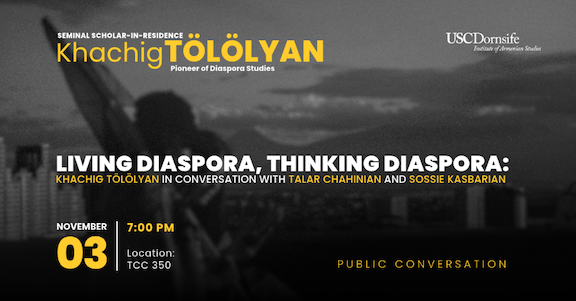
Prof. Khatchig Tölölyan to Join Drs. Talar Chahinian and Sossie Kasbarian in Conversation on Diaspora at USC
Asbarez / 4 hours ago
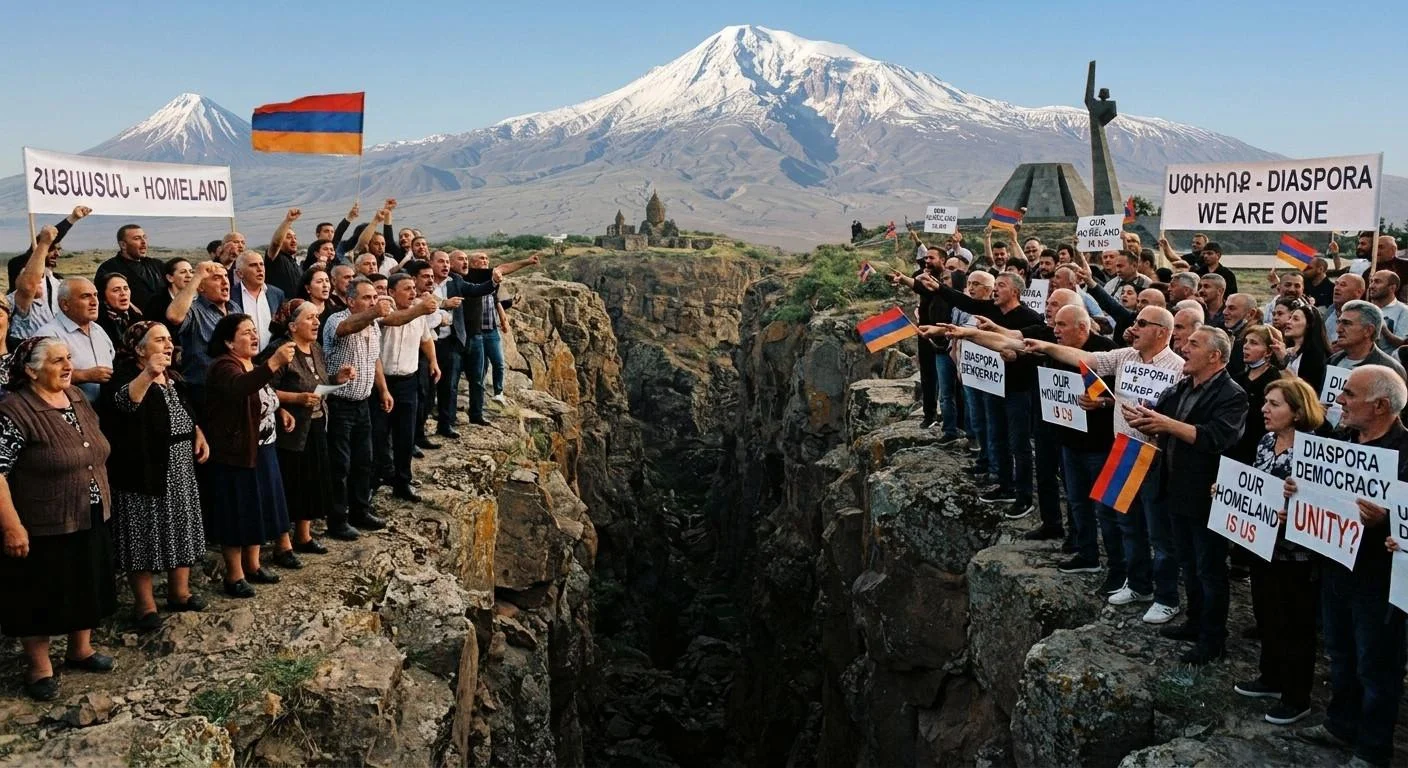
Rhetorical Unity, Practical Detachment: The Eternal Homeland-Diaspora Dance
The California Courier / 14 hours ago

«ԳՆԴԱԿԸ ԿԼՈՐ Է…»
Hairenik Weekly / Oct 26