On May 28, at the Republic Day parade, Prime Minister Nikol Pashinyan told the country that Armenia is today “a state more than ever, more independent than ever, more sovereign than ever, more secure than ever.” October tested the statement. A foreign soldier shot a mother in her own house in front of her children, and days later, the prime minister publicly questioned her decision not to wait for police. On Sept. 29, Azerbaijan’s security service notified Armenia’s National Security Service that a soldier had left his unit and might have crossed the border. Nobody told the villages. On Oct. 1, the children of Ani Avetisyan, 39, came home from school in Shaki, in Syunik, and found an armed man in the house. She called the police and went inside. According to her sister, the soldier was pointing a rifle at the children; Avetisyan tried to block the rifle with her hand, was shot in the hand and leg, lost three fingers and stabbed him with a kitchen knife. He was found after residents and law enforcement followed a blood trail to a neighboring property, where he was apparently hiding in a chicken coop. Azerbaijan’s military prosecutors opened a criminal case for leaving his unit without permission; the case makes no mention of Ani Avetisyan and her children. The next day, at a forum in Baku, Hikmet Hajiyev, President Ilham Aliyev’s foreign policy aide, said that “today there is de facto peace in the region.” On Oct. 6, Pashinyan ruled out exchanging the soldier for any of the 19 Armenians held in Baku: “Suppose we say, give us some of the captives and we’ll give you this soldier. Then when a soldier of ours crosses, whom are we going to give?” In 2023, Yerevan returned two convicted Azerbaijani soldiers, and 32 Armenians came home the same day. On Oct. 7, Pashinyan told parliament, “I understand that maternal instinct is strong, but when the police are called, you have to wait for the police to act.” Then, addressing the opposition, he said, “God forbid one of our soldiers ends up lost in Azerbaijan, because I am telling you, there are positions fifty meters apart.” On Oct. 8, he said extradition “is not being discussed, and Baku has not asked.” “If that incident had not happened, we would already have given the Azerbaijani soldier back,” Pashinyan said. On Oct. 12, he told French radio that the case “cannot in any way cast doubt on peace” and that Armenia had experienced no casualties from cross-border gunfire for two years. It remains true because a woman shot by a foreign soldier in her kitchen has been classified as a crime victim rather than a casualty of border fire. Read those statements together. The soldier is being held as a deposit: not in exchange for any of the 19 citizens held in Baku, an exchange Pashinyan rejected, but as insurance against a hypothetical Armenian conscript who might wander across a 50-meter gap next year. The state’s policy on its own hostages was written from the neighbor’s point of view before it was written from its own. Ani Avetisyan said , “Had they warned us, I would not have sent the kids to school and we would not have stayed in Shaki.” In fairness, the government has a case, and it should be stated in full. The peace is real, and it is recent; two years ago, these briefings were about gunfire. In Shaki, the state did act. Pashinyan dismissed the National Security Service deputy who oversaw the border guards. Defense Minister Suren Papikyan acknowledged “shortcomings,” and the soldier faces five charges . Pashinyan said that if convicted , the soldier must serve “at least part of the sentence” in Armenia, and the state is covering Avetisyan’s medical expenses. A government that wants a treaty signed may reasonably refuse to turn one deserter into a crisis. But the ruling Civil Contract party refused a parliamentary inquiry into peacetime military deaths and the security breach in Shaki, and the restraint runs one way. On Oct. 7, in Baku, Aliyev demanded that Armenia “create conditions for opening relevant archives” on missing Azerbaijanis as “a practical expression of commitment to peace.” The next day, Pashinyan said Armenia was ready to work with Azerbaijan on the fate of missing persons. On Oct. 8, the European Parliament voted 492-23, with 60 abstentions, to adopt a resolution calling for the release of political prisoners in Azerbaijan, including Armenian detainees. Human rights lawyer Siranush Sahakyan, who represents Armenian prisoners, reported that Bibles were confiscated and that cross-shaped tattoos had been burned off prisoners’ skin. On Oct. 15, while hosting a summit in Baku, Aliyev said “Armenia forced us into war” and claimed that Armenia had expelled 1 million Azerbaijanis. Meanwhile, the Western Azerbaijan Community, a state-backed organization chaired by Azerbaijani lawmaker Aziz Alakbarli, established a working group in September to study “Albanian” Christian heritage in Syunik, Vayots Dzor and the Sevan basin. An article by Alakbarli described Noravank as an “Albanian-Christian” site. The claim has received no official response from Yerevan. Restraint that only one side practices is not a treaty obligation. It is a hierarchy. The peace agreement, initialed in August 2025, remains unsigned. On Oct. 2, Azerbaijani presidential aide Hajiyev reiterated Baku’s demand for constitutional changes and urged Armenia to prepare its society for peace. When Hajiyev says our government must “prepare its society for peace,” he is issuing an instruction in public. In August, Prime Minister Nikol Pashinyan argued that retaining a reference to the Declaration of Independence in the new constitution would perpetuate the Karabakh movement. His party discussed the unpublished draft on Oct. 13, ahead of a Dec. 30 drafting deadline and a referendum planned for 2027. On Oct. 14, Pashinyan proposed preserving Armenia’s 29,743 square kilometers through border delimitation, territorial exchanges to eliminate enclaves and the mutual abandonment of claims concerning Karabakh and “Western Azerbaijan,” as if those claims were equivalent. He also used the Azerbaijani name Kyarki for Tigranashen. On Oct. 15, he set 2031 as his target for signing and ratifying the agreement. The government is not silent everywhere. On Oct. 1, the day Ani Avetisyan was shot, Pashinyan called for “legislative changes to end the seizure of the Church” and a commission to examine a report on the Armenian Apostolic Church prepared by the prime minister’s office. The next day, the ruling party announced plans for a parliamentary commission to examine the report. Also on Oct. 1, a Yerevan court handed opposition lawmaker Edgar Ghazaryan a suspended two-year prison sentence for his 2024 criticism of Constitutional Court judges. Silence outward, prosecution inward. Three things would make the May 28 statement true. Publish what the NSS did between Sept. 29 and Oct. 1, and let the court decide the soldier’s fate. Say what Armenia is asking for the 19 in Baku before promising a signature by 2031. And publish the constitution draft before Dec. 30, and say plainly whether the Declaration is out at Baku’s request. “More secure than ever,” the prime minister said in May. In October, a woman in Syunik lost her fingers taking a rifle off a soldier the state had been warned about. “More sovereign than ever.” In October, Pashinyan used the Azerbaijani name Kyarki when referring to Tigranashen and set 2031 as his target for signing and ratifying a peace agreement with Baku. Sovereignty is the right to call your own village by its own name without asking. A state that waits for permission has another name, and it is not that one. The post The illusion of sovereignty in Armenia appeared first on The Armenian Weekly .
Free: opens Google Translate with the text filled in. Long articles are split into numbered sections.
Premium: read the translation right here, without leaving HyeNews. Try free for 7 days.
Already in English.
The illusion of sovereignty in Armenia

Comments
No comments yet — be the first to comment.
More from The Armenian Weekly

Turkish and Azerbaijani media respond to my article on diaspora vs. Pashinyan
The Armenian Weekly / 9 hours ago

Panel discussion on the role of media in Armenia on Nov. 10
The Armenian Weekly / 9 hours ago

Interview: The Naghash Ensemble on its 11-city U.S. tour
The Armenian Weekly / 9 hours ago

ANC–International releases report on Baku’s case against Ruben Vardanyan
The Armenian Weekly / 11 hours ago
Related coverage

Ժողովրդավար Պրազիլցին․․․Լուլա Յաղթական
Hairenik Weekly / 9 hours ago
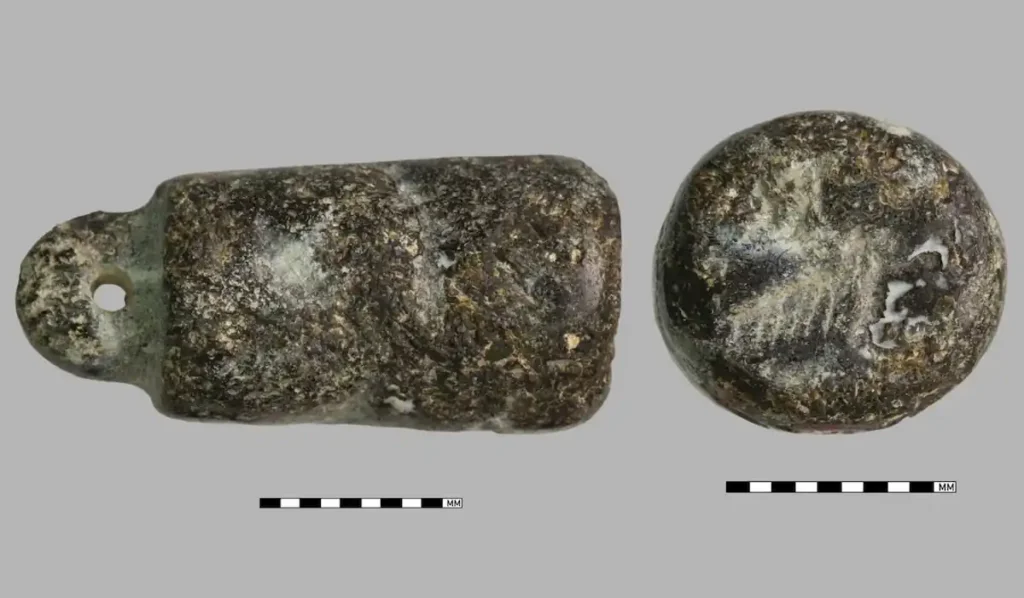
2,700-Year-Old Woman Buried with Urartian Seal Found in Armenia
The California Courier / Oct 26
Turkish and Azeri Media Outlets Respond To My Article on Diaspora vs. Pashinyan — By Harut Sassounian
The California Courier / Oct 26
The Scrutiny Aliyev Rejects
MassisPost / Oct 24