Showing in English.
5 full-article translations/day — headlines & summaries always free. Create free account for 25/day
Poison that is ignored: The stolen future of children.
Göz yumulan zehir: Çocukların gasp edilen geleceği
The danger is not limited to the nervous system alone.
Tehlike yalnızca sinir sistemiyle de sınırlı değildir.
Hormonal disruptors, which mimic or block the hormonal system, can lead to impaired mental development and early puberty even at very low doses; they can also increase the risk of obesity and diabetes.
Hormonal sistemi taklit eden ya da bloke eden hormonal sistem bozucular, çok düşük dozlarda dahi zihinsel gelişimde gerilemeye ve erken ergenliğe yol açabilir; obezite ve diyabet riskini artırabilir.
Toxic substances affecting reproductive health can damage sperm quality and testicular tissue in boys, and reduce the lifetime ovarian reserve in girls while they are still in the womb.
Üreme sağlığını etkileyen toksik maddeler ise erkek çocuklarda sperm kalitesine ve testis dokusuna zarar verebilir, kız çocuklarında yaşam boyu sahip olunacak yumurtalık rezervini henüz anne karnındayken azaltabilir.
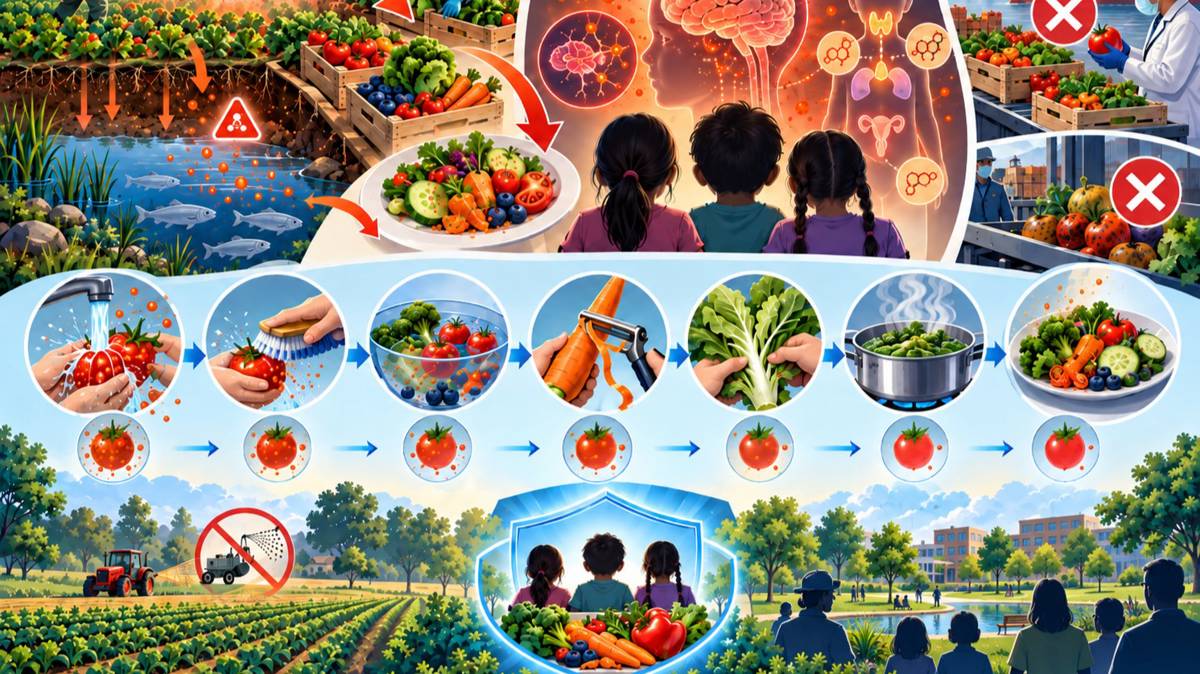
Pesticides are synthetic chemical compounds used in agricultural production, storage, or urban areas (gardens, parks, etc.)
Pestisitler, tarımsal üretimde, depolamada veya kentsel alanlarda (bahçe, park vb.)
to control, repel, or eliminate insects, fungi, weeds, rodents, and other organisms that are thought to harm plants and crops.
bitkilere ve ürünlere zarar verdiği düşünülen böcekler, mantarlar, yabancı otlar, kemirgenler ve diğer organizmaları kontrol altına almak, uzaklaştırmak ya da yok etmek amacıyla kullanılan sentetik kimyasal bileşiklerdir.
Pesticides are highly toxic chemicals.
Pestisitler toksik etkisi yüksek kimyasallardır.
These substances not only affect the targeted organism (insects, fungi, weeds, etc.)
Bu maddeler yalnızca hedef alınan organizmayı (böcek, fungus, yabani ot gibi) etkilemekle kalmaz; çevresel ortamlara sızar ya da bulaşır.
but also seep into or contaminate the environment.
Bir başka deyişle, bu maddeleri yalnızca zararlıları hedef alan birer "bitki ilacı" gibi görmek yanıltıcıdır; bir böceği ya da otu kurutmak için kullanılan zehir sadece orada kalmaz; havaya, toprağa ve içtiğimiz suya karışır.
In other words, it is misleading to view these substances as merely "plant killers" targeting pests; the poison used to kill an insect or weed doesn't just stay there; it mixes with the air, soil, and the water we drink.
Ancak en önemlisi, tabağımıza gelen gıdalardaki, özellikle de sebze ve meyvelerdeki pestisit kalıntılarıdır.
But most importantly, there are pesticide residues in the food we eat, especially fruits and vegetables.
Gıdalardaki pestisit kalıntıları ne yazık ki az ya da çok günlük diyetimizin bir parçasıdır ve maruz kalınan miktara, süreye, yaşa ve cinsiyete bağlı olarak çeşitli sağlık sorunlarına ve kansere yol açabilir.
Unfortunately, pesticide residues in food are more or less a part of our daily diet and, depending on the amount, duration, age, and gender of exposure, can lead to various health problems and cancer.
Pestisitlerin yol açtığı toksik etkilere en hassas kesim çocuklardır.
Children are the most vulnerable group to the toxic effects of pesticides.
Büyüme ve gelişme çağındaki çocukların pestisitlere maruz kalması, tiroit ve üreme hormonlarının işleyişini aksatarak kısırlık, erken ergenlik ve hormonal disfonksiyonlara zemin hazırlar.
Exposure to pesticides during the growth and development stage of children disrupts the functioning of thyroid and reproductive hormones, leading to infertility, early puberty, and hormonal dysfunction.
Hormonal disfonksiyon, endokrin sistemi oluşturan salgı bezlerinin (tiroit, hipofiz, pankreas, böbrek üstü bezleri, yumurtalıklar veya testisler) normal çalışma düzeninin bozulması; buna bağlı olarak hormonların kanda yetersiz (hipofonksiyon) veya aşırı (hiperfonksiyon) salgılanması veya üretilen hormonlara karşı hücresel düzeyde direnç/duyarsızlık gelişmesi durumudur.
Hormonal dysfunction is the disruption of the normal functioning of the endocrine glands (thyroid, pituitary, pancreas, adrenal glands, ovaries, or testes); consequently, insufficient (hypofunction) or excessive (hyperfunction) secretion of hormones in the blood, or the development of cellular resistance/insensitivity to the hormones produced.
Hormonlar vücutta metabolizma, büyüme, üreme, doku onarımı, uyku ve duygu durum gibi hayati süreçleri koordine eden kimyasal habercilerdir.
Hormones are chemical messengers that coordinate vital processes in the body such as metabolism, growth, reproduction, tissue repair, sleep, and mood.
Bu habercilerin biyokimyasal dengesinin bozulması vücutta sistemik etkiler doğurur.
Disruption of the biochemical balance of these messengers has systemic effects on the body.
(1) Hormonal sistem bozukluklarına ek olarak, bilim dünyasında son yıllarda üzerinde giderek daha geniş bir mutabakat oluşan önemli halk sağlığı tehditlerinden biri gelişimsel nörotoksisitedir.
(1) In addition to hormonal system disorders, one of the important public health threats that has gained increasing consensus in the scientific community in recent years is developmental neurotoxicity.
Erken yaşta maruz kalınan bazı nörotoksik pestisitler, maruziyetin düzeyine ve zamanına bağlı olarak gelişmekte olan beynin hücresel mimarisini bozabiliyor; çocuklarda IQ kaybı, dikkat eksikliği, hiperaktivite ve bilişsel gelişimde gerileme gibi olumsuz sonuçlarla ilişkilendiriliyor.
Some neurotoxic pesticides, when encountered at an early age, can disrupt the cellular architecture of the developing brain depending on the level and time of exposure; In children, it is associated with negative consequences such as IQ loss, attention deficit, hyperactivity, and cognitive developmental delay.
Sorumlular kim?
Who is responsible?
Tarımsal üretimde pestisit kullanımı ile gıdalardaki pestisit kalıntılarının kontrol ve denetiminden sorumlu kamu kurumu Tarım ve Orman Bakanlığı’dır.
The Ministry of Agriculture and Forestry is the public institution responsible for the control and supervision of pesticide use in agricultural production and pesticide residues in food.
Sağlık Bakanlığı ise içme ve kullanma sularındaki pestisit kalıntılarının izlenmesi ve denetlenmesinden sorumludur.
The Ministry of Health is responsible for monitoring and controlling pesticide residues in drinking and utility water.
Ancak bu kamu kurumlarının yürüttüğü resmi denetim çalışmalarının sonuçlarına kamuoyunun erişmesi mümkün olmadığından, iç pazarda tüketilen gıdalardaki ve sulardaki pestisit kalıntı yükünün gerçek boyutlarını tam olarak bilemiyoruz.
However, since the public does not have access to the results of the official inspection studies carried out by these public institutions, we do not know the true extent of the pesticide residue load in food and water consumed in the domestic market.
Buna karşın, Türkiye’den ihraç edilen ürünlerde ithalatçı ülkelerce yapılan sınır analizleri ve bu kapsamda yayımlanan bildirimler, tarımsal üretimimizdeki kalıntı sorununun boyutlarına ilişkin önemli ipuçları sunabiliyor.
On the other hand, border analyses carried out by importing countries on products exported from Turkey and the notifications published within this scope can provide important clues about the extent of the residue problem in our agricultural production.
RASFF kayıtları ne anlatıyor?
What do RASFF records tell us?
Avrupa Birliği bünyesinde uygulanan Gıda ve Yemler İçin Hızlı Alarm Sistemi ( RASFF ), üye ülkelerin iç pazarında veya sınır kontrollerinde tespit edilen gıda ve yem kaynaklı risklerin (pestisit kalıntıları, patojenler, ağır metaller vb.)
The Rapid Alert System for Food and Feed (RASFF), implemented within the European Union, is an official early warning network and information sharing system where food and feed-related risks (pesticide residues, pathogens, heavy metals, etc.)
paylaşıldığı, denetim sonuçları ile alınan önlemleri kayıt altına alan resmi bir erken uyarı ağı ve bilgi paylaşım sistemidir.
detected in the domestic market or at border controls of member countries are shared, and the inspection results and measures taken are recorded.
Bu sistemde son bir yıl içinde Türkiye ile ilgili pestisit kayıtlarını gözden geçirdim.
In this system, I reviewed pesticide records related to Turkey over the past year.
Son bir yıl içinde Türkiye'den gönderilen ürünlerde uygunsuz pestisit kalıntılarıyla ilgili RASFF sisteminde 106 bildirim var.
There are 106 notifications in the RASFF system regarding unsuitable pesticide residues in products shipped from Türkiye in the last year.
Bu bildirimlerin 79'u sınırda ret bildirimi.
79 of these notifications were border rejection notifications.
Bu bildirimler gözden geçirildiğinde, 106 adet örneğin 14 tanesinde en az bir yasaklı pestisit tespit edilmiş (yüzde 13).
Upon reviewing these notifications, at least one banned pesticide was detected in 14 of the 106 samples (13 percent).
Bir başka deyişle, yaklaşık her sekiz bildirimden biri, kullanımı yıllar önce yasaklanmış bir pestisit kalıntısı içeriyor.
In other words, approximately one in eight notifications contains residues of a pesticide whose use was banned years ago.
Bu ciddi bir sorun olarak görülmeli ama başka sorunlar da var ve onlara da bakalım.
This should be considered a serious problem, but there are other problems, and let's look at them.
Orada yasak burada serbest Avrupa Birliği'nde onayı sona ermiş ancak ülkemizde kullanımı devam eden pestisitler de var.
There are also pesticides whose approval has expired in the European Union but whose use continues in our country.
Örneğin indoxacarb ve thiophanate-methyl için Türkiye'de son kullanım tarihi 31 Aralık 2027.
For example, the expiry date for indoxacarb and thiophanate-methyl in Türkiye is December 31, 2027.
Bu pestisitleri de dikkate alarak yeniden bir değerlendirme yaparsak, 106 bildirim kaydının 25'inde Türkiye'de kullanımı yasaklanmış ya da sonlandırılma sürecinde olan en az bir pestisit tespit edildiğini görüyoruz.
If we re-evaluate, taking these pesticides into account, we see that in 25 of the 106 notification records, at least one pesticide whose use is banned or in the process of being phased out in Türkiye was detected.
Yani yaklaşık her dört bildirimden biri, ülkemizde kullanımı yasaklanmış ya da sonlandırılma sürecinde olan en az bir pestisit kalıntısı içeriyor.
In other words, approximately one in four notifications contains residues of at least one pesticide that has been banned or is in the process of being phased out in our country.
“Bir ülkede sağlığa zararlı olduğu tespit edildiği için kullanımı yasaklanan bir pestisit bir başka ülkede neden hâlâ kullanılıyor?”
Let's leave aside for now the question of "Why is a pesticide banned in one country for being harmful to health still being used in another?"
sorusunu şimdilik bir kenara bırakalım.
We will address this question at the end of the article.
Bu soruya yazının sonunda değineceğiz.
Because another problem emerges when the records are carefully reviewed.
Kayıtlar dikkatle gözden geçirildiğinde bir başka sorun daha beliriyor çünkü.
There are many pesticides in the EU whose approvals expired or were not renewed in 2020-2021.
AB'de 2020–2021 yıllarında onayı sona ermiş ya da yenilenmemiş çok sayıda pestisit var.
However, the use of these pesticides continues in our country.
Ancak bu pestisitlerin kullanımı ülkemizde devam ediyor.
In EU countries, the reasons for banning pesticides include posing a threat to human health, especially children's health, or to other living things such as bees, birds, and fish.
AB ülkelerinde yasaklama kararının alınmasında insan sağlığı, özellikle de çocuk sağlığı için ya da arılar, kuşlar ve balıklar gibi diğer canlılar için bir tehdit oluşturması gibi gerekçeler yer alıyor.
For example, demonstrating that a pesticide has one of the following characteristics can be one of the reasons for banning its use.
Örneğin bir pestisitin aşağıdaki özelliklerden birine sahip olduğunun gösterilmesi, kullanımına yasak getirilmesinin gerekçelerinden biri olabiliyor.
The dates in parentheses indicate the date the ban decision was made.
Parantez içindeki tarihler yasaklama kararının alındığı tarihi gösteriyor.
Pesticides exhibiting carcinogenic, mutagenic, and reproductive toxicity, such as thiophanate-methyl (2020), spirodiclofen (2020), and dimethomorph (2024); substances that mimic or block the hormonal system, such as prochloraz (2021); and those exhibiting developmental neurotoxicity in children, such as chlorpyrifos-methyl (2020), have had their approvals expire in the European Union.
Kanserojenlik, mutajenlik ve üreme toksisitesi gösteren pestisitler, örneğin thiophanate-methyl (2020) , spirodiclofen (2020) , dimethomorph (2024) gibi; hormonal sistemi taklit eden ya da bloke eden maddeler, örneğin prochloraz (2021) ; çocuklar için gelişimsel nörotoksisite gösterenler örneğin chlorpyrifos-methyl (2020) gibi.
Approvals for flutriafol (2021), indoxacarb (2021), and spirotetramate (2024) have also expired in the European Union.
Avrupa Birliği'nde flutriafol (2021), indoxacarb (2021) ve spirotetramat (2024) pestisitlerinin onayları da sona erdi.
These substances include those with toxic effects on reproductive health or the nervous system, or those raising scientific concerns regarding these effects.
Bu maddeler arasında üreme sağlığı veya sinir sistemi üzerinde toksik etkileri bulunan ya da bu etkiler açısından bilimsel endişelere neden olanlar var.
However, not all approvals have expired for the same reasons.
Ancak hepsinin onayı aynı gerekçeyle sona ermiş değil.
Tetramethrin, which has toxic effects on the nervous system and is suspected of being carcinogenic, does not have agricultural use approval in the EU.
Sinir sistemi üzerinde toksik etkileri bulunan ve kanserojenlik şüphesi taşıyan tetramethrinin ise AB'de tarımsal kullanım onayı bulunmuyor.
The use of the pesticides mentioned above continues, either de facto or legally, in Turkey.
Yukarıda andığımız pestisitlerin Türkiye’de kullanımı ise fiilen ya da yasal olarak devam ediyor.
These pesticides should also be banned in our country.
Bu pestisitlerin ülkemizde de kullanımının yasak olması gerekirdi.
When we reviewed all the records, including these pesticides, using the RASFF system, a rather alarming picture emerged.
RASFF sistemi üzerinde yaptığımız değerlendirmeye bu pestisitleri de dahil ederek kayıtların tümünü yeniden gözden geçirdiğimizde epeyce vahim bir tablo ortaya çıkıyor.
In 42 out of 106 records, residues of at least one pesticide that is banned, in the process of being phased out, or lacks agricultural use approval in Türkiye or the EU were detected.
106 kaydın 42'sinde, Türkiye'de ya da AB'de kullanımı yasaklanmış, sonlandırılma sürecinde olan veya tarımsal kullanım onayı bulunmayan en az bir pestisit kalıntısı tespit edilmiş.
Roughly four out of ten records contain at least one substance from this group.
Yani kabaca her on kayıttan dördü bu gruptaki maddelerden en az birini içeriyor.
This finding is based on a specific number of products exported to EU countries that were registered due to detected inappropriate pesticide residues, so it doesn't reflect the overall situation in our country.
Bu tespit AB ülkelerine ihraç edilen ve uygunsuz pestisit kalıntısı tespit edildiği için kayda giren belli sayıdaki ürüne dayandığı için ülkemiz genelindeki durumun ne olduğunu göstermiyor elbette.
However, it points to a potentially serious problem and necessitates a discussion on another issue: why pesticides banned in EU countries are still permitted in our country.
Ancak dikkate alınması gereken bir sorun olabileceğine işaret ediyor ve AB ülkelerinde kullanımı yasak olan pestisitlerin ülkemizde kullanılmasına neden hâlâ izin verildiği gibi bir başka sorunu da tartışmaya açmayı gerekli kılıyor.
Does the risk of health hazards vary from country to country?
Sağlık zararı ülkeden ülkeye değişir mi?
The continued use of a pesticide banned in one country due to its potential to cause health hazards in another cannot be explained by biological or scientific grounds.
Sağlık zararı oluşturabileceği için bir ülkede yasaklanan bir pestisitin başka bir ülkede kullanılmaya devam etmesi, biyolojik veya bilimsel gerekçelerle açıklanamaz; insan ve çocuk fizyolojisi ülkeden ülkeye farklılık göstermez ya da sınır tanımaz.
Human and child physiology does not differ or transcend borders from country to country.
Ülkeler arasındaki bu farklılığın temel nedeni, tarım kimyasalları üreten çok uluslu şirketlerin “gelişmiş” ülkelerde yasaklanan zararlı maddeleri regülasyon ve kamusal denetimi zayıf ülkelere pazarladığı zehir sömürgeciliği, küresel çifte standartlardır.
The fundamental reason for this difference between countries is the toxic colonialism and global double standards of multinational companies producing agricultural chemicals, which market harmful substances banned in "developed" countries to countries with weak regulation and public oversight.
Ancak elbette en önemlisi, çocuk sağlığını korumayı dikkate alan bir siyasal yaklaşımın yokluğu ya da yetersizliği ve bu konudaki toplumsal tartışmaların da çok cılız olmasıdır.
However, most importantly, there is the absence or inadequacy of a political approach that considers the protection of children's health, and the very weak societal debate on this issue.
Çocukları derinden etkileyen bu meselenin neden önemli olduğu hakkında kısa bir bilgilendirme yapmak gerekiyor.
A brief explanation of why this issue, which deeply affects children, is important is necessary.
Çocuklar neden bu tartışmanın odağında?
Why are children at the center of this debate?
Tarımsal zehirlerin yetişkin bedenindeki etkileriyle bir çocuğun gelişim sürecindeki etkilerini aynı teraziye koyamayız.
We cannot compare the effects of agricultural poisons on an adult body with their effects on a child's development.
Yetişkin bir bünyenin tolere edebildiği veya karaciğerinde görece zararsız formlara dönüştürebildiği bir toksik kimyasal maruziyeti, anne karnındaki bir embriyo veya hızla büyüyen bir çocuk için geriye dönüşü olmayan yapısal hasarlar anlamına gelebilir.
Exposure to a toxic chemical that an adult body can tolerate or convert into relatively harmless forms in the liver can mean irreversible structural damage for an embryo in the womb or a rapidly growing child.
Gelişimsel toksikoloji literatürünün açıklıkla ortaya koyduğu gibi, beynin ve hormonal sistemin doğru bir yapılanma ile oluşumu için yalnızca tek bir şans vardır.
As the developmental toxicology literature clearly demonstrates, there is only one chance for the brain and hormonal system to develop correctly.
Çocuk gelişiminin en hassas evrelerinde ya da kritik gelişim pencereleri olarak adlandırılan dönemlerde yaşanan bir bozulmanın tedavisi, telafisi ya da biyolojik olarak yeniden inşası mümkün olmayabilir.
Treatment, compensation, or biological reconstruction of a disruption experienced during the most sensitive stages of child development, or during periods called critical developmental windows, may not be possible.
(2) Nörogelişim bozucu bazı kimyasallar, henüz tam olgunlaşmamış kan-beyin bariyerini aşabilir ve sinir hücrelerinin birbirine bağlanma ve hedef dokulara göç etme kabiliyetini kırabilir.
(2) Some neurodevelopmental disrupting chemicals can cross the still-immature blood-brain barrier and impair the ability of nerve cells to connect to each other and migrate to target tissues.
Bu maruziyet genellikle acil servise kaldırılmayı gerektirecek akut bir tablo yaratmaz; aksine toplum genelinde ortalama birkaç puanlık sinsi IQ kayıplarıyla seyreder.
This exposure does not usually create an acute condition requiring emergency room admission; rather, it manifests as insidious IQ losses of a few points on average in the general population.
Birkaç IQ puanı düşüşü önemsiz görünebilir ancak popülasyon ölçeğinde bakıldığında birkaç puanlık bilişsel kayıp, üstün yetenekli çocuk oranında ciddi düşüşlere yol açarken, özel eğitim gereksinimi olan çocuk sayısını da misliyle artırabilir.
A drop of a few IQ points may seem insignificant, but when viewed on a population scale, a cognitive loss of a few points can lead to serious decreases in the rate of gifted children and can exponentially increase the number of children requiring special education.
Dikkat eksikliği, konsantrasyon bozukluğu ve dürtü kontrol yetersizlikleri gibi sorunlarla kendini gösterebilen bu hasar, çocuğun odaklanma, soyut düşünebilme ve kendini gerçekleştirme potansiyelini daha okul çağına gelmeden kalıcı biçimde aşındırabilir.
This damage, which can manifest itself as problems such as attention deficit, concentration disorders, and impulse control deficiencies, can permanently erode a child's potential for focus, abstract thinking, and self-actualization even before they reach school age.
Tehlike yalnızca sinir sistemiyle de sınırlı değildir.
The danger is not limited to the nervous system alone.
Hormonal sistemi taklit eden ya da bloke eden hormonal sistem bozucular, çok düşük dozlarda dahi zihinsel gelişimde gerilemeye ve erken ergenliğe yol açabilir; obezite ve diyabet riskini artırabilir.
Endocrine disruptors, which mimic or block the hormonal system, can lead to regression in mental development and early puberty even at very low doses; they can also increase the risk of obesity and diabetes.
Üreme sağlığını etkileyen toksik maddeler ise erkek çocuklarda sperm kalitesine ve testis dokusuna zarar verebilir, kız çocuklarında yaşam boyu sahip olunacak yumurtalık rezervini henüz anne karnındayken azaltabilir.
Toxic substances affecting reproductive health can damage sperm quality and testicular tissue in male children, and reduce the lifetime ovarian reserve of female children even while still in the womb.
Üstelik bazı toksik kimyasalların epigenetik mekanizmalar yoluyla sonraki kuşakları da etkileyebileceğine ilişkin deneysel bulgular var.
Furthermore, there is experimental evidence that some toxic chemicals can affect subsequent generations through epigenetic mechanisms.
Toksik kimyasalların çocuk gelişimine verdiği zararlar akademik literatürde uzun zamandır yer alan, artık geniş ölçüde kabul gören ve sıklıkla dile getirilen bilgilerdir.
The harm that toxic chemicals cause to child development has long been a widely accepted and frequently discussed topic in academic literature.
Öyleyse çocukları koruyucu bir değişim sağlamak neden bu kadar zor ya da içinde yaşadığımız sistem kimleri ya da neleri koruyor?
So why is it so difficult to bring about a protective change for children, or whom or what is the system we live in protecting?
Yasaklanması gereken kimyasalların kullanımına göz yummak teknik bir ihmal değildir.
Turning a blind eye to the use of chemicals that should be banned is not a technical oversight.
Bu tablo, çocukların akranlarıyla hayata, örneğin eğitim süreçlerine, eşit başlama şansını, ruhsal ve bedensel bütünlüğünü, en temelde ise geleceğe dair tüm yaşam hakkını olumsuz etkileyen sistematik bir çevre adaletsizliğidir.
This situation is a systematic environmental injustice that negatively affects children's equal chances of starting life on equal footing with their peers, such as in education, their mental and physical integrity, and fundamentally, their entire right to life for the future.
Ekonomik ve sosyal açıdan daha gelişmiş ülkeler halkı korumak için her zaman olmasa da ihtiyat ilkesini uygulama, yani bir toksik maddeyle ilgili sağlık zararı oluşturduğuna dair bir şüphe belirdiğinde kullanımına yasak getirme konusunda daha hızlı davranabilirken; çevre ülkelerde kamusal kararlar halk ve çocuk sağlığını değil, kitlesel-endüstriyel tarım lobilerini ve tarımsal verimi her şeyin önüne koyan bir ataletle, siyasal bir vurdumduymazlıkla şekilleniyor demek yanlış olmaz.
While economically and socially more developed countries may act more quickly to apply the precautionary principle to protect their populations – that is, to ban the use of a toxic substance when there is a suspicion that it poses a health risk – It would not be wrong to say that in developing countries, public decisions are shaped by a political indifference and apathy that prioritizes mass-industrial agricultural lobbies and agricultural yield above all else, rather than public and child health.
Ülkemizde olduğu gibi yasaklı maddelere tanınan uzun stok eritme takvimleri, hatta yasak kararı alınsa bile klorpirifos örneğinde görüldüğü gibi yıllarca yasaklanan toksik maddenin piyasada bulunabiliyor olması, şirket kârlarının toplum sağlığının önüne konduğunu gösterir.
The long stockpiling schedules for banned substances, as seen in our country, and the fact that even after a ban, toxic substances like chlorpyrifos can remain on the market for years, demonstrate that corporate profits are prioritized over public health.
İhraç ürünler sınırda denetlenirken iç pazara yönelik kontrol ve denetim hizmetlerinin yetersizliği ise gelişimsel nörotoksinlerin ve hormonal sistem bozucuların faturasını, başta savunmasız yoksul çocuklar olmak üzere tüm topluma ve ekosisteme ödeten ağır bir çevre adaletsizliğidir.
The inadequacy of control and inspection services for the domestic market, while export products are inspected at the border, is a severe environmental injustice that makes the entire society and ecosystem, especially vulnerable poor children, pay the price for developmental neurotoxins and hormonal disruptors.
Siyasal iktidar, çocukların gelişimsel hakkını gasp eden bu adaletsizliğin birincil sorumlusudur.
The political power is primarily responsible for this injustice that violates children's developmental rights.
Pestisit maruziyetini mutfakta azaltmak için ne yapmalı?
What should be done to reduce pesticide exposure in the kitchen?
Mutfakta tarımsal kimyasal kalıntılarına maruziyeti asgari düzeye indirmek, yüzeyde bulunan sistemik olmayan pestisitlerin uzaklaştırılmasını hedefleyen doğru mekanik ve fiziksel ön işlemlerle mümkündür.
Minimizing exposure to agricultural chemical residues in the kitchen is possible through proper mechanical and physical pre-treatments aimed at removing non-systemic pesticides on surfaces.
Ancak uygulanan işlemlerin gıdalardaki pestisit kalıntılarını kısmen azaltacağı, bu işlemlerin tüm pestisit kalıntılarını gideren yöntemler olmadığı dikkate alınmalıdır.
However, it should be noted that the applied processes will only partially reduce pesticide residues in food, and these processes are not methods that remove all pesticide residues.
Mutfaktaki işlemlerin etkisi pestisitin kimyasal özelliklerine ve gıdanın yapısına bağlı olarak değişmektedir.
The effectiveness of kitchen processes varies depending on the chemical properties of the pesticide and the structure of the food.
Kısmen de olsa yapılmasında yarar olan bazı öneriler aşağıda sunulmuştur.
Some suggestions that may be beneficial, at least partially, are presented below.
Sebze ve meyveleri tüketmeden önce akan bol su altında en az bir dakika boyunca ovarak ya da yumuşak bir fırça yardımıyla yıkamak, yüzeydeki kalıntı yükünü önemli ölçüde azaltıyor; özellikle sodyum bikarbonatlı (karbonatlı) suda 10–15 dakika bekletmek alkali ortam yaratarak pestisitlerin kimyasal parçalanmasını ve çözünmesini hızlandırabiliyor.
Washing vegetables and fruits under plenty of running water for at least one minute before consumption, either by rubbing or using a soft brush, significantly reduces the residue load on the surface; soaking them in sodium bicarbonate (carbonated) water for 10-15 minutes, in particular, can accelerate the chemical breakdown and dissolution of pesticides by creating an alkaline environment.
Sirkeli suyun pestisit kalıntılarını azaltmadaki etkisi ise pestisitin özelliklerine ve gıdanın türüne göre değişiyor.
The effect of vinegar water in reducing pesticide residues varies depending on the properties of the pesticide and the type of food.
Bu nedenle her gıda ve pestisit için etkili olduğu söylenemez.
Therefore, it cannot be said to be effective for every food and pesticide.
Kabuk soymak, yüzey mumu tabakasına yapışmış lipofilik aktif maddeleri uzaklaştırmada en etkili yöntemlerden biri; ancak bu işlem lif ve mikrobesin kaybına yol açabileceğinden seçici uygulanmalı.
Peeling is one of the most effective methods for removing lipophilic active substances adhering to the surface wax layer; however, this process should be applied selectively as it can lead to loss of fiber and micronutrients.
Ispanak, pazı, marul gibi yapraklı yeşilliklerde dış yaprakların ayıklanması, kök ve sap kısımlarının aşırıya kaçmadan kesilip atılması, kısa bir süre ön haşlama yapılması ve haşlama suyunun dökülmesi sistemik kimyasalların bir kısmının suya geçerek gıdadan ayrılmasını sağlıyor.
Removing the outer leaves from leafy greens such as spinach, chard, and lettuce, cutting off the roots and stems without overdoing it, blanching briefly, and discarding the blanching water helps to remove some of the systemic chemicals from the food by allowing them to pass into the water.
Bununla birlikte, dokunun içine nüfuz eden sistemik pestisitleri mutfaktaki hiçbir işlemin tamamen yok edemeyeceği unutulmamalı; bireysel mutfak pratikleri kamusal denetimin ve zehirsiz tarım politikalarının ikamesi olarak değil, yalnızca maruziyeti sınırlayıcı birer ihtiyat önlemi olarak değerlendirilmelidir.
However, it should be remembered that no process in the kitchen can completely eliminate systemic pesticides that penetrate the tissue; individual kitchen practices should be considered only as precautionary measures to limit exposure, not as a substitute for public control and non-toxic agricultural policies.
(4) Asli çözüm tarımda pestisit kullanımını azaltıcı yöntemleri ülke genelinde bir program ile yaygınlaştırmak, ekolojik tarıma destek vermek, gıdalarda ve sularda iyi planlanmış ve sonuçları da şeffaf biçimde kamuoyu ile paylaşılan kontrol ve denetim hizmetleri yürütmektir.
(4) The real solution is to spread methods to reduce pesticide use in agriculture through a nationwide program, to support ecological agriculture, and to conduct well-planned control and inspection services in food and water, the results of which are shared transparently with the public.
RASFF kayıtları ülkemizdeki pestisit kalıntısı sorununun gerçek boyutlarını göstermiyor elbette.
Of course, RASFF records do not show the true extent of the pesticide residue problem in our country.
Ancak çocukların gelişimine zarar verebilen toksik kimyasalların gıdalarda tespit ediliyor olması başlı başına ciddiye alınması gereken bir sorun.
However, the fact that toxic chemicals that can harm the development of children are detected in food is a problem that should be taken seriously in itself.
Sorumlu kamu kurumlarının gerekli önlemleri alması, toplumun da bu konuda bilgi sahibi olması ve meselenin önemini fark etmesi gerekiyor.
Responsible public institutions need to take the necessary precautions, and the public needs to be informed about this issue and realize its importance.
Çocukların sağlığını ve geleceğini koruyacak önlemleri alabildiğimiz, gerekli çalışmaları yapabildiğimiz ölçüde hâlâ bir toplum olduğumuzu varsayabiliriz.
We can only assume that we are still a society to the extent that we can take the necessary measures and carry out the necessary work to protect the health and future of children.
NOTLAR Beyan: Bu yazının hazırlanması sırasında kapak görselinin oluşturulması, bazı cümlelerin sadeleştirilmesi, tekrarların kontrol edilmesi ve metnin dil ve anlatım açısından gözden geçirilmesi amacıyla yapay zekâ aracı ChatGPT’den yararlandım.
NOTES Disclaimer: During the preparation of this article, I used the artificial intelligence tool ChatGPT to create the cover image, simplify some sentences, check for repetitions, and review the text in terms of language and expression.
Yazının düşünsel çerçevesi, bilimsel değerlendirmeleri ve dile getirilen görüşlerin sorumluluğu bana aittir.
I am responsible for the intellectual framework, scientific evaluations, and opinions expressed in this article.
( 1) Pestisitlerin yol açtığı sağlık sorunları hakkında detaylı bilgilere şu linkten erişilebilir.
(1) Detailed information about health problems caused by pesticides can be accessed at this link:
org/ (2) Grandjean P, Landrigan PJ.
org/ (2) Grandjean P, Landrigan PJ.
Neurobehavioural effects of developmental toxicity.
Neurobehavioural effects of developmental toxicity.
Lancet Neurol.
Lancet Neurol.
2014 Mar;13(3):330-8.
2014 Mar;13(3):330-8.
doi:
doi:
1016/S1474-4422(13)70278-3 (3) Gore AC, Chappell VA, Fenton SE, Flaws JA, Nadal A, Prins GS, Toppari J, Zoeller RT.
1016/S1474-4422(13)70278-3 (3) Gore AC, Chappell VA, Fenton SE, Flaws JA, Nadal A, Prins GS, Toppari J, Zoeller RT.
EDC-2: The Endocrine Society's Second Scientific Statement on Endocrine-Disrupting Chemicals.
EDC-2: The Endocrine Society's Second Scientific Statement on Endocrine-Disrupting Chemicals.
Endocr Rev.
Endocr Rev.
2015 Dec;36(6):E1-E150.
2015 Dec;36(6):E1-E150.
doi:
doi:
2015-1010.
2015-1010.
(4) Gıdalardaki pestisit maruziyetini azaltmaya yönelik mutfak uygulamaları hakkında epeyce geniş bir literatür var.
(4) There is quite a large literature on kitchen practices to reduce pesticide exposure in food.
Literatürde yer alan bilgileri derlemeye çalışıyorum ve önümüzdeki birkaç ay içinde erişime açık bir rapor ile yayımlayacağım.
I am trying to compile the information in the literature and will publish it in a publicly accessible report in the next few months.
Comments
No comments yet — be the first to comment.
More from Agos

“Tomorrow morning, we could see the headline ‘Armenia-Turkey border has opened’ in the news”
Agos / Oct 14
Defendant Ayhan Şengüler acquitted.
Agos / Oct 14
"We might see the headline 'Armenia-Türkiye border opened' on the news tomorrow morning."
Agos / Oct 14

"We are on a historic battle line."
Agos / Oct 14
Related coverage
No related coverage from other sources yet.