Showing in English.
5 full-article translations/day — headlines & summaries always free. Create free account for 25/day
French high school protests: What's wrong with these kids?
Fransa lise protestoları: Bu çocukların derdi ne?
The police's increasingly harsh stance against children aged 14-17 in front of high schools has shifted the initial debate about "impossibilities in education" to another level.
Polisin, 14-17 yaş aralığındaki çocuklara karşı liselerin önünde giderek daha sertleşir hale gelmesi, eylemlerin başlangıcındaki “eğitimde imkânsızlıklar” tartışmasını başka bir noktaya taşıdı.
This is because the students were now facing not only the Ministry of Education but also security forces intervening on the grounds of public order.
Çünkü öğrencilerin karşısında artık yalnızca Eğitim Bakanlığı değil, kamu düzeni gerekçesiyle müdahale eden güvenlik güçleri de vardı.
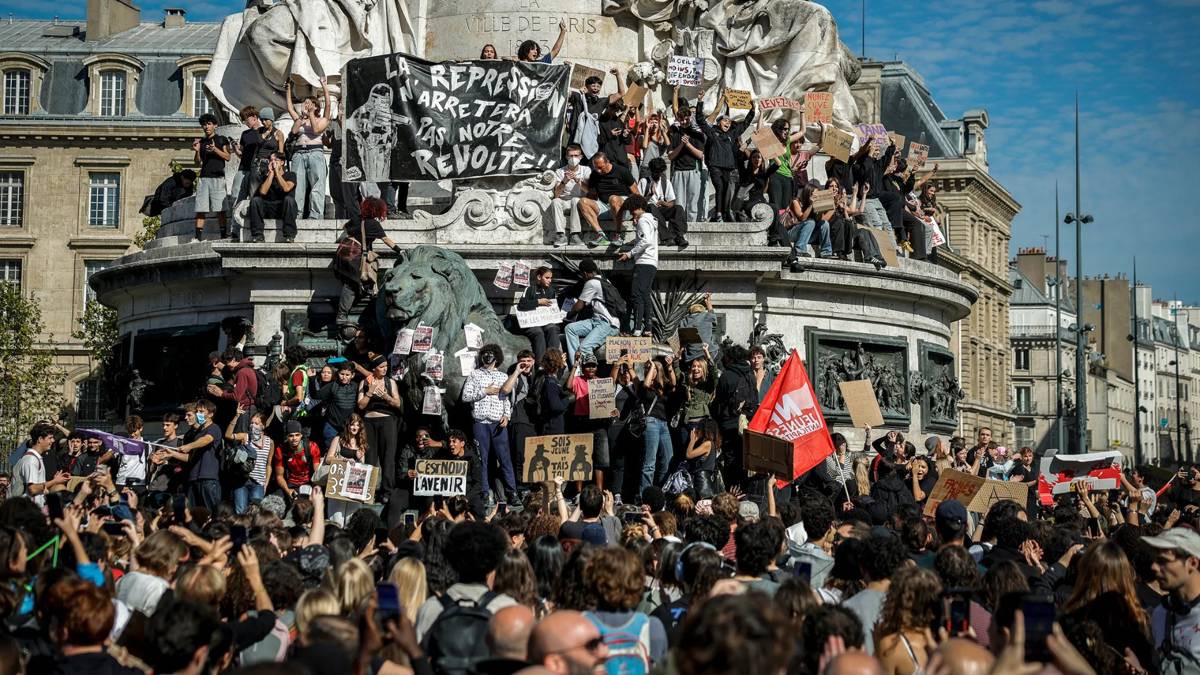
According to figures provided by the organizing High School Student Union (Union syndicale lycéenne - USL), 100,000 people participated in the high school students' protest on October 6, 2026, in Paris, and a total of 450,000 across France.
Organizatör Lise Öğrenci Birliği Sendikası'nın (Union syndicale lycéenne -USL) verdiği rakamlara göre, 6 Ekim 26’da düzenlenen liselilerin protestosuna Paris’te 100 bin, Fransa genelinde toplam 450 bin kişi katıldı.
What are these children's grievances?
Bu çocukların derdi ne?
The protests, which began on September 21 at Saint-Exupéry High School in Créteil, southeast of Paris, quickly spread to Saint-Denis in northern Paris, the Île-de-France region, and then to different cities across the country.
21 Eylül’de Paris’in güneydoğusunda Créteil ilçesindeki Saint-Exupéry Lisesi’nde başlayan liselilerin eylemleri, hemen ardından Paris'in kuzeyindeki Saint-Denis’ ye, Île-de-France bölgesine, ardından ülkenin farklı kentlerine yayıldı.
By October 1, the movement affected approximately 500 high schools nationwide.
Hareket 1 Ekim’de ülke genelinde yaklaşık 500 liseyi etkiledi.
The main complaints of the students include teacher shortages, missed classes, the use of temporary teachers instead of permanent ones, a lack of school nurses, educational consultants, and psychological counselors, uninsulated and poorly maintained school buildings that are cold in winter and very hot in summer, overcrowded classrooms, demanding curricula being hampered by inadequate educational materials, and discriminatory and selective practices in the university entrance system.
Öğretmen eksikliği, boş geçen dersler, kadro öğretmen atamak yerine geçici öğretmen görevlendirmeleri, okul hemşiresi, eğitim danışmanı, psikolojik danışman eksikliği, kışın soğuk yazın çok sıcak olan yalıtımsız ve bakımsız okul binaları, kalabalık sınıflar, ağır ders programlarının yetersiz eğitim malzemeleriyle geçiştirilmesi ve üniversiteye geçiş sistemindeki ayrımcı, seçici uygulamalar, öğrencilerin başlıca şikâyetlerini oluşturuyor.
These complaints are not new.
Bu şikâyetler yeni değil.
These are the most frequently complained-about problems of the last 12 years, issues that parents, students, and school administrations have repeatedly appealed to the Ministry of Education and the government for, but without success.
Son 12 yılın en çok şikâyet edilen, veliler, öğrenciler ve okul yönetimlerinin sayısız defa Eğitim Bakanlığı’na, hükûmetlere başvurduğu ama olumlu bir sonuç alamadığı sorunlar.
However, the "Parcoursup" method, first implemented in 2018, has exacerbated these problems.
Ama ilk olarak 2018 yılında uygulanmaya başlanan “Parcoursup” yöntemi bu sorunlara tuz biber ekti.
The old system for university placement, APB (Admission Post-Bac), involved high school seniors entering their preferences into the system, which used a Gale-Shapley matching algorithm for placement: students would submit a list based on their high school years and graduation exam grades, specifying the faculties they wished to attend.
Tuz ve biber Üniversiteye yerleşmekte eski sistem olan APB'de (Admission Post-Bac), lise son sınıf öğrencileri tercihlerini sisteme girer, sistem Gale-Shapley eşleştirme algoritmasını kullanarak yerleştirme gerçekleştirirdi: Yani öğrenci lise öğrenim yıllarının ve bitirme imtihanı notlarının ışığında sisteme bir liste sunar ve yerleşmek istediği fakülteleri belirtir.
It operated in rounds where the proposing party would offer a choice, and the other party would temporarily accept it, waiting for a better offer (delayed acceptance).
Teklif eden tarafın önerdiği, karşı tarafın ise geçici olarak kabul edip daha iyi bir teklif gelene kadar beklettiği (ertelenmiş kabul) turlarla çalışırdı.
The advantage of this was that it always provided the best possible match and a much greater chance of achieving the ideal outcome for the student making the offer.
Bunun avantajı her zaman en uygun olan bir eşleşme sonucuna ulaşma ve teklif yapan öğrenci için en ideal sonuca ulaşma imkânının çok fazla olmasıydı.
In 2018, however, the national digital platform Parcoursup was introduced for university and higher education applications.
2018’de ise üniversite ve yükseköğretime başvurular için ulusal dijital platform Parcoursup’a geçildi.
Those living in disadvantaged areas believed that one of the main reasons for this was the insufficient funds in the state budget for "everyone," especially those living in suburbs, and the policy of selecting educated white-collar workers from within the elite group.
Dezavantajlı bölgelerde yaşayanlar, bunun en önemli nedenlerinden birinin, devlet bütçesinde “herkese” özellikle de banliyölerde yaşayanlara yeterli para olmaması ve beyaz yakalı eğitimlileri elit grup içinden seçme politikası olduğuna inandı.
They argued that this method aimed to keep the rural population rural, the worker the worker, and the rich the rich.
Bu yöntemin, köylünün köylü, işçinin işçi, zenginin de zengin kalmasını hedeflediğini söyledi.
The state, on the other hand, defended the switch to the Parcoursup platform due to problems such as the high volume of applications and the need for lottery-based selections in some areas.
Devlet ise sistemde yaşanan yoğunluk ve bazı bölümlerde kura çekilmek zorunda kalınması gibi sorunlar nedeniyle Parcoursup platformuna geçildiğini savundu.
Even in the first year of Parcoursup, it became clear that this method meant social and cultural inequality, and that the digital selections were based on an algorithm and information discrimination.
Parcoursup’a geçildiği ilk yıl daha, bu yöntemin sosyal ve kültürel eşitsizlik demek olduğu üstelik dijital seçmelerin bir algoritma üzerinden ve bilgi ayrımcılığı temelinde oluştuğu ortaya çıktı.
For Parcoursup, which has a highly complex operation, students from highly educated families who were familiar with the system (having high cultural capital) knew which strategies to use when making choices and how to write the required cover letters.
Oldukça karmaşık bir işleyişe sahip olan Parcoursup için, ailesi yüksek eğitimli olan ve sistemi iyi bilen (kültürel sermayesi yüksek) öğrenciler, hangi stratejilerle tercih yapacaklarını ve zorunlu motivasyon mektuplarını nasıl yazacaklarını biliyorlardı.
Children from low-income or immigrant families, however, were often left alone and without guidance in this process.
Dar gelirli veya göçmen ailelerin çocukları ise bu süreçte çoğunlukla yalnız ve rehberlikten yoksun kaldılar.
Even if they were the best student in their high school, the digital algorithm excluded them from the selection process because they did not understand how it worked.
Kendi lisesinin en iyi öğrencisi olsa bile, sistemin işleyişini bilmediği için dijital algoritma onu seçim dışında bıraktı.
Another algorithm applied in Parcoursup, labeling students based on their high school affiliation, was the "High School Label": Universities use local algorithms when selecting students.
Liseden etiketlenenler Parcoursup ’ta uygulanan bir diğer algoritma "Lise Etiketi" oldu: Üniversiteler öğrenci seçerken yerel algoritmalar kullanıyor.
Since the success and reputation of the high school the candidate graduated from is one of the criteria in these algorithms, successful students from disadvantaged high schools were placed behind even less successful students from prestigious high schools.
Bu algoritmalarda, adayın mezun olduğu lisenin başarı düzeyi ve saygınlığı kriterlerden biri olduğundan, dezavantajlı liselerin başarılı öğrencileri prestijli liselerin daha başarısız öğrencilerinin bile gerisinde kaldılar.
In addition to this problem, it was not fully explained which university eliminated a student based on which criteria.
Bu soruna ek olarak hangi üniversitenin, hangi kriterlere göre öğrenciyi elediği tam olarak açıklanamadı.
This was deemed contrary to the principle of "transparency."
Bu durum "şeffaflık" ilkesine aykırı bulundu.
It was also criticized in Senate reports under the title "Combating the Discriminatory Effects of Parcoursup" for deepening discrimination (based on origin, name, or place of residence).
Ayrımcılığı (köken, isim veya yaşanılan yer bazlı) derinleştirdiği gerekçesiyle “Parcoursup'un ayrımcı etkilerine karşı mücadele” başlığıyla Senato raporlarında da eleştirildi.
As a result, the fact that thousands of students from disadvantaged areas have been left without a place in universities and forced into employment outside of universities by the state since 2018 has become undeniable.
Sonuç olarak 2018’den beri dezavantajlı bölgelerde yaşayan binlerce öğrencinin açıkta kalması ve devlet eliyle üniversitelerin dışında bir istihdama zorlanması, artık saklanamaz hale geldi.
For example, according to 2024 data, approximately 85,000 students with good grades were unable to gain acceptance from any higher education institution at the end of the process.
Örneğin, 2024 yılı verilerine göre 85 bin civarında öğrenci notları iyi olduğu halde, süreç sonunda herhangi bir yükseköğretim kurumundan kabul alamadı.
According to data published by the Ministry of National Education in 2026, following the main admissions phase of Parcoursup, 126,652 out of 872,000 applications are still awaiting university offers.
2026’da Parcoursup ana kabul aşamasının ardından, Millî Eğitim Bakanlığı tarafından yayınlanan verilere göre, 872 bin başvurudan
The Parcoursup process spans months.
652'si hala üniversite teklifi bekliyor.
Students are forced to constantly monitor updated "waiting lists."
Parcoursup'ta süreç aylara yayılıyor.
Many students wait under intense psychological pressure, enduring the ordeal of the waiting list, without knowing whether they have been accepted until the end of summer, or even until September when universities open.
Öğrenciler sürekli güncellenen "yedek listeleri" takip etmek zorunda.
In short, critics argue that Parcoursup is not a fair guidance tool as claimed, but rather an elitist selection mechanism that serves to conceal the shortage of places in universities due to budget constraints and favors children from wealthy families.
Birçok öğrenci yaz bitene, hatta Eylül ayı gelip üniversiteler açılana kadar kabul edilip edilmediğini bilmeden yoğun bir psikolojik baskı altında Yedek Liste işkencesi içinde bekler.
Ryad Rani Schroeyers, the head of the High School Student Union, also lists the pressure created by Parcoursup among the fundamental problems.
Özetle eleştirmenler, Parcoursup'un iddia edildiği gibi adil bir yönlendirme aracı değil, bütçe yetersizliğinden dolayı üniversitelerdeki kontenjan açığını gizlemeye yarayan ve zengin aile çocuklarını kayıran elitist bir eleme mekanizması olduğunu savunuyor.
There's no budget for education, but there is for defense: In 2026, the defense budget is
Lise Öğrenci Birliği Sendika Başkanı Ryad Rani Schroeyers de Parcoursup’un yarattığı baskıyı temel sorunlar arasında sıralıyor.
15 billion, while the school education budget is
Eğitime yok, savunmaya var 2026'da savunma bütçesi 57,15 milyar, okul eğitimi bütçesi 64,5 milyar avro.
5 billion.
Savunmaya yapılan yıllık ilave yaklaşık 6,7 milyar, okul eğitimine yapılan ilave ise yalnızca 200 milyon avro.
The annual additional funding allocated to defense is approximately
Yani savunmadaki ek artış, eğitimdeki artışın 33 katı.
7 billion euros, while the additional funding for school education is only 200 million euros.
Ancak öğrencilerin itirazı yalnızca eğitim bütçesinin miktarına değil, devletin kaynaklarını nasıl ve kimin için kullandığına yönelik.
This means the additional increase in defense is 33 times greater than the increase in education.
Bir tarafta yıllardır çözülemeyen eğitim sorunları ve giderek sertleşen bir eleme sistemi, diğer tarafta hızla büyüyen savunma bütçesi var.
However, the students' objection is not only to the amount of the education budget, but also to how and for whom the state uses its resources.
Dolayısıyla 21 Eylül’de Saint-Exupéry Lisesi’nde başlayan hareketi yalnızca öğrencilerin kendi okullarındaki eksikliklere karşı bir protestosu olarak okumak yetersiz kalıyor.
On one hand, there are long-standing educational problems and an increasingly strict selection system; on the other hand, there is a rapidly growing defense budget.
Liselilerin sorduğu soru giderek daha politik bir nitelik kazanıyor: Devlet, eğitim için kaynak bulunamadığını söylerken başka alanlarda milyarlarca avroluk yeni kaynakları nasıl yaratabiliyor?
Therefore, interpreting the movement that began at Saint-Exupéry High School on September 21st solely as a protest by students against deficiencies in their own schools is insufficient.
Hareketin ülke çapında yüzlerce liseye yayılmasıyla birlikte hükûmetin önündeki mesele de mecburen değişti.
The question posed by the high school students is increasingly taking on a political character: How can the state create billions of euros in new resources in other areas while claiming it cannot find resources for education?
Artık karşısında yalnızca daha fazla öğretmen, daha iyi okul binaları ya da Parcoursup’un değiştirilmesini isteyen öğrenciler değil; kamusal kaynakların dağılımını ve eğitim politikasının kendisini sorgulayan kitlesel bir öğrenci hareketi oldu.
As the movement spread to hundreds of high schools nationwide, the issue facing the government has inevitably changed.
Çocukların karşısına dikilen "polis" Saint Denis Belediye Başkanı Bally Bagayoko Hükûmet, liseli temsilcileri çağırıp dinlemek yerine başka bir tercih yaptı.
Now, it faces not only students demanding more teachers, better school buildings, or changes to the Parcoursup program, but also a mass student movement questioning the distribution of public resources and education policy itself.
Ve tam bu noktada eğitim politikasıyla başlayan tartışmaya başka bir kurumu dahil etti: Polis teşkilatı.
The "police" confronting the children: Saint Denis Mayor Bally Bagayoko.
29 Eylül 2026’da Paris'in kuzeyindeki Saint-Denis'de, Paul Éluard lise öğrencilerinin okul girişindeki toplantısına, çevik kuvvet orantısız şekilde müdahale etti.
Instead of calling and listening to high school student representatives, the government made another choice.
, çevik kuvvet ve öğrenciler arasına kendini siper edip polis şiddetini engellemeye çalıştı.
And at this point, it introduced another institution into the debate that began with education policy: the police force.
Sağ ve merkez siyasete göre, öğrenci olaylarının arkasında Boyun Eğmeyen Fransa Partisi'nin (LFI) ve partinin popüler cumhurbaşkanı adayı Jean-Luc Mélenchon'un yönlendirmesi var.
On September 29, 2026, in Saint-Denis, north of Paris, riot police disproportionately intervened in a meeting of Paul Éluard high school students at the school entrance.
Kamuoyu yoklamaları, Fransa'daki 18-24 yaş grubunun yaklaşık yüzde 40'ının Mélenchon'a destek verdiğini ve bu desteğin özellikle yüksek göçmen nüfusuna sahip kalabalık kent banliyölerinde yoğunlaştığını gösteriyor.
A police officer tried to prevent police violence by shielding himself between the riot police and the students.
Bu bölgelerde Mélenchon'un Fransa'nın değişen nüfus yapısı ve kültürel çeşitliliğini anlatmak için kullandığı “yeni Fransa” ve “kreolleşme” söylemleri büyük ilgi görüyor.
According to right-wing and centrist politicians, the student protests were orchestrated by the Unyielding France Party (LFI) and its popular presidential candidate, Jean-Luc Mélenchon.
Liselilerin karşısında güvenlik Polisin, 14-17 yaş aralığındaki çocuklara karşı liselerin önünde giderek daha sertleşir hale gelmesi, eylemlerin başlangıcındaki “eğitimde imkânsızlıklar” tartışmasını başka bir noktaya taşıdı.
Public opinion polls show that approximately 40% of the 18-24 age group in France supports Mélenchon, and this support is particularly concentrated in crowded urban suburbs with high immigrant populations.
Çünkü öğrencilerin karşısında artık yalnızca Eğitim Bakanlığı değil, kamu düzeni gerekçesiyle müdahale eden güvenlik güçleri de vardı.
In these regions, Mélenchon's discourse of "new France" and "creolization," which he used to describe France's changing demographic structure and cultural diversity, is attracting considerable attention.
Böylece tartışma, “Fransa eğitime ne kadar para ayırıyor?”
The increasing harshness of the police against 14-17 year-olds in front of high schools has shifted the initial debate on "impossibilities in education" to another level.
sorusunun sınırlarını aştı.
Because now, students are facing not only the Ministry of Education but also security forces intervening on the grounds of public order.
Ve devlet, öğrencilerin dile getirdiği yapısal sorunlara kaynak ve müzakere yoluyla mı, yoksa güvenlik politikalarıyla mı karşılık veriyor sorusuna dönüştü.
Thus, the discussion has moved beyond the question of "How much money does France allocate to education?"
Veliler, öğretmenler, üniversiteler, Hakimler Birliği Sendikası, İşçi sendikaları, sivil toplum örgütleri liselilerin yanında yer aldılar.
and has transformed into a question of whether the state is responding to the structural problems raised by the students through resources and negotiation, or through security policies.
Bu sorun Fransa açısından yeni değil.
Parents, teachers, universities, the Judges' Union, labor unions, and civil society organizations have sided with the high school students.
Lise ve üniversite öğrencilerinin sokak hareketleri ülkenin yakın siyasi tarihinde defalarca hükûmetleri zorlayan toplumsal hareketlerin parçası oldu.
This problem is not new for France.
Ancak 2026 eylemlerini farklılaştıran, eğitim sistemindeki günlük sorunların aynı anda bütçe tercihleri, Parcoursup’un yarattığı eşitsizlik tartışması ve gençlerin gelecek kaygısıyla birleşmesidir.
High school and university student street movements have repeatedly been part of social movements that have challenged governments throughout the country's recent political history.
Bu nedenle liselerin önündeki orantısız polis müdahaleleri yalnızca bir “asayiş” meselesi değil.
However, what differentiates the 2026 protests is the simultaneous convergence of daily problems within the education system, budgetary choices, the inequality debate sparked by Parcoursup, and young people's anxieties about the future.
Öğrencilerin eğitim hakkı için başlattığı bir hareketin hangi noktada kamu düzeni sorunu olarak lanse edildiği sorusunu da beraberinde getiriyor.
Therefore, the disproportionate police interventions in front of high schools are not merely a matter of "public order."
Mesele, devletin hangi gençlerin hangi eğitime erişeceğine, eğitim sistemindeki eşitsizliğe ne kadar kaynak ayıracağına ve bu politikalara itiraz eden gençlerle nasıl ilişki kuracağına dair tercihleridir.
They also raise the question of how a movement initiated by students for their right to education can be portrayed as a public order issue.
The issue concerns the state's choices regarding which young people will have access to which education, how much resources it will allocate to addressing inequality in the education system, and how it will engage with young people who protest these policies.
Comments
No comments yet — be the first to comment.
More from Agos


Related coverage
No related coverage from other sources yet.