Showing in English.
5 full-article translations/day — headlines & summaries always free. Create free account for 25/day
"Armenian Lyre - Sounds and Echoes" — Presentation of a book dedicated to Armenian poetry
«Հայկական քնար-հնչիւններ եւ արձագանգներ» — Հայկական բանաստեղծութեան նուիրուած գիրքի ներկայացում
The 23rd volume in the series of Greek-language publications of the “Armenika” periodical is a unique milestone in the collection of volumes published by the editorial staff.
«Արմենիքա» պարբերաթերթի յունալեզու հրատարակութիւններու շարքի 23-րդ գիրքը իւրայատուկ հանգրուան մըն է, խմբագրութեան կողմէ մէջ լոյս տեսած հատորներու հաւաքածոյին մէջ։
With Ara Mangoyan’s meticulous and authentic translation, it offers Greek and Armenian readers […]
Արա Մանկոյեանի բծախնդիր եւ հարազատ թարգմանութեամբ, յոյն եւ հայ ընթերցողներուն կը […]
The 23rd book in the series of Greek-language publications of the “Armenika” periodical is a unique milestone in the collection of volumes published by the editorial staff.
«Արմենիքա» պարբերաթերթի յունալեզու հրատարակութիւններու շարքի 23-րդ գիրքը իւրայատուկ հանգրուան մըն է, խմբագրութեան կողմէ մէջ լոյս տեսած հատորներու հաւաքածոյին մէջ։
With Ara Mangoyan’s meticulous and authentic translation, Greek and Armenian readers are presented with well-known works of Armenian poetry, which constitute distinctive gems of the treasures of Armenian literature, enriching the invaluable treasury of the Armenian language and writing.
Արա Մանկոյեանի բծախնդիր եւ հարազատ թարգմանութեամբ, յոյն եւ հայ ընթերցողներուն կը հրամցուին հայկական բանաստեղծական աշխարհի հանրածանօթ ստեղծագործութիւններ, որոնք կը կազմեն հայ գրականութեան գանձերու յատկանշական գոհարներ, հարստացնելով հայ լեզուի ու գիրի անգնահատելի գանձարանը։
All the compatriots and Greek acquaintances of the periodical who were present at the presentation of the book “Armenian Lyric-Sounds and Echoes” certainly enjoyed the delicate charms of our poetic world, feeling and living in each word the Armenian creative spirit, the power of the Armenian land and the lyrical beauty, in the enchanting atmosphere of speech and music.
Բոլոր այն հայրենակիցները եւ պարբերաթերթի յոյն ծանօթները, որոնք ներկայ եղան «Հայկական քնար-հնչիւններ եւ արձագանգներ» գիրքի ներկայացումին, վստահաբար ըմբոշխնեցին մեր բանաստեղծական աշխարհի նրբահիւս մանեակները, զգալով ու ապրելով իւրաքանչիւր բառին մէջէն հայ ստեղծագործ ոգին, հայ հողին զօրութիւնը եւ քնարական գեղեցկութիւնը, խօսքի ու երաժշտութեան հոգեզմայլ մթնոլորտին մէջ։
On the evening of Sunday, October 4, 2026, in the “Zakarian-Sarajian” halls of the “Zavarian” center in Gokinia, the poetic performance was honored with their presence by the Ambassador of the Republic of Armenia, the Prelate, the clergy, the Chairman of the National Executive, the ARF Central Committee member, members of the unions, representatives of the Greek-Armenian press, as well as dozens of attendees.
Կիրակի, 4 Հոկտեմբեր 2026-ի երեկոյեան, Գոքինիոյ «Զաւարեան» կեդրոնի «Զաքարեան-Սարաճեան» սրահներուն մէջ, բանաստեղծական ելոյթը իրենց ներկայութեամբ պատուեցին Հայաստանի Հանրապետութեան դեսպանը, Առաջնորդ Սրբազան հայրը, հոգեւոր դասը, Ազգային վարչութեան ատենապետը,
Arta Jelalian gave the opening speech, reflecting on the published book, emphasizing the joy it brings to the return of poetry, which is the highest art of language and invites us to search beyond the visible and obvious.
Դ.
The speaker presented Armenian poetry as an inexhaustible source of inspiration that continues to open new paths for the reader and the creator.
Կեդր.
He also pointed out the renewal and strengthening of Greek-Armenian ties through the significant contribution of Ara Mangoyan.
Կոմիտէի անդամը, միութիւններու անդամներ, յունահայ մամուլի ներկայացուցիչներ, ինչպէս նաեւ տասնեակ ներկաներ։
The moderator emphasized and emphasized with appreciation that Ara Mangoyan’s translation work represents a double contribution.
Բացման խօսքով հանդէս եկաւ Արտա Ճէլալեան, որ անդրադարձաւ հրատարակուած գիրքին մասին, շեշտելով անոր ընդմէջէն բանաստեղծութեան վերադարձին բերած ուրախութիւնը՝ բանաստեղծութիւն, որ լեզուի բարձրագոյն արուեստն է եւ մեզ կը հրաւիրէ որոնելու տեսանելիէն ու ակներեւէն անդին։
On the one hand, he brings his contribution to the general world of literature, creating new bridges, new encounters and new searches through poetry and language.
Խօսողը ներկայացուց հայ բանաստեղծութիւնը՝ իբրեւ ներշնչման անսպառ աղբիւր, որ կը շարունակէ նոր ուղիներ բանալ ընթերցողին ու ստեղծագործողին առջեւ։
On the other hand, his work is a valuable contribution to the Greek-Armenian community, because it renews and deepens the ties that exist between Greek and Armenian cultures through Armenian culture and poetry.
Ան նաեւ մատնանշեց յոյն-հայկական կապերու վերանորոգումն ու ամրապնդումը՝ Արա Մանկոյեանի նշանակալից ներդրումին միջոցաւ։
The first speaker in the book presentation series was philologist Tonia Kafetsaki, who stated that “Armenian Lyre” is a collection that reveals the inextricable link that exists between the history and poetry of the Armenian people.
Հանդիսավարը ընդգծեց ու գնահատանքով շեշտեց, թէ Արա Մանկոյեանի թարգմանական աշխատանքը կը ներկայացնէ կրկնակի նպաստ։
It takes the reader to the origins of Armenian poetry, from ancient centuries to the modern period.
Մէկ կողմէն՝ ան իր ներդրումը կը բերէ գրականութեան ընդհանրական աշխարհին, բանաստեղծութեան եւ լեզուի միջոցով ստեղծելով նոր կամուրջներ, նոր հանդիպումներ ու նոր որոնումներ։
The collection especially emphasizes the themes of national awakening, persecution, the Armenian Genocide, and the loss of the homeland.
Միւս կողմէ՝ անոր աշխատանքը կը հանդիսանայ արժէքաւոր նպաստ մը յունահայ համայնքին, որովհետեւ հայ մշակոյթի ու բանաստեղծութեան միջոցով կը նորոգէ ու կը խորացնէ յունական ու հայկական մշակոյթներու միջեւ գոյութիւն ունեցող կապերը։
The poets’ works testify to how historical tragedy has been transformed into literary memory and art.
Գիրքի ներկայացումներու շարքին, առաջին խօսողը եղաւ բանասէր Թոնիա Քաֆեծաքի, որ յայտնեց, թէ «Հայկական քնար»ը հայ ժողովուրդի պատմութեան եւ բանաստեղծութեան միջեւ գոյութիւն ունեցող անքակտելի կապը բացայայտող ժողովածու մըն է։
Ararat, the homeland, migration, longing and the hope of return become powerful symbols of Armenian identity.
Ան ընթերցողը կը տանի հայ բանաստեղծութեան ակունքները՝ հին դարերէն մինչեւ ժամանակակից շրջանը։
Armenian poets join their personal voices to the collective voice of the people, becoming the exponents of their pain and demands.
Ժողովածուին մէջ յատկապէս կը շեշտուին ազգային զարթօնքի, հալածանքներու, Հայոց ցեղասպանութեան եւ հայրենիքի կորուստի նիւթերը։
At the same time, the collection demonstrates the influence and response of Armenian culture on foreign writers, from Byron to William Watson.
Բանաստեղծներու ստեղծագործութիւնները կը վկայեն, թէ ինչպէս պատմական ողբերգութիւնը վերածուած է գրական յիշողութեան ու արուեստի։
This whole thing turns into a literary testimony emphasizing the historical and spiritual face of the Armenian people.
Արարատը, հայրենիքը, գաղթը, կարօտը եւ վերադարձի յոյսը կը դառնան հայ ինքնութեան հզօր խորհրդանիշեր։
The next speaker, philologist Tespina Demertsi, noted in her analysis that in the depths of Armenian poetry, a people is revealed that did not lose its spiritual strength even in the midst of historical suffering.
Հայ բանաստեղծները իրենց անձնական ձայնը կը միացնեն ժողովուրդի հաւաքական ձայնին՝ դառնալով անոր ցաւին եւ պահանջներուն արտայայտիչները։
Nature, parents, ancestors, teachers and the homeland are presented as values that bind generations together.
Միաժամանակ, ժողովածուն կը ցուցադրէ հայ մշակոյթի ազդեցութիւնը եւ արձագանգը օտար գրողներու մօտ՝ Պայրընէն մինչեւ Ուիլիըմ Ուաթսըն։
Poets derive wisdom from everyday life and formulate the moral principles of human living.
Այս ամբողջութիւնը կը վերածուի հայ ժողովուրդի պատմական ու հոգեւոր դիմագիծը ընդգծող գրական վկայութեան։
Humility, humanity, camaraderie, justice, sacrifice and responsibility become universal messages.
Յաջորդ խօսողը, բանասէր Տեսփինա Տեմերծի իր վերլուծութեան մէջ նկատեց, թէ հայ բանաստեղծութեան խորքին մէջ կը բացայայտուի ժողովուրդ մը, որ պատմական տառապանքներուն մէջէն իսկ չկորսնցուց իր հոգեկան ուժը։
Lyrical images of love, friendship and family relationships complete that spiritual world.
Բնութիւնը, ծնողները, նախնիները, ուսուցիչները եւ հայրենիքը կը ներկայանան իբրեւ սերունդներ իրարու կապող արժէքներ։
Armenian poetry is not only a reflection of the history of the Armenian people, but also a testament to preserving human dignity.
Բանաստեղծները կեանքի առօրեայ երեւոյթներէն կը քաղեն իմաստութիւն եւ կը ձեւակերպեն մարդուն ապրելու բարոյական սկզբունքները։
Translator Ara Mangoyan expressed his feelings with a mixture of expressions, noting: “The same well-known writer Nikos Kazantzakis, visiting Armenia in 1928, wrote that Armenia is not a country, but a spiritual fortress, a rock, where the human soul has fortified itself so that the eastern flood would not engulf it.
Խոնարհութիւնը, մարդասիրութիւնը, ընկերասիրութիւնը, արդարութիւնը, զոհողութիւնն ու պատասխանատուութիւնը կը դառնան համամարդկային պատգամներ։
I tried, to the best of my ability, to reflect the image of that fortress with this translation work.
Սիրոյ, բարեկամութեան եւ ընտանեկան յարաբերութիւններու քնարական պատկերները կ՚ամբողջացնեն այդ հոգեւոր աշխարհը։
Because we, Greek-Armenians, love Greece as our natural homeland, with its Olympus and high mountains, but in our souls also lives the sweet and dreamy Armenia, with captive Ararat and Sipan, free Aragats and the enchanting Lake Sevan.
Հայկական բանաստեղծութիւնը միայն հայ ժողովուրդի պատմութեան արտացոլումը չէ, այլեւ մարդուն արժանապատուութիւնը պահպանելու վկայութիւն։
When we say Armenia, we do not understand only today's narrow borders, but from Cilicia to Lake Van and Ani, from the Republic of Armenia to Artsakh.
Յուզումնախառն արտայայտութիւններով հանդէս եկաւ թարգմանիչ Արա Մանկոյեան, որ նշեց.
We carry this country within us, even if we have never seen it.
«Յոյն հանրածանօթ գրող Նիքոս Քազանծաքիս 1928-ին Հայաստան այցելելով, գրած էր, թէ Հայաստան երկիր չէ, այլ հոգեւոր ամրոց, ժայռ մը, ուր մարդկային հոգին ամրացաւ՝ որպէսզի արեւելեան ջրհեղեղը չկլանէ զայն։
We are proud of it, with its passions and successes, its pain and joy, which emanate from the lines of poets.
Այդ ամրոցին պատկերը փորձեցի, ըստ կարողութեանս, ցոլացնել այս թարգմանական աշխատանքով։
Armenian poetry is a gurgling stream that carries the fragrance of its ancestors, the power of a people that has known how to turn pain into song and darkness into light.
Որովհետեւ մենք՝ յունահայերս, Յունաստանը կը սիրենք իբրեւ բնական հայրենիք՝ իր Օղիմպոսով եւ բարձր լեռներով, բայց մեր հոգիին մէջ կ՚ապրի նաեւ քաղցր ու երազուն Հայաստանը՝ գերի Արարատով ու Սիփանով, ազատ Արագածով ու Սեւանի հմայիչ լիճով։
For someone who grew up between two languages and two histories, this poem is the imprint of a long inner journey.
Հայաստան ըսելով չենք հասկնար միայն այսօրուան նեղ սահմանները, այլ Կիլիկիայէն մինչեւ Վանի լիճն ու Անին, Հայաստանի Հանրապետութենէն մինչեւ Արցախ։
By translating, I tried not to simply transfer words, but to convey feelings, and to allow one of my homelands to speak in the language of another.”
Այս երկիրը կը կրենք մեր մէջ, նոյնիսկ եթէ երբեք չենք տեսած.
Ara Mankoyan expressed his gratitude to the editorial staff of “Armenika” magazine and all those who made the publication of the book a reality, as well as to the speakers and artists who were part of the program of the performance.
հպարտ ենք անով՝ իր կիրքերով ու յաջողութիւններով, իր ցաւով եւ ուրախութեամբ, որ կը բխին բանաստեղծներուն տողերէն։
Summing up his speech, he said: “I wish that the book “Armenian Lyre-Sounds and Echoes” will be a warm, intimate voice that will allow us to listen to Armenian sorrow, reminding us, at the foot of Ararat and under the blue sky of Greece, that poetry is a beacon that shows the way to the soul.”
Հայ բանաստեղծութիւնը կարկաչուն առուակ մըն է, որ նախնիներու բուրմունքը կը կրէ, ժողովուրդի մը ուժը, որ գիտցած է ցաւը երգի եւ խաւարը լոյսի վերածել։
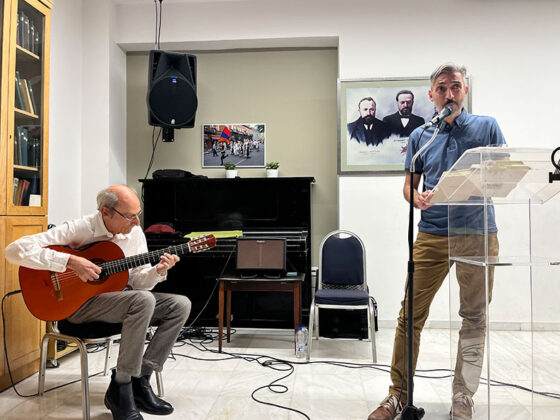
The reading of the poems by actor Tigran Abrahamyan, accompanied by the guitar by Armenian artist Lefteris Khavoutsa, was a wonderful expression of speech and music.
Երկու լեզուներու եւ երկու պատմութիւններու միջեւ մեծցած մարդու մը համար, այս ծաղկաքաղը երկար ներքին ճամբորդութեան դրոշմն է.
Abrahamyan, with his unique style, sense of gentleness, and mastery of the ups and downs of his voice, expressed the spirit of the poetic gems and the mystery that emanates from them.
թարգմանելով փորձեցի ոչ թէ պարզապէս բառեր փոխադրել, այլ զգացում փոխանցել, եւ թոյլ տալ, որ իմ մէկ հայրենիքս խօսի միւսին լեզուով»։
The Armenian melodies of Khavutsas became the decorative voice of the spoken word, connecting the gentle and sweet delicacy of the Armenian melody to the recitation.
Արա Մանկոյեան շնորհակալութիւն յայտնեց «Արմենիքա» պարբերաթերթի խմբագրութեան եւ բոլոր այն դերակատարներուն, որոնք իրականութիւն դարձուցին գիրքի հրատարակութիւնը, ինչպէս նաեւ՝ ելոյթի յայտագիրին մէջ մաս կազմած խօսողներուն եւ արուեստագէտներուն։
At the end of the performance, all those present congratulated the translator and the organizers of the performance with immense satisfaction, then Ara Mankoyan signed copies of the book.
Իր խօսքը ամփոփելով ան յայտնեց.
1 Guestbook 3 The post “Armenian Lyre-Sounds and Echoes” — Presentation of a Book Dedicated to Armenian Poetry appeared first on Azat Or .
«Կը մաղթեմ որ «Հայկական քնար-հնչիւններ եւ արձագանգներ» գիրքը ըլլայ ջերմ, մտերիմ ձայն մը, որ թոյլ պիտի տայ ունկնդրելու հայկական կսկիծը, յիշեցնելով՝ Արարատին փեշերուն եւ Յունաստանի կապուտան երկնքին տակ, թէ բանաստեղծութիւնը փարոս մըն է, որ ճամբան ցոյց կու տայ հոգիին»։
Խօսքի ու երաժշտութեան հիասքանչ արտայայտութիւն մը հանդիսացաւ դերասան Տիգրան Աբրահամեանի կողմէ բանաստեղծութիւններու ընթերցումը, կիթառի ընկերակցութեամբ հայազգի արուեստագէտ Լեֆթերիս Խավուծասի։
Աբրահամեան իւրայատուկ ոճով, մեղմութեան զգացումով ու ձայնի ելեւէջներու վարպետութեամբ, արտայայտեց բանաստեղծական գոհարներու ոգին ու անոնց մէջէն ցայտող խորհուրդը։
Խավուծասի հայկական նուագները զարդարուն ձայնը եղան լսուող խօսքին, ասմունքին կապելով հայկական մեղեդիի մեղմանուշ նրբութիւնը։
Ելոյթի աւարտին, բոլոր ներկաները անհուն գոհունակութեամբ շնորհաւորեցին թարգմանիչը եւ ելոյթի կազմակերպիչները, ապա Արա Մանկոյեան մակագրեց գիրքի օրինակներ։
1 Հիւրատետր 3 The post «Հայկական քնար-հնչիւններ եւ արձագանգներ» — Հայկական բանաստեղծութեան նուիրուած գիրքի ներկայացում appeared first on Azat Or .
Comments
No comments yet — be the first to comment.
More from Azat Or
"Flag" Leader: Win or lose in time
Azat Or / 15 hours ago
Diocesan Report Meeting and Reception in Honor of His Holiness the Prelate
Azat Or / 18 hours ago

Homenetmen 3×3 Basketball Tournament in Memory of Garbis Janikian
Azat Or / 18 hours ago
CALL OF DEACONS - The spirit of service, from generation to generation
Azat Or / 18 hours ago