Translate this article

Showing in English.

5 full-article translations/day — headlines & summaries always free. Create free account for 25/day

Artsakh & Karabakh

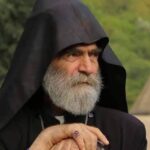
Barkev Martirosyan warned of the danger facing the Armenian heritage of Artsakh and called for Interpol's intervention.

Barkev Martirosyan advirtió sobre el peligro que enfrenta el patrimonio armenio de Artsaj y pidió la intervención de Interpol

Archbishop Barkev Martirosyan, the long-serving primate of the Diocese of Artsakh, called on the international community and Interpol authorities to investigate the origin, ecclesiastical affiliation, and [...]

El arzobispo Barkev Martirosyan, el histórico primado de la Diócesis de Artsaj, realizó un llamado a la comunidad internacional y a las autoridades de Interpol para que investiguen el origen, la pertenencia eclesiástica y las [...]

Read more >>

Leer más >>

Barkev Martirosyan warned of the danger facing the Armenian heritage of Artsakh and called for Interpol's intervention.

Archbishop Barkev Martirosyan, the long-serving primate of the Diocese of Artsakh, called on the international community and Interpol authorities to investigate the origin, ecclesiastical affiliation, and circumstances surrounding the removal of khachkars and frescoes from the Dadivank Monastery, given the risk to Artsakh's Armenian religious and cultural heritage.

El arzobispo Barkev Martirosyan, el histórico primado de la Diócesis de Artsaj, realizó un llamado a la comunidad internacional y a las autoridades de Interpol para que investiguen el origen, la pertenencia eclesiástica y las circunstancias del traslado de jachkares y frescos del monasterio de Dadivank, ante el riesgo que atraviesa el patrimonio religioso y cultural armenio de Artsaj.

The statement, dated October 2, was released after the head of Azerbaijan's State Service for the Protection of Cultural Heritage confirmed that information regarding the pieces removed from Dadivank had been sent to Interpol in October 2025 and added to its database of stolen artworks.

El pronunciamiento, fechado el 2 de octubre, fue difundido luego de que el responsable del Servicio Estatal para la Protección del Patrimonio Cultural de Azerbaiyán afirmara que la información sobre piezas trasladadas desde Dadivank había sido enviada en octubre de 2025 a Interpol e incorporada a su base de datos de obras de arte robadas.

Martirosyan maintained that the inclusion of the objects in this database cannot be presented as a court ruling determining their ownership and asked the Interpol president and secretary general to examine "the entire case." “It is necessary to determine the origin of these religious objects, their ecclesiastical affiliation, the circumstances under which they were moved, and the risks to their preservation,” he stated. According to the archbishop, without such an investigation, a definitive legal assessment of the relocation of the artifacts cannot be made.

Martirosyan sostuvo que la inclusión de los objetos en esa base de datos no puede ser presentada como una resolución judicial que determine su propiedad y pidió al presidente de Interpol y a su secretario general que examinen “todo el caso”. “Es necesario determinar el origen de estos objetos religiosos, su pertenencia eclesiástica, las circunstancias en que fueron trasladados y los riesgos existentes para su conservación”, señaló. Para el arzobispo, sin una investigación de esas características no puede realizarse una valoración jurídica definitiva sobre el traslado de las piezas.

A large part of the appeal is dedicated to establishing the Armenian character of Dadivank. Martirosyan cites the testimony of the 13th-century historian Kirakós Gandzaketsi, the Armenian inscriptions preserved in the monastery, and the khachkars dated 1283. He also notes that one of the main churches in the complex was built in 1214 by Arzu Khatún in memory of her husband and children, and links the monastery's origins to Saint Dadi and the early spread of Christianity in Artsakh.

Gran parte del llamamiento está dedicada a fundamentar el carácter armenio de Dadivank. Martirosyan recurre al testimonio del historiador del siglo XIII Kirakós Gandzaketsí, a las inscripciones armenias conservadas en el monasterio y a los jachkares fechados en 1283. También recuerda que una de las principales iglesias del complejo fue construida en 1214 por Arzu Jatún en memoria de su esposo y sus hijos, y vincula los orígenes del monasterio con San Dadí y con la temprana expansión del cristianismo en Artsaj.

The former primate of Artsakh places the situation in Dadivank within a broader context: the risk, he warns, faced by Armenian churches, monasteries, cemeteries, and other monuments that came under Azerbaijani control after the exodus of the Armenian population from Artsakh in 2023. In this regard, he recalls European Parliament resolutions that have warned about the destruction of Armenian cultural heritage and specifically mentions the case of the medieval cemetery of Djulfa in Nakhchivan, where thousands of khachkars were destroyed. “The experience of Djulfa does not allow us to wait until another monument is reduced to rubble,” he stated.

El ex primado de Artsaj coloca la situación de Dadivank dentro de un problema más amplio: el riesgo que, según advierte, enfrentan las iglesias, monasterios, cementerios y otros monumentos armenios que quedaron bajo control azerbaiyano después del éxodo de la población armenia de Artsaj en 2023. En ese sentido, recuerda resoluciones del Parlamento Europeo que alertaron sobre la destrucción del patrimonio cultural armenio y menciona especialmente el caso del cementerio medieval de Djulfa, en Najicheván, donde miles de jachkares fueron destruidos. “La experiencia de Djulfa no nos permite esperar hasta que otro monumento se convierta en un montón de piedras”, afirmó.

Martirosyan also cites the decision of the International Court of Justice of December 7, 2021, which ordered Azerbaijan to take measures to prevent and punish acts of vandalism and desecration against Armenian cultural heritage. Based on this precedent, he argues that the debate on the relocation of religious artifacts from Dadivank cannot be separated from the security and conservation of this heritage.

Martirosyan también cita la decisión de la Corte Internacional de Justicia del 7 de diciembre de 2021, que ordenó a Azerbaiyán adoptar medidas para prevenir y sancionar actos de vandalismo y profanación contra el patrimonio cultural armenio. A partir de ese antecedente, sostiene que el debate sobre el traslado de objetos religiosos de Dadivank no puede separarse de las condiciones de seguridad y conservación de ese patrimonio.

The archbishop also addressed his appeal to UNESCO and the European Parliament, urging them to launch an independent investigation into the state of Armenian monuments, including on-site inspections, inventories, and publication of the findings.

El arzobispo dirigió además su pedido a la UNESCO y al Parlamento Europeo, a quienes reclamó que impulsen una investigación independiente sobre el estado de los monumentos armenios, con inspecciones sobre el terreno, inventarios y publicación de los resultados.

The appeal also includes the Pope, the World Council of Churches, leaders of Christian churches, the President of the United States, the U.S. Congress and Senate, and the European Union. Martirosyan asked them to intervene in the preservation of the sanctuaries and to examine the existing documentation on the state of Armenian heritage.

El llamamiento incluye también al Papa, al Consejo Mundial de Iglesias, a los líderes de las iglesias cristianas, al presidente de los Estados Unidos, al Congreso y al Senado norteamericanos y a la Unión Europea. Martirosyan les pidió que intervengan en la preservación de los santuarios y examinen la documentación existente sobre la situación del patrimonio armenio.

Elsewhere in the text, he recalled his own experience during the 1991-1994 war, when, he recounted, he witnessed attacks against Armenian religious sites, including the monasteries of Amaras and Gandzasar. “We saw it with our own eyes,” he said, referring to the damage suffered by the monuments during those years and the subsequent restoration work.

En otro tramo del texto recordó su propia experiencia durante la guerra de 1991-1994, cuando, según relató, fue testigo de ataques contra sitios religiosos armenios, entre ellos los monasterios de Amaras y Gandzasar. “Los vimos con nuestros propios ojos”, señaló al referirse a los daños sufridos por los monumentos durante aquellos años y a los posteriores trabajos de restauración.

Barkev Martirosyan was Primate of the Diocese of Artsakh from March 1989 to February 2021. In his message, he recalled that when he assumed this responsibility, numerous churches and monasteries remained closed or destroyed, and that one of his main tasks was to revive religious life after decades of Soviet persecution. “It wasn’t simply a matter of rebuilding buildings. We were rebuilding the spiritual memory of Artsakh,” he stated.

Barkev Martirosyan fue primado de la Diócesis de Artsaj desde marzo de 1989 hasta febrero de 2021. En su mensaje recordó que, cuando asumió esa responsabilidad, numerosas iglesias y monasterios permanecían cerrados o destruidos y que una de sus principales tareas fue recuperar la vida religiosa después de décadas de persecución soviética. “No se trataba simplemente de reconstruir edificios. Estábamos reconstruyendo la memoria espiritual de Artsaj”, expresó.

Martirosyan currently resides in the United States, where he traveled for health reasons with the authorization of the Catholicos of All Armenians. However, he dedicated the final part of his statement to reaffirming his connection to Artsakh. “A person may distance themselves from their land, but the land does not always distance itself from the person,” he wrote, adding, “As long as I live, with all my soul and my whole being, I will remain united to my beloved Artsakh, to its churches and monasteries, to its mountains and its people. Artsakh is not a past chapter of my life. It is my service, my indelible memory, my life, and the meaning of my life.”

Actualmente Martirosyan reside en los Estados Unidos, adonde viajó por razones de salud con la autorización del Catholicós de Todos los Armenios. Sin embargo, dedicó el tramo final del comunicado a reafirmar su vínculo con Artsaj. “Una persona puede alejarse de su tierra, pero la tierra no siempre se aleja de la persona”, escribió y agregó: “Mientras viva, con toda mi alma y todo mi ser seguiré unido a mi querido Artsaj, a sus iglesias y monasterios, a sus montañas y a su gente. Artsaj no es para mí una etapa pasada de mi vida. Es mi servicio, mi memoria imborrable, mi vida y el sentido de mi vida”.

“To sin against the truth is to sin against God. The time has come to put an end to this aggressive and false policy,” Archbishop Barkev Martirosyan concluded.

“Pecar contra la verdad significa pecar contra Dios. Ha llegado el momento de poner fin a esta política agresiva y falsa”, cerró el arzobispo Barkev Martirosyan.

Comments

Sign in to join the conversation.

No comments yet — be the first to comment.

We use cookies for analytics and advertising, including Google ad partners who may use cookies to serve personalized ads. See our Privacy Policy for details and your choices.