Showing in English.
5 full-article translations/day — headlines & summaries always free. Create free account for 25/day
The Senate honored the Armenian Apostolic Church for over a century of social, spiritual, and community work in Argentina
El Senado distinguió a la Iglesia Apostólica Armenia por más de un siglo de labor social, espiritual y comunitaria en Argentina
The Honorable Senate of the Nation presented a Diploma of Honor to the Armenian Apostolic Church on Thursday, October 1st, in recognition of its social, spiritual, and community work carried out for more than a year. [...]
El Honorable Senado de la Nación entregó el jueves 1º de octubre un Diploma de Honor a la Iglesia Apostólica Armenia en reconocimiento a su labor social, espiritual y comunitaria desarrollada durante más de un [...]
Read more >>
Leer más >>
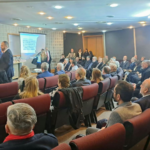
On Thursday, October 1st, the Honorable Senate of the Nation presented a Diploma of Honor to the Armenian Apostolic Church in recognition of its social, spiritual, and community work carried out for over a century in the Republic of Argentina. The ceremony, presided over by the Senate's Provisional President, Bartolomé Abdala, was attended by the Primate Bishop for Argentina and Chile, Monsignor Aren Shaheenian, and the Vice President of the Administrative Institution of the Armenian Church, Carlos Manoukian.
El Honorable Senado de la Nación entregó el jueves 1º de octubre un Diploma de Honor a la Iglesia Apostólica Armenia en reconocimiento a su labor social, espiritual y comunitaria desarrollada durante más de un siglo en la República Argentina, en una ceremonia encabezada por el presidente provisional del Senado, Bartolomé Abdala, en la que la distinción fue recibida por el obispo primado para Argentina y Chile, monseñor Aren Shaheenian, y el vicepresidente de Institución Administrativa de la Iglesia Armenia, Carlos Manoukian.
During the ceremony, Shaheenian and Manoukian delivered speeches highlighting the role of the Armenian Apostolic Church for the Armenian people, its history in Argentina, and its service to the community.
Durante el acto, Shaheenian y Manoukian brindaron discursos en los que se refirieron al papel de la Iglesia Apostólica Armenia para el pueblo armenio, su trayectoria en Argentina y su presencia al servicio de la comunidad.
"It is an honor for me to be here today in the Honorable Senate of the Argentine Nation, representing my Armenian community, to receive such a distinguished Diploma of Honor," Shaheenian stated at the beginning of his remarks.
“Es para mí un honor estar hoy en este recinto del Honorable Senado de la Nación Argentina, representando a mi comunidad Armenia, para recibir tan distinguido Diploma de Honor”, expresó Shaheenian al comenzar su intervención.
The Primate traced the history of the Armenian Apostolic Church, from its origins linked to the preaching of the apostles Thaddeus and Bartholomew and the adoption of Christianity by Armenia at the beginning of the 4th century, to its role in education, culture, and the preservation of Armenian identity.
El Primado realizó un recorrido por la historia de la Iglesia Apostólica Armenia, desde sus orígenes vinculados con la predicación de los apóstoles Tadeo y Bartolomé y la adopción del cristianismo por Armenia a comienzos del siglo IV, hasta su papel en la educación, la cultura y la preservación de la identidad armenia.
“The Armenian Apostolic Church is not merely an institution of the past, nor simply a space intended to preserve traditions. It is a living, missionary, and evangelizing Church; a Church that, from its origins, received the mission to proclaim Jesus Christ, transmit the faith, and serve humanity,” he stated.
“La Iglesia Apostólica Armenia no es solamente una institución del pasado, ni únicamente un espacio destinado a conservar tradiciones. Es una Iglesia viva, misionera y evangelizadora; una Iglesia que, desde sus orígenes, recibió la misión de anunciar a Jesucristo, transmitir la fe y servir al ser humano”, sostuvo.
Shaheenian also highlighted the Church’s role in education and recalled the creation of the Armenian alphabet by Saint Mesrob Mashdots, which enabled the translation of the Holy Scriptures and fostered the intellectual and spiritual development of Armenians.
Shaheenian destacó también el papel de la Iglesia en la educación y recordó la creación del alfabeto armenio por San Mesrob Mashdots, que permitió traducir las Sagradas Escrituras y desarrollar la vida intelectual y espiritual armenia.
“The school and the church walked hand in hand. The church shaped the heart; the school nurtured the mind; the family transmitted life. In this way, a community was formed that was able to preserve its faith and culture even in the most difficult moments of its history,” he said.
“La escuela y la iglesia caminaron juntas. La iglesia formaba el corazón; la escuela formaba la inteligencia; la familia transmitía la vida. Así se constituyó una comunidad capaz de conservar su fe y su cultura incluso en los momentos más difíciles de su historia”, expresó.
Part of his speech was dedicated to the arrival of Armenians in Argentina at the beginning of the 20th century and the establishment of the first community institutions.
Una parte de su discurso estuvo dedicada a la llegada de los armenios a Argentina a comienzos del siglo XX y a la construcción de las primeras instituciones comunitarias.
“When the Armenian people arrived in Argentina, they brought with them a history of pain, but also a profound hope,” he noted. “At the beginning of the 20th century, the Armenians who settled in our country began to organize their communities, their parishes, their educational, cultural, and mutual aid institutions. The Church was one of the first spaces for encounter and the reconstruction of community life.”
“Cuando el pueblo armenio llegó a la Argentina, trajo consigo una historia de dolor, pero también una profunda esperanza”, señaló. “A comienzos del siglo XX, los armenios que se establecieron en nuestro país comenzaron a organizar sus comunidades, sus parroquias, sus instituciones educativas, culturales y de ayuda mutua. La Iglesia fue uno de los primeros espacios de encuentro y de reconstrucción de la vida comunitaria”.
The Primate emphasized that Armenian churches have since fulfilled functions that went beyond religious practice and have also become spaces for education, remembrance, solidarity, and cultural transmission.
El Primado destacó que los templos armenios cumplieron desde entonces funciones que excedieron la práctica religiosa y se convirtieron también en espacios de educación, memoria, solidaridad y transmisión cultural.
“In Argentina, the church was not only a temple for celebrating the Divine Liturgy. It was also a home, a school, a place of remembrance, a house of solidarity, and a space where families could reconnect with their language, their culture, and their faith,” he stated.
“En la Argentina, la iglesia no fue únicamente un templo para celebrar la Divina Liturgia. Fue también un hogar, una escuela, un lugar de memoria, una casa de solidaridad y un espacio donde las familias podían reencontrarse con su idioma, su cultura y su fe”, afirmó.
Shaheenian noted that the Diocese of the Armenian Apostolic Church for Argentina continues this work today, together with its parishes, schools, cultural institutions, and service organizations.
Shaheenian señaló que actualmente la Diócesis de la Iglesia Apostólica Armenia para Argentina continúa esa tarea junto con sus parroquias, escuelas, instituciones culturales y organizaciones de servicio.
“The Armenian Apostolic Church is part of Argentine society and has a responsibility to all the Argentine people. We are heirs to a unique tradition, but we are called to offer its fruits for the common good,” he expressed.
“La Iglesia Apostólica Armenia forma parte de la sociedad argentina y tiene una responsabilidad ante todo el pueblo argentino. Somos herederos de una tradición particular, pero estamos llamados a ofrecer sus frutos al bien común”, expresó.
He also highlighted the bond built with Argentina by generations of Armenians who found a new home in the country. “Their presence in Argentina is also a sign of gratitude: gratitude to this land that welcomed our parents and grandparents, and a commitment to the society we share,” he affirmed.
También destacó el vínculo construido con Argentina por las generaciones de armenios que encontraron en el país un nuevo hogar. “Su presencia en la Argentina es también un signo de gratitud: gratitud a esta tierra que recibió a nuestros padres y abuelos, y compromiso con la sociedad que compartimos”, afirmó.
The ceremony also included the participation of Gustavo Guillermé, president of the World Congress for Intercultural and Interreligious Dialogue “A Path to Peace,” the organization that promotes these types of awards.
La ceremonia contó además con la participación de Gustavo Guillermé, presidente del Congreso Mundial de Diálogo Intercultural e Interreligioso “Una Senda hacia la Paz”, entidad que impulsa este tipo de reconocimientos.
During the event, an institutional video about the history and activities of the Armenian Apostolic Church in Argentina was shown. National authorities, senators, the head of consular affairs for the Republic of Armenia, Ruzanna Azroyan, members of the diplomatic corps, representatives of Armenian community institutions, and special guests also participated. As part of the ceremony, the Senate also presented additional Diplomas of Honor.
Durante el acto se proyectó un video institucional sobre la historia y las actividades de la Iglesia Apostólica Armenia en Argentina. También participaron autoridades nacionales, senadores, la encargada de asuntos consulares de la República de Armenia, Ruzanna Azroyan, integrantes del cuerpo diplomático, representantes de instituciones de la comunidad armenia e invitados especiales. En el marco de la ceremonia, el Senado entregó además otros Diplomas de Honor.
Comments
No comments yet — be the first to comment.
More from Diario Armenia
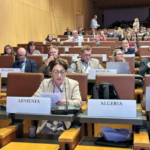
Lilit Galstyan called on the OSCE to send a humanitarian mission to visit Armenian prisoners in Azerbaijan and offered to travel to Baku personally.
Diario Armenia / 4 hours ago

The Kaiané Armenian Dance Ensemble will celebrate its 66th anniversary at the El Nacional Theater with a tribute to the composer Khachatur Avetisyan
Diario Armenia / 4 hours ago
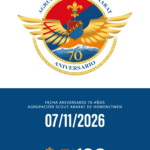
The Ararat Scout Group of Homenetmen will celebrate its 70th anniversary with a meeting of generations in Buenos Aires
Diario Armenia / 4 hours ago

The Armenian School of Vicente López will celebrate its 60th anniversary with a gathering of the educational community.
Diario Armenia / 5 hours ago
Related coverage
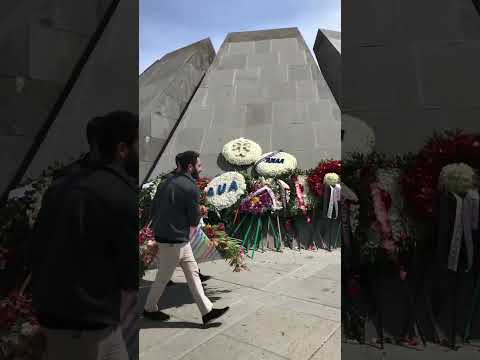
Armenia recycles genocide remains to create paper and organic fertilizer
Soy Armenio / Apr 27

Yesterday, the Ottoman Empire. Today, Türkiye and Azerbaijan - A discussion on the Armenian genocide.
Nor Sevan / May 4, 2021

Message from Alberto Fernández on the 106th anniversary of the Armenian genocide
Nor Sevan / Apr 25, 2021

"Bearing witness in difficult times", Rodolfo Walsh - 03/24/1977
Nor Sevan / Mar 25, 2021