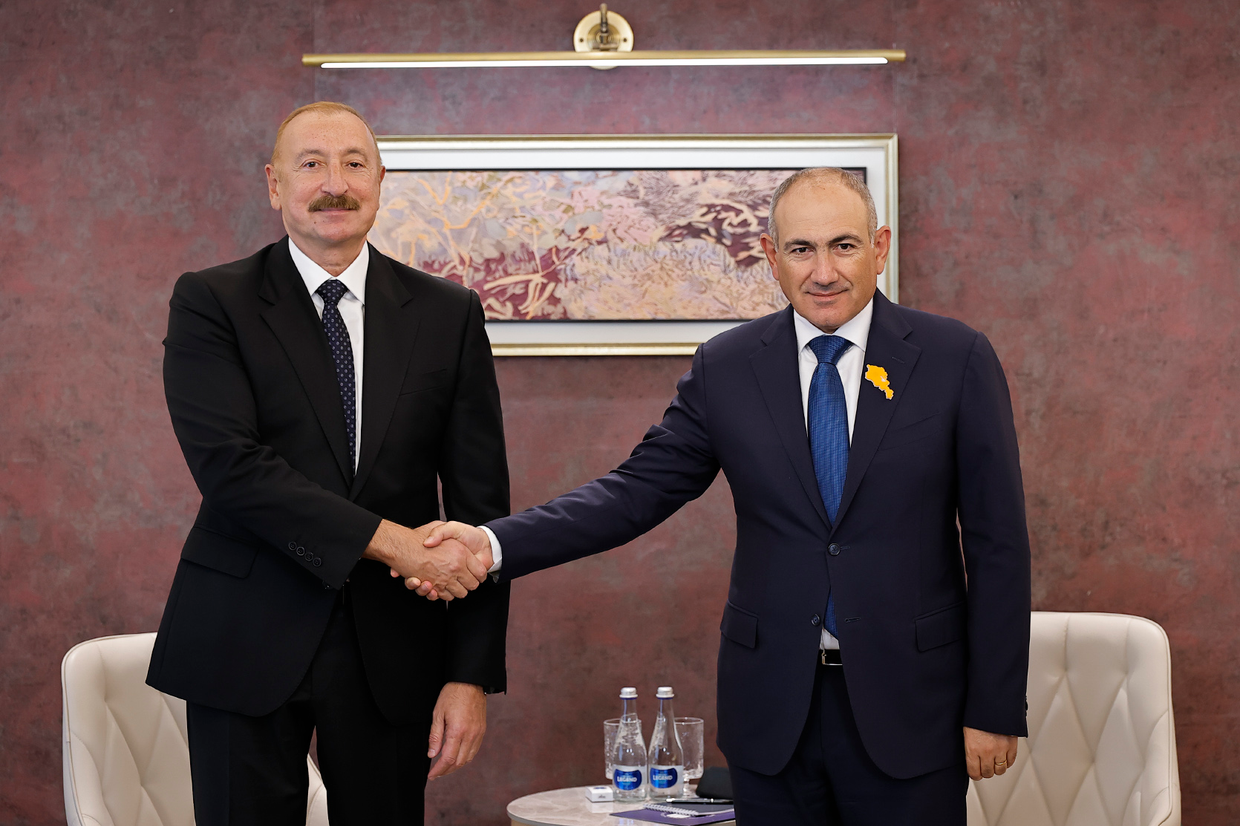
Armenia–Azerbaijan ConflictPashinyan calls Baku’s portrayal of history ‘unacceptable’ as Azerbaijan doubles downby Arshaluys Barseghyan and Rafig Shahbazov• 4 min readShare▲Armenian Prime Minister Nikol Pashinyan (right) and Azerbaijani President Ilham Aliyev (left) meet on the sidelines of Shanghai Cooperation Organisation (SCO) summit in Kyrgyzstan on 31 August 2026. Official photo.Armenian Prime Minister Nikol Pashinyan called Azberiaijan’s attempts to portray Armenian religious sites in Nagorno-Karabakh as not being Armenian ‘unacceptable and incomprehensible’. Meanwhile, Azerbaijani presidential aide Hikmet Hajiyev continued to make controversial comments about Armenian heritage in the region. The battle over monuments in Nagorno-Karabakh has long been central to the conflict over the region, with Azerbaijan often labeling medieval monasteries or heritage as Caucasian Albanian, and denying their Armenian origin despite widespread recognition among international scholars. Caucasian Albania, not related to modern-day Albania in the Balkans, was an ancient Christian kingdom that existed in the South Caucasus. The dispute escalated after a group of diplomats visited Nagorno-Karabakh earlier in September. The official tour, hosted by Azerbaijani presidential aide Hikmet Hajiyev, portrayed Armenian religious heritage as Caucasian Albanian and showed display copies of ancient Armenian manuscripts, implying their empty pages meant they were fake. The tour was condemned in Armenia, with officials arguing the distortion of history was indicative of rhetoric that could undermine the peace process. ‘But I also consider it pointless to set the goal if we set ourselves the task of proving it, for example, to Azerbaijan, because that is a pointless and unfeasible task. We should record that this is an unfeasible task, but that does not change, has not changed, and will not change anything for us’, Pashinyan said on Wednesday. He went on to argue that ‘established peace is a value for both Armenia and Azerbaijan’, and on both sides ‘it is necessary to treat peace with care’. In regards to the claims about the origin of Gandzasar (Ganjasar), Pashinyan stated that Armenia responded to Azerbaijan’s claims ‘through the most competent official knowledgeable about this matter’ — the director of the Matenadaran, Ara Khzmalyan. Critics have accused both Pashinyan and the rest of his administration for not delivering an adequate response to Azerbaijan’s claims, echoing recurring sentiments that Pashinyan is too willing to make concessions to Azerbaijan. Amid the ongoing peace process, Armenia has taken a more cautious stance in its response towards Azerbaijan’s actions in Nagorno-Karabakh, which have included erasing Armenian religious and cultural heritage, ancient cemeteries, residential areas, and settlements, along with former government buildings. As Pashinyan’s government faced criticism over its response, Armenia’s Security Council Secretary Alen Simonyan noted in a briefing on Wednesday that their government could have offered a harsh statement satisfying the Armenian population, ‘but that will not benefit this much-desired peace’. Simonyan also stated that he spoke by phone with Hajiyev, however he declined to provide details, only stating that they have each other’s phone numbers and hold consistent contact — talking to each other ‘every two days’. According to him, he communicated his concerns ‘that everything should be done so that such events do not suddenly interfere with the process’. ‘There is their view and there is our view. The meaning of my work is to first not bring these views together and make them clash with each other’, he noted. On Thursday, amidst the renewed dispute, Pashinyan described the Azerbaijani narrative of ‘Western Azerbaijan’ — which Armenia views as containing territorial claims — as a ‘very serious challenge and security threat’ to Armenia and ‘the established peace’. In a Euronews panel in Dubai on Wednesday, Hajiyev said peace with Armenia is ‘an uphill struggle’, but that Azerbaijan is committed to preserving the Christian heritage on its territory as it is part of its history. In the wide-ranging panel, Hajiyev told Euronews that ‘probably [the] Armenian government and Armenian leadership should work to prepare their people for the peace as well’. ‘Now we won the war, but we are also winning in peace which is an uphill struggle’, said Hajiyev. ‘Throughout the years of occupation in Karabakh and Eastern Zangezur, our mosques, our Islamic cultural heritage were a subject of complete destruction by Armenia — even the pigs were put inside of the mosques’. ‘We are not taking it as a sign of revenge, but it's our history and our heritage and we cannot forget that’, he added. Hajiyev further said Azerbaijan is dedicated to ‘preserving the Christian heritage on the sovereign territory of Azerbaijan, regardless of their belonging, and that is a full stop because it's our cultural heritage’. ‘It’s also one of the first places of Christianity since the fourth century: Christianity was adopted by the (Caucasian) Kingdom of Albania as an official religion’, while Azerbaijan was ‘also one of the first countries that adopted Islam’. On 15 September, President Ilham Aliyev spoke about what he described as Armenia’s destructive treatment of mosques during a meeting with religious leaders. Aliyev said that 65 mosques had been completely destroyed by the Armenian state, while some others had been partially destroyed. ‘You have probably seen those photos too. Armenia deliberately kept animals in mosques, including pigs and cows. In other words, it did not refrain from such barbaric acts in order to insult and humiliate us, deliberately inflicting further pain on our people by exploiting our sensitivities. In fact, this was not only an insult to us and our people, but to the entire Muslim world. This is the true face of the Armenian state. We must never forget this, and we never will’. Discussion has also continued on social media in Azerbaijan, with some people agreeing that Gandzasar belongs to the Armenians, while Dadivank (Khudavang) Monastery is associated with Caucasian Albania.
Already in English.
5 full-article translations/day — headlines & summaries always free. Create free account for 25/day
Pashinyan calls Baku’s portrayal of history ‘unacceptable’ as Azerbaijan doubles down
The Azerbaijani official controversially portrayed Armenian heritage as Caucasian Albanian while giving diplomats a tour.
Comments
No comments yet — be the first to comment.
More from OC Media
Explainer | What’s behind the Turkey–Azerbaijan spat?
OC Media / 6 hours ago
Azerbaijan proposes paying corruption whistleblowers 5% of assets recovered
OC Media / 8 hours ago

Study finds long-term health consequences among protesters exposed to chemical irritants in Georgia
OC Media / 8 hours ago
Opinion | When remembering becomes politically inconvenient
OC Media / 8 hours ago
Related coverage
Նախագահ Վահագն Խաչատուրյանին իր հավատարմագրերն է հանձնել Հայաստանում Կանադայի նորանշանակ դեսպանը
Hetq / 1 hour ago
Դեսպան Հրաչյա Փոլադյանը հյուրընկալել է Օմանի Սուլթանությունում մի շարք երկրների նորանշանակ դեսպաններին
Aravot / 1 hour ago
Իրանի դեսպանը բարձր է գնահատել բեռնափոխադրումների դյուրացման հայկական կողմի ջանքերը
A1plus / 2 hours ago
Կանադայի նորանշանակ դեսպանը հավատարմագրերն է հանձնել Վահագն Խաչատուրյանին
ArmLur / Zhoghovurd / 2 hours ago