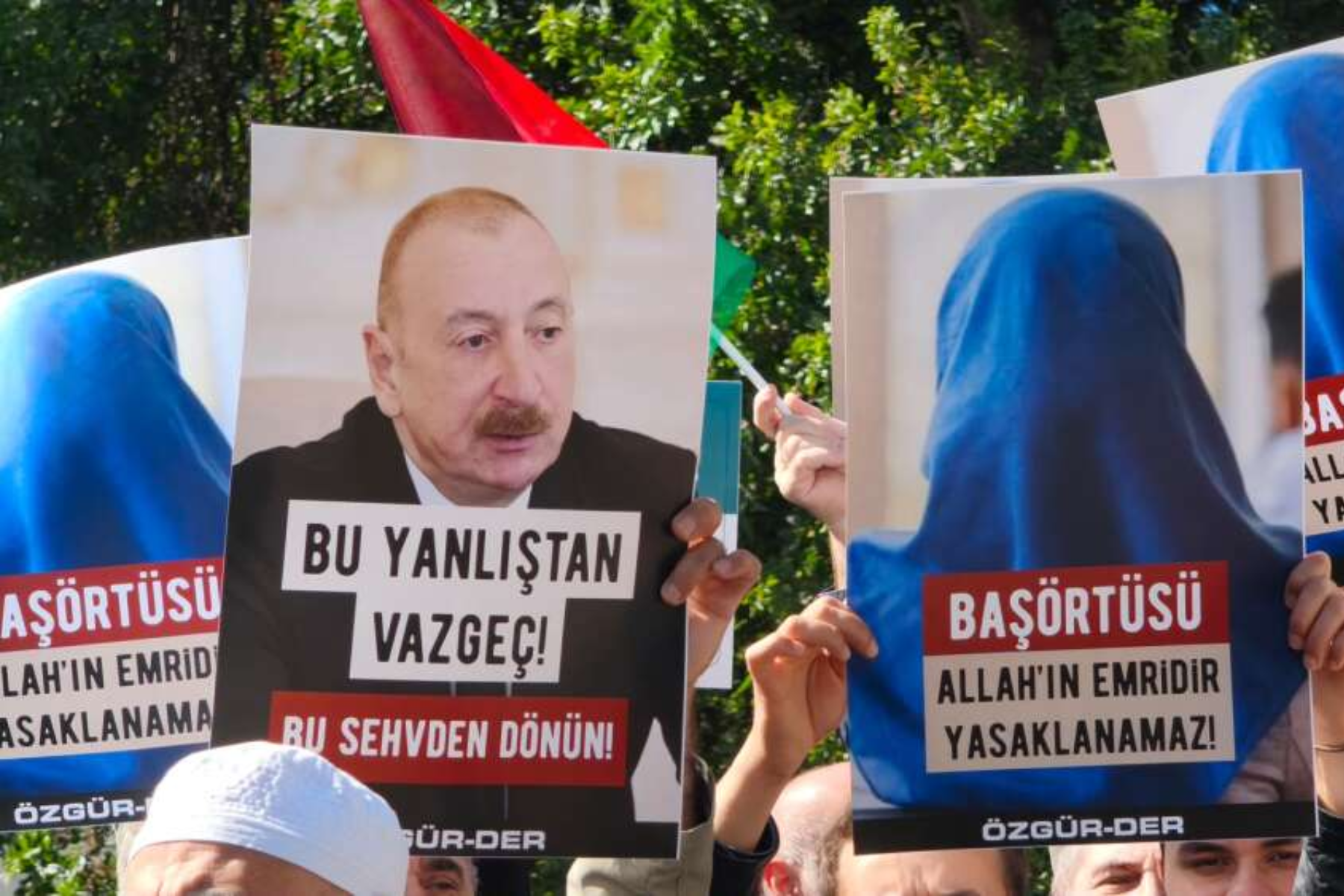
‘One nation, two states’, was how former Azerbaijani President Heydar Aliyev often referred to the inseparable ties between Turkey and Azerbaijan. In the decades since Azerbaijan’s independence, Turkey has proven to be Baku’s strongest and most consistent ally across a wide spectrum of areas of cooperation. While Turkey has denied directly participating in the Second Nagorno-Karabakh War , Turkish defence support for Azerbaijan (along with Israeli arms) were instrumental to the victory over Armenia. However, in recent days, simmering tensions have bubbled to the surface, centred around disputes about Azerbaijan’s restrictions on religious freedom, Ankara’s distaste of Baku’s alliance with Israel, and questions over Turkish support during the Second Nagorno-Karabakh War. Deeper down, the spat has also highlighted Azerbaijan’s increasingly strident geopolitical posture — and Turkey’s willingness to assert its ‘big brother’ status. Azerbaijani President Ilham Aliyev (left) with Turkish President Recep Tayyip Erdoğan (right) during the opening ceremony of the Iğdır–Nakhchivan gas pipeline. Official image. ‘A headscarf ban in our brotherly country Azerbaijan’ The latest row appears to have been set off by Azerbaijan’s apparent implementation of a controversial ban on the wearing of hijabs in schools. Efforts by the Azerbaijani government to restrict hijabs in schools have long been a hot-button issue domestically, with the authorities walking back a ban in 2010 after protests. Though Turkey itself had such a ban until 2014, Turkish President Recep Tayyip Erdoğan has since fashioned himself a champion of the rights of Muslim women to openly practice their religion, including the wearing of hijabs. In his speech at the UN General Assembly in September, Erdoğan criticised restrictions on wearing hijabs in schools, calling it ‘an attack on women’s most fundamental rights’ and linking the issue to ‘Islamophobia’, which he said is ‘spreading like the plague in the West’. Erdoğan did not mention Azerbaijan by name, but many viewed the comments as being directed at Baku. Turkish protesters demonstrating against the Azerbaijani ban of headscarfs in schools carrying a sign of President Ilham Aliyev and Israeli Prime Minister Benjamin Netanyahu reading, 'May your friendship be damned!'. Photo: Haksoz Haber. Turkish media and politicians linked to the ruling Justice and Development Party (AKP) have also condemned the decision and urged Erdoğan to raise the issue with Azerbaijani President Ilham Aliyev. At the same time, religious organisations in Turkey have held protests outside the Azerbaijani consulate in Istanbul calling for a retraction of the restrictions, with some speakers escalating their rhetoric and calling into question the fundamentals of the ‘brotherly nation’ narrative. ‘The media’s portrayal of this decision as “a headscarf ban in our brotherly country Azerbaijan” does not reflect the truth’, said literary scholar Ahmet Kerim Artuk at the protest. ‘Because of its secular authoritarianism, Islamophobia, and its collaboration with Zionist oppressors in foreign policy, this administration cannot be our brother. The Baku administration has added the tears of our veiled Azerbaijani sisters to the blood of our martyrs in Gaza’, Artuk continued, connecting the hijab ban to Azerbaijan’s longstanding ties with Israel , one of the thorniest issues between Baku and Ankara. Azerbaijan’s strong ties with Israel Azerbaijan’s symbiotic relationship with Israel has increasingly become a source of controversy since the beginning of the war in Gaza. While the majority of the Muslim world — including Turkey — has condemned the war and the deaths of tens of thousands of Palestinian civilians caused by Israel’s indiscriminate bombing, Azerbaijan has remained neutral. For Baku, Israeli arms have been crucial to the modernisation of the Azerbaijani military, and for Israel, Azerbaijani fossil fuels continue to dominate imports to the country. Both countries have also utilised their relationship as a means of demonstrating what they deem their respective religious tolerance. Nonetheless, the rhetorical links made by Turkish religious figures between the hijab ban and the Azerbaijan–Israel alliance illustrate the issue remains unresolved. Hülya Şekerci, the founder of the Turkish religious rights organisation Özgür-Der, said at the 3 October protest that, ‘our resistance in Palestine is the same as our struggle for the right to wear a headscarf in Azerbaijan’. Azerbaijani President Ilham Aliyev (left) and Israeli Prime Minister Benjamin Netanyahu (right) in 2018. For illustrative purposes. Official photo. ‘We can never call an administration that continues to sit opposite the murderer [Israeli Prime Minister Benjamin] Netanyahu while he is being protested against and halls are being emptied at the UN General Assembly, and that develops a strategic partnership with Zionist murderers, a brotherly state’, she added. Şekerci was referring to another recent source of controversy when the Azerbaijani delegate remained in the UN hall to listen to Netanyahu’s speech in September even as dozens of others left the room in protest . Absent other intermediaries, Azerbaijan has tried to act as a mediator between Israel and Turkey. In 2025, Azerbaijan hosted talks with Turkish and Israeli officials over disputes about Syria. In August 2026, the Israeli media outlet Ynet reported, citing sources, that Azerbaijan’s efforts to reduce tensions between the two countries were continuing ‘ behind the scenes ’. ‘Have [Israel] and Turkey lost your minds? You are our friends, and Turkey is our friend too’, an unnamed Azerbaijani official reportedly told Ynet . ‘What are we supposed to do if, God forbid, you start fighting? That is why it is important to reduce the tensions immediately’. Amidst criticism in Turkey over Azerbaijan’s trade ties with Israel, pro-government Azerbaijani news agency APA published an article seeking to show that trade between Turkey and Israel continues, namely through Turkish-owned vessels carrying cargo to Israeli ports under the flags of other countries. The article was later apparently deleted before being republished the next day. At the same time, some secular segments of Turkish society tend to view Azerbaijan’s ties with Israel more favourably. For example, prominent Turkish journalist Yılmaz Özdil has argued that Baku’s diplomatic approach towards Israel has been more effective than Ankara’s. In his remarks, Özdil also emphasised that Azerbaijan relied on Israeli rather than Turkish weapons to regain control over Nagorno-Karabakh. Azerbaijan’s regional ambitions This is not the first time that Azerbaijan and Turkey have been at odds over the issue of normalisation with Armenia. Relations between Azerbaijan and Turkey deteriorated sharply in 2009 during the football diplomacy between Turkey and Armenia, but tensions later subsided. The Second Nagorno-Karabakh War in 2020 strengthened the strategic partnership between Azerbaijan and Turkey, with Ankara strongly supporting Baku during the conflict. Turkey had already closed its border with Armenia in 1993 in response to the Nagorno-Karabakh conflict and maintained that the border would not reopen without progress between Armenia and Azerbaijan. However, Aliyev has increasingly leaned into a more self-aggrandising view of the war, saying earlier in October that ‘we achieved [the victory] entirely on our own’. ‘Everyone has a powerful backer behind them, so to speak — some even have several. But we stood alone’, Aliyev said. He doubled-down on the remarks later in his speech, adding, ‘When we needed help, no one helped us’. Baku residents celebrate end of Second Nagorno-Karabakh War on 10 November 2020. Photo: Toghrul Rahimli/Wikipedia commons. It was a striking departure from his own words offered shortly after the conclusion of the war in December 2020, when he said, ‘From the first days of the [war], or rather from the first hours, we have felt the support of Turkey’. ‘[Erdoğan] said that Azerbaijan was not alone and Turkey was always with Azerbaijan’, Aliyev added. Previously, in 2024, Erdoğan had himself claimed a share in the victory after the Second Nagorno-Karabakh War, prompting criticism in the state-run newspaper, Azerbaijan . At the time, Erdoğan said that Turkey could ‘enter Israel just as we entered Karabakh and Libya.’ At the same time, Turkey has otherwise maintained it did not directly participate in the war beyond providing support. Azerbaijan, for its part, has also repeatedly stated no foreign troops directly took part in the hostilities. Another bone of contention are disagreements over normalisation with Armenia, which Baku has long asserted must be linked to its own peace process with Yerevan. Cars at a standstill on the Lachin Corridor, as the Armenian population of Nagorno-Karabakh flees to Armenia in September 2023. Photo: Marut Vanyan/OC Media. After Azerbaijan regained control over Nagorno-Karabakh in 2023, the regional situation changed. Turkey began to pursue the normalisation of relations with Armenia more actively, including discussions on reopening the border, restoring transport links and establishing diplomatic relations. At the same time, while Turkey has long viewed itself as the ‘big brother’ in the bilateral relationship, Azerbaijan appears to be questioning the nature of this dynamic, given its increasingly strident geopolitical stance and its self-declared status as a regional power. Azerbaijan’s victory in the Nagorno-Karabakh conflict and growing energy ties with the EU have bolstered its view of itself as a power-broker in the region, and one that can have its own foreign policy — distinct from Turkey or other stronger countries in the area. After a Russian anti-air missile mistakenly downed an Azerbaijan Airlines passenger jet in 2024, killing 38 people, Baku reacted strongly , sending its longstanding ties with Moscow into an unprecedented downturn. At the time, Russian commentators appeared to be surprised at the extent and strength of Azerbaijan’s reaction. Nonetheless, the intensified confrontation has since been resolved , and Azerbaijan appears to be back to its old tricks with Russia, engaging in a mostly behind-the-scenes alliance that rises to the surface occasionally, such as when Baku agreed to release a jailed French national in exchange for the removal of Uzbek-Russian oligarch Alisher Usmanov from sanctions in September. The public theatrics of the spat with Turkey may indicate a similar approach is at work. Will the spat escalate? Despite the array of contentious topics, high-level officials, including Erdoğan and Aliyev, have refrained from directly criticising each other. The Azerbaijani media landscape has also so far shown a cautious approach. The main narrative in Azerbaijani pro-government media has been to discuss what it describes as a campaign against Azerbaijan in the Turkish media and to defend Baku–Ankara relations. For example, on 26 September, Azerbaijan’s Media and Broadcasting Council said that ‘unfounded and biased claims’ against Azerbaijan were being circulated in the Turkish media. Pro-government media outlets in Azerbaijan, such as Caliber and APA , have also not published critical screeds against Turkey, which they often do when Azerbaijan is in the midst of geopolitical disagreements. Turkish and Azerbaijani officials at a signing ceremony in October 2026 for a package of defence agreements totaling $500 million. Photo: Haluk Görgün/X. While it is likely that commentators in both countries will continue to exchange barbs, there are structural indications that the Azerbaijani–Turkish alliance is here to stay, at least for the medium-term. Earlier in 2026, Baku and Ankara signed a deal to cement the supply of natural gas from Azerbaijan’s Absheron field for a 15-year period starting from 2029. The agreement comes as Turkey has sought to reduce its dependence on Russian energy, with Azerbaijan’s share of Turkish gas imports doubling to roughly 22% in 2024 compared to a decade earlier. For Azerbaijan, despite Aliyev’s tough talk on military strength, there are clear limits, and it seems unlikely that Baku would want to truly rupture the longtime security alliance with Turkey. On 30 September, In the midst of the spat, Turkey and Azerbaijan signed several defence contracts worth around $500 million , illustrating military cooperation is continuing. It seems clear that Azerbaijan is not yet ready to stand on its own two feet, either militarily or politically. For now, the ‘one nation, two states’ dynamic is likely to continue.
Already in English.
3 full-article translations/day — headlines & summaries always free. Create free account for 25/day
Explainer | What’s behind the Turkey–Azerbaijan spat?
A variety of tenuously connected issues have exposed a deeper divide over the unequal power dynamics between Ankara and Baku.
Comments
No comments yet — be the first to comment.
More from OC Media
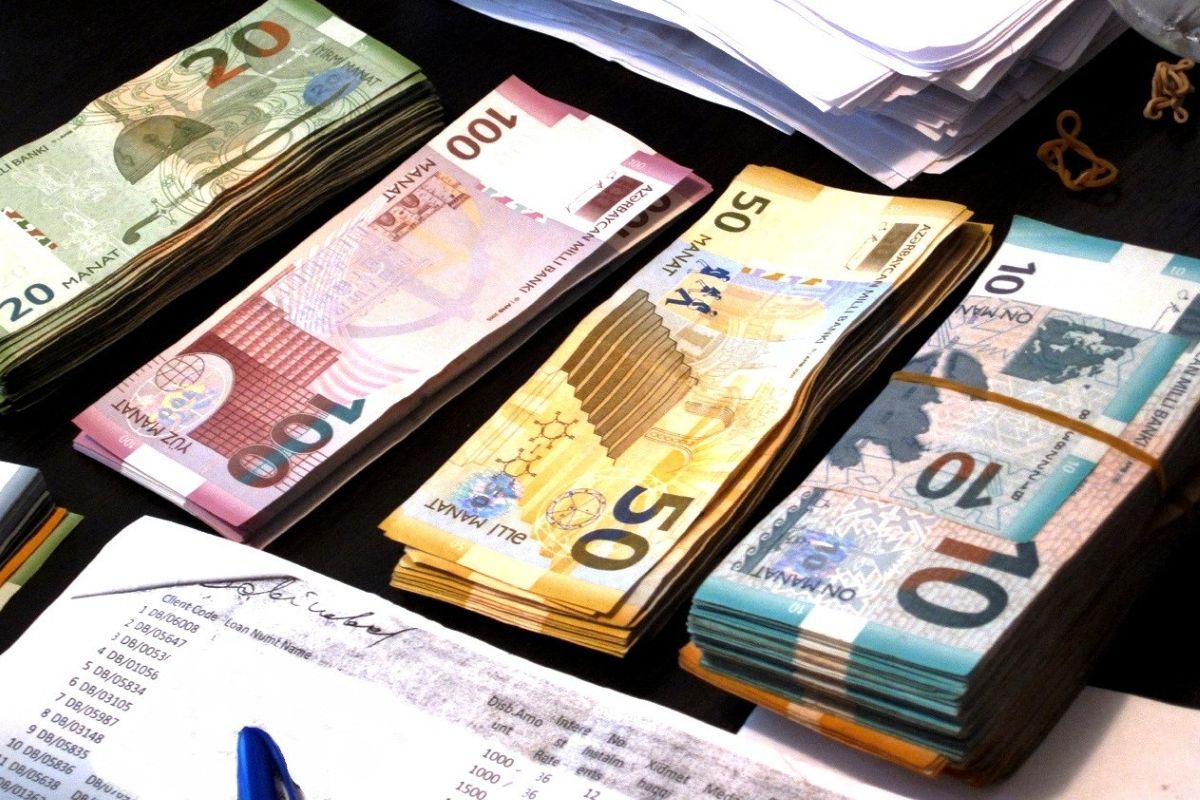
Azerbaijan proposes paying corruption whistleblowers 5% of assets recovered
OC Media / 4 hours ago

Study finds long-term health consequences among protesters exposed to chemical irritants in Georgia
OC Media / 4 hours ago
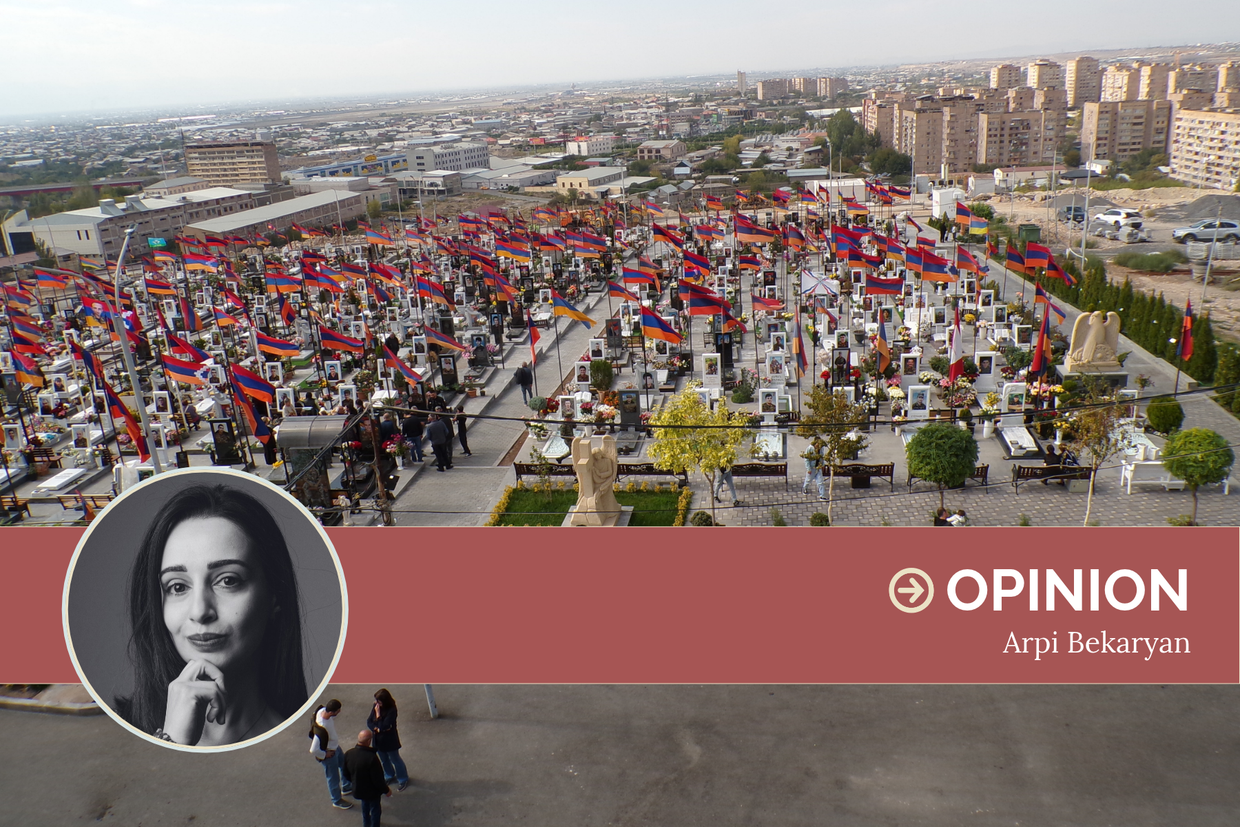
Opinion | When remembering becomes politically inconvenient
OC Media / 4 hours ago

Pashinyan rejects possibility of exchanging detained Azerbaijani soldier for Armenian prisoners
OC Media / 5 hours ago
Related coverage
«Արթուր Դանիելյանի մեղադրանքը լրացվեց». Տիգրան Աթանեսյան
Aravot / 13 minutes ago
Հնարավո՞ր է՝ դիտարկում եք արտահանձնել ադրբեջանցի ահաբեկչին․ Կարապետյանը՝ Փաշինյանին
ArmLur / Zhoghovurd / 2 hours ago

Նա դիվերսանտ չէ․ Սուրեն Պապիկյանը՝ Շաքիում հայտնված ադրբեջանցի զինծառայողի մասին. ՏԵՍԱՆՅԹՈՒԹ
Factor.am / 3 hours ago
Սկսել պատերազմ, դիմել փրկչի օգնությանը․ Միրզոյանի մեկնաբանությունը՝ Իրանի շուրջ աժիոտաժի մասին
ArmLur / Zhoghovurd / 3 hours ago