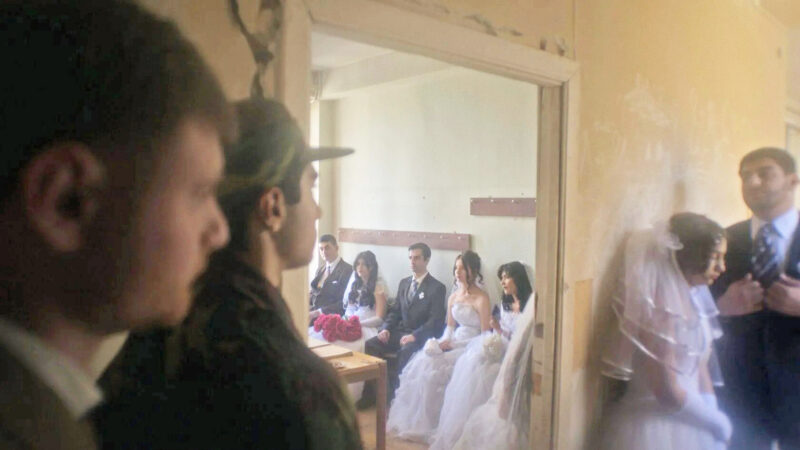
It may be unfair to fault an experimental film for having little conventional plot or dialogue. Yet when the lights came up after Christine Haroutounian’s “After Dreaming,” there was a palpable sense of unease in the audience — not simply because of the tragic events the film recounts, but perhaps because of the distance it creates from the viewer. Scene from “After Dreaming” Surreal, unforgettable landscapes, strong performances, and a striking visual sensibility distinguish this 2025 feature film. A brooding, lanky soldier named Atom (Davit Beybutyan) escorts a young woman, Claudette (Veronika Poghosyan), across a war-ravaged Armenia, eventually becoming her lover and husband. As Atom drives through a rainy winter countryside toward her family and the promise of safety, Claudette is unaware that her father has been shot dead by another Armenian in a border misunderstanding. Haroutounian’s unhurried camera, muted sepia palette, and close attention to the faces of professional and nonprofessional performers give the film much of its emotional force. As the relationship between Claudette and Atom unfolds, the director explores the effects of trauma on those involved, alongside recurring concerns with family, religion, and Armenian national identity. The film also incorporates real-life footage of a 2008 mass wedding in Stepanakert, where some 700 Armenian couples married in a single ceremony — a poignant document given subsequent events. Davit Beybutyan Haroutounian is an intellectually curious filmmaker. During the post-screening Q&A, she invoked thinkers such as Roland Barthes and his concept of the punctum, suggesting how seriously she thinks about the relationship between image and meaning. She also made a convincing case that, while the film is firmly rooted in contemporary Armenian history and the recent loss of Artsakh, its concerns extend beyond this one conflict to generalized questions of war, intimacy, and human relations. There is much to admire in that ambition. Movie poster for “After Dreaming” Still, “After Dreaming” goes on too long and would have been more effective as a substantial short film than as a feature. Like Armenian history itself, it can feel relentlessly somber, allowing little room for tonal variation or release. I also found the central relationship troubling in ways the film never quite resolves. Poghosyan plays Claudette as sheepish and whiny, while Beybutyan gives Atom a virile, intimidating presence. Before the couple ever have sex, he announces matter-of-factly: “Even God couldn’t help the last woman I screwed.” The line seems to promise a disturbing encounter, or at least one that might illuminate something essential about his character. Instead, when sex finally occurs, it is surprisingly tame. We are also once again presented with full-frontal female nudity but no equivalent male exposure — a familiar cinematic asymmetry. Scene from “After Dreaming” The dialogue between Atom and Claudette feels stilted, repeatedly circling the question of whether they “understand one another.” The effect is less an accumulation of meaningful ambiguity than juvenile banter. Some scenes test the viewer’s patience, notably the seemingly interminable car ride at the beginning and the extended sequence of musicians playing at the wedding. By contrast, the berd , a traditional Armenian circle dance performed here by male soldiers, is genuinely powerful. And the final sequence, in which fireworks become indistinguishable from bombs, is a remarkable piece of filmmaking: a devastating visual transformation that communicates in an instant what the film’s more protracted passages struggle to express. I am a devotee of experimental cinema. But experimentation doesn’t exempt a film from the demands of timing, development, and communication — even when what it communicates is deliberately elusive. “After Dreaming” contains images that linger long after the screening. If she develops a more disciplined sense of duration, Haroutounian could become a formidable filmmaker. Cinematographer Evgeni Rodin deserves considerable credit for the film’s haunting visual force. In Armenian with English subtitles (105 minutes) , “After Dreaming” was screened as part of “Our Century: Spiraling through Armenian Cinema,” curated by Sona Karapoghosyan, at New York’s Asia Society, October 23–25. The post ‘After Dreaming’: A Haunting Journey Through War-Torn Armenia appeared first on The Armenian Mirror-Spectator .
Free: opens Google Translate with the text filled in. Long articles are split into numbered sections.
Premium: read the translation right here, without leaving HyeNews. Try free for 7 days.
Already in English.
‘After Dreaming’: A Haunting Journey Through War-Torn Armenia
Comments
No comments yet — be the first to comment.
More from Armenian Mirror-Spectator
Tatyana Yangaykina: From the Depths of Mordovia to the Heart of the Armenian Soul
Armenian Mirror-Spectator / 3 hours ago
Judge Disciplined for Refusing to Try Armenian Archbishop
Armenian Mirror-Spectator / Nov 3
COP17 Put Forth a Clearer Picture of the Biodiversity Crisis — but Not the Ambition to Solve It
Armenian Mirror-Spectator / Nov 2
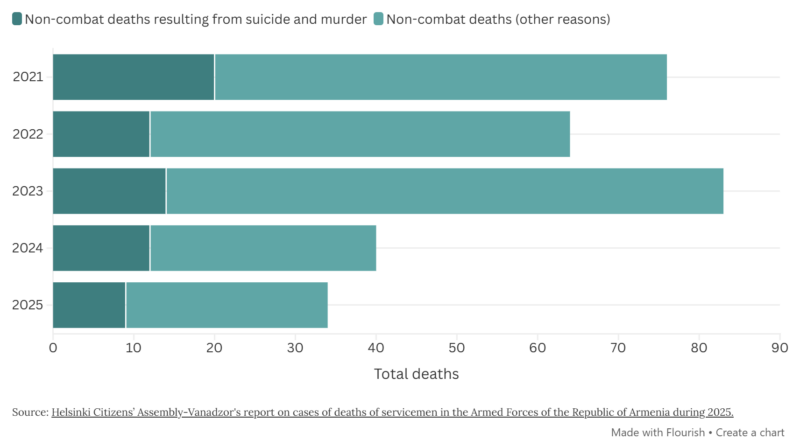
Armenian Soldier Found Dead as Spate of Non-Combat Deaths Continues
Armenian Mirror-Spectator / Nov 2
Related coverage
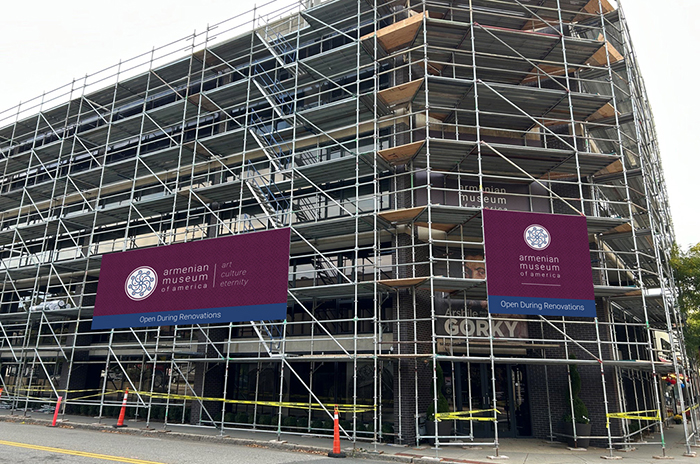
Armenian Museum of America Begins Major Exterior Renovation to Transform Museum’s Presence on Main Street
MassisPost / 2 hours ago
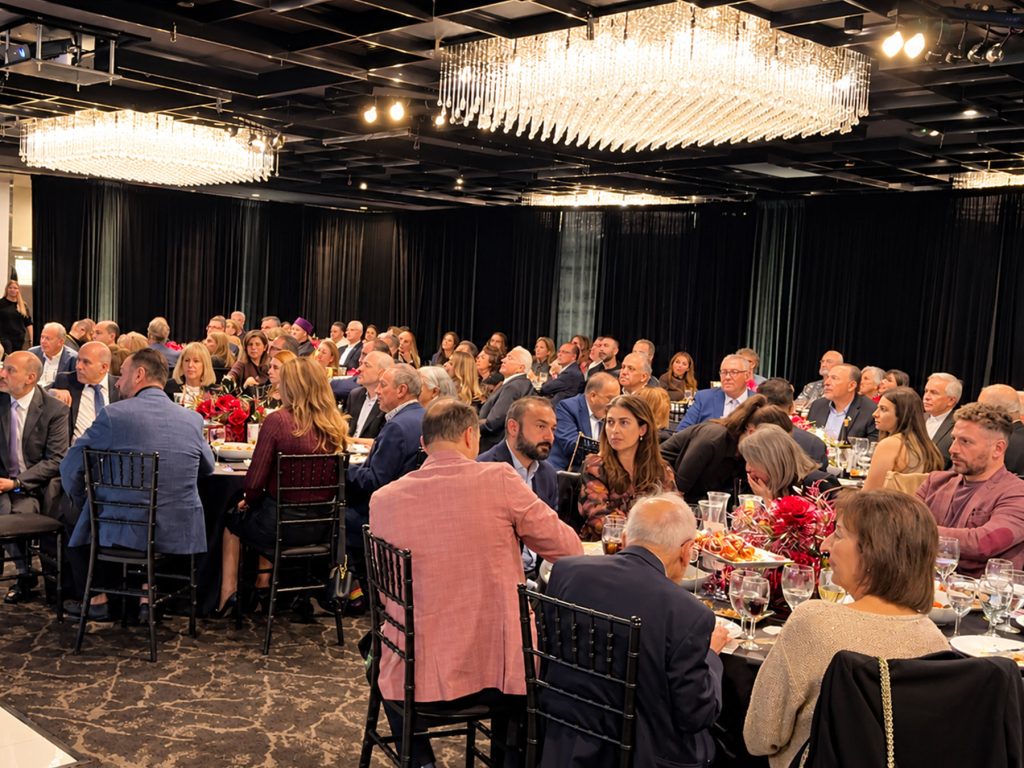
Armenian American Museum Hosts Major Donor Appreciation Reception
MassisPost / Nov 4
Armenian American Museum Hosts Major Donor Appreciation Reception
Asbarez / Nov 4
Festival in Vienna Cancelled After Controversial Exclusion of Artsakh Artists
Asbarez / Nov 4