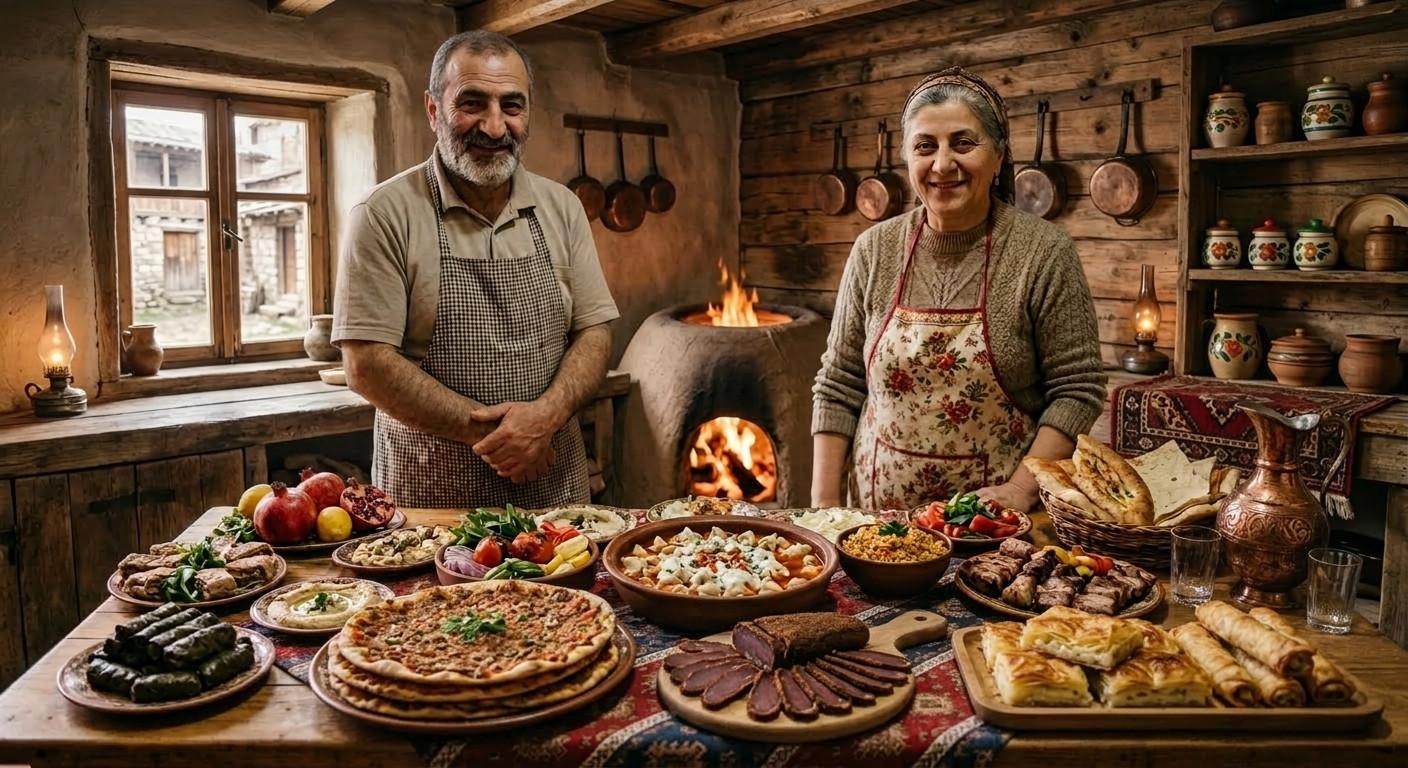
By Baghdo Tokatlian When diaspora Armenians visit the Republic of Armenia for the first time, they often experience an unexpected cultural shock at the dinner table. The travelers search menus for the familiar, heavily spiced lamb shish kebab and earthy bulgur pilafs of their childhoods, only to find locals feasting on massive slabs of bone-in pork paired with a mysterious grain shift to white rice. This culinary disconnect is the result of a century-long historical divergence. Armenian cuisine is fundamentally split into two distinct traditions: Western (Ottoman) Armenian and Eastern (Caucasus/Soviet) Armenian. While the Eastern variant was forged in a landlocked, heavily centralized environment, Western Armenian food developed across a massive imperial trade networkmaking it one of the most varied, cosmopolitan, and complex cuisines of the old world. To understand the sheer variety of Western Armenian cuisine, one must realize that it is, at its heart, Ottoman-Armenian cuisine. Historically, "Western Armenia" encompassed a vast territorial expanse stretching from the mountainous Anatolian highlands down to the coastal Mediterranean kingdom of Cilicia. Because Armenians were deeply woven into the urban, commercial, and economic fabric of the Ottoman Empirefrequently serving as imperial palace chefs, international merchants, and cosmopolitan citizenstheir cooking evolved hand-in-hand with the imperial palate. This vast geography created distinct regional sub-cuisines: Furthermore, Western Armenian chefs had front-row access to the global spice trade. They integrated warm aromatics like allspice, cinnamon, cumin, and mahleb into savory meats and complex pastries. Conversely, Eastern Armenian cuisine developed in a more condensed geographic footprint across the South Caucasus, leaning away from heavy spice profiles to highlight the simple, unadorned flavors of high-quality meats, fresh wild mountain greens, and simple stone-oven baking (tonir). A common misconception is that rice was entirely absent from the old empire. Rice was an urban luxury and status symbol. In major Ottoman hubs like Constantinople or Smyrna, wealthy Armenians regularly cooked rice pilaf or stuffed it into high-end dolma. However, for the millions of rural Armenians living in the provinces, wheat was the absolute king of the soil. Families processed wheat at home into various grades of bulghur (parboiled, cracked wheat). Bulghur pilaf and eetch (bulghur salad) formed the daily baseline of Western Armenian nutrition. When survivors of the 1915 Genocide migrated to the United States or Europe, they didn't experience a Levantine fusionthe Levantine-adjacent flavors were already native to those from Southern Anatolia. Instead, they experienced an American-market fusion of necessity. Finding zero bulgur on mid-century American grocery shelves, immigrants took their traditional village techniquebrowning fine vermicelli noodles in massive amounts of butter and cooking it in rich chicken brothand applied it directly to cheap American white rice. This hybrid creation became the ubiquitous Armenian-American Rice Pilaf, a dish so wildly successful it eventually inspired commercial products like Rice-A-Roni. A defining feature of the Western Armenian kitchen was its absolute mastery of charcuterie and highly technical pastry artssectors born from urban commerce and long preservation needs. Western Armenians excelled exceptionally at creating complex cured meats and multi-layered baked goods: In modern Yerevan, true pakhlava, authentic basturma, and laminated kata remain surprisingly hard to find. The commercially mass-produced versions sold across present-day Armenia are often far removed from the artisanal originals, leaning into thick, heavy Soviet baking techniques or simplified curing processes that strip away the complex aromatic spice profiles. The starkest contrast between the two cuisines lies in the meat. For Ottoman Armenians, lamb and mutton were the definitive, primary proteins. The Anatolian landscape was perfectly suited for grazing sheep, and living inside a Muslim-majority empire meant the commercial meat market naturally revolved around lamb and beef. The preference in the modern Republic of Armenia today is entirely different: pork is the undisputed king of the grill. This pivot was a direct byproduct of Soviet industrialization. When Eastern Armenia was absorbed into the USSR, the state centralized agriculture and built massive, industrial swine-breeding farms. Pigs mature rapidly and reproduce efficiently, making them the perfect economic engine for feeding a Soviet populace. Over generations, pork became deeply normalized, entirely free from the religious taboos that kept it off Western Armenian tables in the Middle East. This divide even altered the vocabulary of fire: The hallmark of Western Armenian cuisine is its intricate assembly, heavy reliance on cracked wheat grains, and complex, sweet-and-savory flavor profiles heavily scented with warm spices: Thriving on a deep connection to its mountain terroir, long simmering stews, and Soviet or Persian cross-pollinations, the Eastern Armenian table highlights natural proteins and fresh, unadorned flavors: Because of centuries of geopolitical fragmentation, displacement, and the oral nature of kitchen traditions, much of Armenia's food history was preserved on stained index cards rather than in state archives. However, a rich body of published material and interactive digital documentation brilliantly bridges the gap between historical narrative, folklore, and recipe preservation: Today, the culinary border is rapidly dissolvingbut this unification is happening strictly within the borders of present-day Armenia, not in the diaspora. In cities like Los Angeles, Beirut, or Paris, the decades-old separation remains clean, with diaspora communities keeping their inherited Ottoman-Armenian culinary styles separate from post-Soviet Eastern arrivals. However, in the streets of Yerevan, a major culinary renaissance is unfolding. Because mass-commercial operations in Armenia struggle to capture the complex, labor-intensive techniques required for authentic Western fare, it is the repatriatesboth old and newwho are doing a far superior job at preparing these ancestral foods. Nowhere is this stark qualitative difference clearer than in the history of lahmajun (Armenian meat pies) in the capital. For decades under Soviet and early post-Soviet rule, the local version of lahmajun sold in Yerevan was notoriously unauthenticfrequently rendered as a bland, soupy, watery meat mixture poured over a thick, soggy piece of dough. It completely lacked the signature crisp and aromatic complexity of the original dish. That reality changed entirely with the influx of Syrian-Armenian repatriates fleeing the civil war in the 2010s. Setting up small, specialized bakeries across Yerevan, these artisans introduced the city to authentic lahmajun: a paper-thin, incredibly crisp, wood-fired crust topped with a highly concentrated, perfectly spiced blend of minced lamb or beef, pomegranate molasses, tomato paste, bell peppers, and fresh herbs. Waves of Syrian- and Lebanese-Armenian repatriates, along with dedicated diaspora culinary artisans returning home, have flooded the capital with these highly specialized spice shops, true bulgur variations, Aleppo-style kebab houses, and bakeries turning out exceptionally laminated kata and flaky pakhlava. By rescuing these techniques from historical oblivion and planting them firmly back into the soil of Yerevan, these repatriates are doing more than just serving dinnerthey are stitching a fractured national identity back together, one layer of pastry at a time. (Bagdo Tokatlian, a lover of simple, tasty food, continues his search for the ultimate Sou Boerek and Kharpert Kufteh.) Top photo AI generated
Free: opens Google Translate with the text filled in. Long articles are split into numbered sections.
Premium: read the translation right here, without leaving HyeNews. Try free for 7 days.
Already in English.
A Tale of Two Hearths: How History Severed and Shaped the Armenian Palate
When diaspora Armenians visit the Republic of Armenia for the first time, they often experience an unexpected cultural shock at the dinner table.
Comments
No comments yet — be the first to comment.
More from Hetq
ԿԲ-ի հայտարարությունը ֆինանսական զեղծարարությունների նոր սխեմայի վերաբերյալ
Hetq / 48 minutes ago

Պետք է սիրահարվել այն խնդրին, որը լուծում ես #shorts #Silicon #Mountains #ֆորում
Hetq / 1 hour ago
Վարչապետն ընդունել է ՀՀ պետական մրցանակակիր Քեմ Ղաֆֆարիանին
Hetq / 1 hour ago
Սամվել Կարապետյանին և ևս 8 անձի կալանավորման միջնորդություն է ներկայացվել դատարան
Hetq / 1 hour ago
Related coverage

Համայնքային ոստիկանության բաժիններ են տեղափոխվել նախկինում դատապարտված և հանցավոր հակումներ ունեցող 65 անձ
Aravot / 13 minutes ago
Ռուսաստանի հայ համայնքում կրթական կենտրոնները նպաստում են ազգային ինքնության պահպանմանը
24TV / 24News / 32 minutes ago
Երբ կտավը պատմում է հայրենիքի մասին․ Մոսկվայում բացվել նկարիչ Յուրի Գրիգորյանի ցուցահանդեսը
Alpha News / 2 hours ago

Մարդը կրակը չի ընկել, որ ֆինանսական ռեսուրս ունի, հայրենասեր է ու ձիգ. Նարեկ Կարապետյան
Pastinfo / 3 hours ago