Listen to the AI generated audio article. Your browser does not support the audio element. On October 6, 2026, the History Museum of Armenia in Yerevan opened its doors to a city that no longer exists and yet exists in countless ways. Titled “Ani: The One Thousand and One Afterlives of a Medieval Armenian Capital,” the exhibition brings together photographs, caricature, poetry, travelogues, and archaeological findings that have, over the past century and a half, made the ruins of Ani legible, and sometimes illegible, to very different publics. The exhibition’s first iteration was shown at the Petőfi Museum of Literature in Budapest from March 19 to April 20, 2026, co-organized by the Department of Armenian Studies at the Pázmány Péter Catholic University. Both exhibitions are part of the research project “Lost-but-found: Armenian Capital Ani at Contested Crossroads,” funded by the Gerda Henkel Foundation and hosted at the Leibniz Institute for the History and Culture of Eastern Europe (GWZO) in Leipzig and the Free University of Berlin. The project grew out of an earlier study. Its principal investigator, Bálint Kovács, had worked on the travelogues of Minas Bzhishkian (1777–1851), a Mkhitarist scholar from San Lazzaro in Venice who wrote about Armenian communities around the Black Sea. Describing these communities, Bzhishkian said: “These people are from Ani.” In his writing, Ani appeared not merely as a ruin, but as a diasporic configuration; a memory and an identity carried far beyond the city walls. A second impulse came from the French-Armenian historian Claude Mutafian, who has often described Ani’s resilience through the metaphor of the phoenix. Taken together, these two images, of scattered descendants and of a city rising from its ashes, shaped the project’s central question: how can we think about a city that is lost as a place of habitation, while situating it within the global context of the Armenian memory-scape? Pursuing this question, the project soon exceeded its initial frame and became a platform for researchers of other “lost” Armenian cities, as well as a network through which the exhibition traveled from Budapest to Yerevan. In Yerevan, however, the exhibition has taken a different form. Developed in collaboration with the History Museum of Armenia, it now sets the many (re)imaginings of Ani alongside archaeological materials excavated at the site, adjacent to the Museum’s permanent exhibition. As curators Karen Jallatyan and Konrad Siekierski told me, they did not intend to showcase Ani’s architectural masterpieces or replicate what the History Museum of Armenia has done for decades. The guiding idea was different: not Ani as it was when it existed, but the afterlives of Ani—how it exists when it no longer does. Walking from one hall to another, visitors move between stone and the image of stone, between objects that survived and the stories that keep them alive. It is this movement, back and forth across time, media, and borders, that makes attending the exhibition a particularly special experience. A City Between the Real and the Imagined Once the capital of the Bagratid kingdom, Ani has long evolved from a real place into an intensely imagined one. Already in medieval times, it was mythologized as “the city of a thousand and one churches.” Today, for Armenians in the Republic of Armenia and throughout the global diaspora, Ani serves as a reference point for varying, and sometimes competing, identities. The curators’ choice of the word “afterlives” is telling. The Armenian title of the exhibition speaks of Ani’s veraprumner , a word that holds together survival and re-living, outliving something and experiencing it once again. In English, this double meaning is ironically somewhat lost. In Armenian, however, it captures precisely what the exhibition is about: not the medieval city as such, but the ways in which it has continuously survived, re-lived, and been re-made from the nineteenth century onward. In this sense, the ruins of Ani form what the exhibition calls a complex memoryscape; a terrain where textual, visual and digital representations are creatively linked across media, cultures and geographies. This is not to say that the exhibition simply celebrates memory. Rather, the curators aimed for critical engagement with the concept itself—pushing and destabilizing it, which is especially important in light of digitalization, and new modes of learning and connectivity. There are too many geopolitical and historical layers to Ani for its memory of it to be singular. Instead, the exhibition invites visitors to attend to a multitude of memories and to focus on their creative power. It does so by gathering objects that exist because someone remembered Ani—poems, paintings, photographs, sketches, cartoons, and more—and then asks what happens to memory when these different strands of memory-making are brought together in one space. There is a lot to remember in Armenian culture. The question, as Karen put it in our talk, “is not what you remember, but rather how you remember it.” Ruin Lust and Ways of Seeing From the second half of the nineteenth century until the Russian Revolution (or coup d’état, depending on how you look at it) of 1917, the ruins of Ani lay within the Russian Empire. It was then that they found a new life. First and foremost, this new life was due to the excavations led by Nikolai Marr between 1892 and 1917, and to his Armenian counterparts who worked alongside him: architect Toros Toramanian, who measured and drew Ani’s churches, walls, and cathedral; archaeologist Ashkharbek Kalantar; and ethnographer Yervand Lalayan. Marr and his team did not only dig. They published booklets, lectured in Armenian communities, and raised funds for the excavations. Through their work, Ani quickly became a pilgrimage site and a meeting point for Armenian intellectuals. At the same time, photography, film, railways, and the postal service became vehicles through which images of Ani reached wider audiences. The exhibition names the resulting fascination “ruin lust”, an obsession with ruins at the heart of which lies a profound sense of loss. The story of Ohannes Kurkdjian (1851–1903) shows how the same image of Ani could mean very different things: a symbol of national loss and hope for Armenians, a suspicious object for the imperial authorities, and an exotic curiosity for European audiences. In the late 1870s, Kurkdjian, assisted by Aram Vruyr, became the first to photograph Ani, and around 1880 published the album “Ruines d’Arménie: Ani” in French and Armenian, but notably, not in Russian. The authorities allegedly banned it, yet the same photographs soon appeared in London’s The Graphic and in the touristic “Vue de Caucase” series. If ruin lust is a contemplative longing, then “ruin porn” is its consumerist shadow, the aestheticized consumption of decay, detached from its history and from the people affected by it. Applying the latter term to the nineteenth century would be anachronistic, but Kurkdjian’s photographs reveal how easily one could slide into the other. Not far from Kurkdjian’s stereoscopic cards, a glass case holds Toramanian’s own wooden camera, which he used to document Ani’s monuments during Marr’s excavations. From the collection of the History Museum of Yerevan, it is one of the curators’ favorite objects. The size of the camera speaks volumes about what it once took to bring an image of Ani back from the site. It is also a reminder that seeing Ani was never neutral. Whether romantic, scientific, or commercial, every photograph of Ani was also a claim about what the ruins meant and to whom they belonged. Between Reverence and Ridicule If photography sacralized Ani, satire brought it back down to earth. A particularly compelling section of the exhibition is devoted to Khatabala , an Armenian periodical published intermittently in Tbilisi during the first three decades of the twentieth century, which became an important outlet for social and political grievances. Khatabala ’s caricatures took up ruins as both motif and theme, and at times engaged directly with Ani to pose incisive questions about social mores, cultural change, and political developments. A recurring target was the archaeological excavations led by Marr and the enthusiasm they inspired. In issues from 1906, 1912, and 1914, the caricaturists mock the sudden fashion for digging: anyone holding a spade, it seems, could declare himself an archaeologist, and any skeleton unearthed was bound to belong to a feudal lord—or to Adam himself. Visitors complain that the “ancient capital” offers no conveniences whatsoever, not even a hotel to rest one’s head. The irony is gentle but sharp, and it differs markedly from the admiration Ani tended to generate otherwise. Nikolai Marr also appears in the memoir of Bishop Krikor Balakian, who accompanied Catholicos Matteos II Izmirlian on his 1910 pilgrimage to Ani. Marr met the Catholicos at the city gate following Russian custom, offering bread and salt, and then delivered a speech in Classical Armenian, promising that alongside the material Ani there would now be “the celestial Ani, the picturesque Ani, and the scientific Ani.” Balakian remarks that since the speaker was half English, half Georgian, and married to a Russian, his grammatical slips could easily be forgiven. Read together, the caricature and the chronicle show how the ruins served at once as a stage for national reverence, for scholarship in the service of empire, and for everyday irony. Longing Across Borders After 1921, when Ani ended up on the Turkish side of the border, it was lost again, visible but hardly reachable. Poetry became one of the media through which this distance was lived. The exhibition presents a selection of poems, in Armenian originals and English translations by Karen Jallatyan and Nanor Kebranian, that span more than a century and several geographies. In Hamastegh’s “You Look Familiar” (1945), the thousand and one churches turn into a thousand and one bells, ringing across the plains of Ararat and cleansing everyone who hears them, regardless of faith or origin. Hovhannes Shiraz’s “Finale 2” (1950–1951) returns to a single wish: to reach Ani and only then to die. And in Maroush Yeramian’s “Ani Lament” (2015), the language itself crumbles, words break apart on the page like masonry turning to rubble. Yet longing was not confined to words. One of the most striking, and, in its own way melancholic, objects on display is a flyer from the National Association for Armenian Studies and Research (NAASR) in Boston, announcing the “Armenian Heritage Tour for 1968.” For $1,195, diaspora Armenians were offered a month-long journey from Boston to Istanbul and eastern Turkey—with Kars and “the ancient capital of Ani” on the itinerary—then on to Yerevan, Moscow and Amsterdam. The first such tour took place in 1967; the one advertised for 1968 never materialized. The flyer captures the Cold War geography of Armenian memory: Ani and Soviet Armenia, separated by a narrow river, could only be visited in one journey by crossing several countries and the Iron Curtain. Such “pilgrimages” to Ani did not end with the Cold War. Between 1987 and 2017, Armen Aroyan, a Los Angeles engineer, guided more than 1,400 diaspora Armenians to the towns and villages of historic Western Armenia from which their ancestors were expelled. Whatever settlement they came looking for, Ani was the one site nearly all of them shared. The poems, the tour flyer, and the “pilgrimages” alike bring to mind the distinction drawn by the Russian-American cultural theorist Svetlana Boym between restorative nostalgia, which seeks to rebuild the lost home, and reflective nostalgia, which dwells on the longing itself. Ani, it seems, has always oscillated between the two. Continuities and Hopes The borders may have become more porous, but they have not moved. At the state level, Turkey still avoids speaking of Ani as an Armenian site, while in Armenia and the diaspora, the city is often framed through a tragic, melancholic, at times obsessive sense of loss. Meanwhile, a new discourse of heritage has been gradually taking shape. Ani’s inscription on the UNESCO World Heritage List has brought conservation efforts and new forms of collaboration, while contemporary travel writing and the digital documentation of the ruins have opened up perspectives that were hardly imaginable a few decades ago. The exhibition can be seen as part of this emerging conversation. Beyond presenting Ani in its plurality, the exhibition also invites us to look past it. Medieval Armenian and Polish chronicles trace the Armenian communities of Crimea, and later of Lviv, Moldavia, and Transylvania, to emigrants who left Ani after the Seljuk conquest of 1064 and the Mongol capture of 1236. Many of these communities in turn became “lost” in their own right. Seen within this long chain of departures, Ani appears less as an exception than as one node in a wider history of Armenian loss and re-making, one that includes places as different as Gherla, the baroque Armenopolis in Transylvania, Old Julfa, Van, Shushi and Stepanakert. The exhibition does not offer a single narrative of Ani, and this is perhaps its greatest strength. Instead, it lets the visitor encounter different forms of memory—romantic and ironic, scholarly and touristic, intimate and political —and decide which of them resonate. Remembering, Karen and Konrad insist, is a form of resistance. But it requires staying critically minded, aware that memory is as creative and performative as it is faithful. The ruins on the far bank of the Akhurian have stood there for a thousand years. What they will come to mean next depends less on the stones than on those who continue to look at them. *Author’s note: “Ani: The One Thousand and One Afterlives of a Medieval Armenian Capital” is on view at the History Museum of Armenia from October 6, 2026 to April 6, 2027. I thank Karen Jallatyan and Konrad Siekierski for generously sharing their insights on the project and exhibition. From our Et Cetera section Reading Labels: In Lieu of an Exhibition Review Naneh Hovhannisyan Mar 11, 2026 At a British Library exhibition on British-Armenian history, Naneh Hovhannisyan reads labels—and reads between them. In this piece of creative nonfiction, she offers a personal response to a major cultural event for British Armenians, reflecting on cultural visibility, diaspora memory and the ambiguities of collective loyalty and representation. Read more Venice 2015 Ten Years On: Creative Resistance and Contemporary Crises André Torossian Dec 19, 2025 A decade on, Andre Torossian revisits Armenia’s landmark diaspora exhibition “Armenity” at the Venice Biennale, reading it through today’s post-2020 realities—war, displacement and the loss of Artsakh—to ask who speaks for Armenians, how identity relates to territory, and what forms of Armenity can endure. Read more Unpacking Victory: A Curatorial Response to War Nairi Khatchadourian May 7, 2025 The exhibition “Victory Over the Victory” critically reexamines war and its legacies, bringing together global artists to challenge war narratives and explore memory, trauma and resistance. Curators Sona Stepanyan and Natasha Dahnberg create a space for dialogue across geographies and generations. Read more Women, Peace, Art: Breaking or Reinforcing Stereotypes? Margarita Ghazaryan Apr 22, 2025 The "Women, Peace, Art" exhibition in Armenia showcased eight female artists addressing peace amid war's haunting memories. While ambitious, the exhibition struggled with essentialist portrayals of women, often reinforcing stereotypes instead of challenging them. Read more By the same author Outside In Column Yerevan, Jamais Vu Ainteb, After the Armenians: A Walk in Search of Ghosts A Bathtub in Stepanavan A Country Blessed By Mountains Ani, Where Khachkars Lie Face Down in the Dust See all [Outside In] articles here The post A Thousand and One Afterlives: Ani at the History Museum of Armenia appeared first on EVN Report .
Free: opens Google Translate with the text filled in. Long articles are split into numbered sections.
Premium: read the translation right here, without leaving HyeNews. Try free for 7 days.
Already in English.
A Thousand and One Afterlives: Ani at the History Museum of Armenia
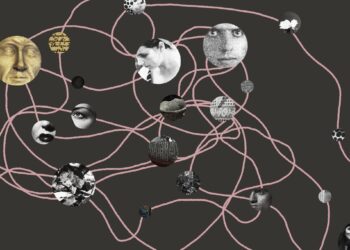
Ani has been lost, remembered and reinvented in countless ways. From photographs and poetry to archaeology, satire and pilgrimage, a new exhibition at the History Museum of Armenia explores the many afterlives of the medieval capital, and how its ruins have continued to shape Armenian memory across borders and generations.
Comments
No comments yet — be the first to comment.
More from EVN Report

A Thousand and One Afterlives: Ani at the History Museum of Armenia | Audio Article
EVN Report / 9 hours ago

When Culture Overrides the Law: Armenia’s Political Culture Problem
EVN Report / 10 hours ago

EVN մեդիա փառատոն. Չորրորդը․ լրագրության, գաղափարների ու փորձի փոխանակման երեք օր
EVN Report / Nov 2

EVN մեդիա փառատոն. Չորրորդը․ լրագրության, գաղափարների ու փորձի փոխանակման երեք օր
EVN Report / Nov 2
Related coverage
Արարատի նախկին մարզպետին պատկանող հողամասերի ձեռքբերման գործընթացում հայտնաբերվել են մի շարք խախտումներ
1in.am / 2 hours ago

Նիկոլը գիտի՝ դուք իրարից ավելի եք զզվում, քան իրանից. էլի դառնալու եք գայլի ուտելիք
24TV / 24News / 2 hours ago

«Զվարթնոց» օդանավակայանում քաղաքացու պայուսակից գողացել են 8000 դոլար և 50 հազար ռուբլի
168 Jham / 3 hours ago

Սպիտակում ընտրապայքարը հասել է պաշտոնանկությունների. ԿԸՀ-ն քննում է համայնքապետի քայլերը
Azatutyun / 3 hours ago