How do we measure the health of our Armenian churches? There are many in our communities who use financial barometers to assess the relative stability of a parish. Some of us will point to the presence of the younger generation as an indicator of future survival. A vibrant Sunday school or youth group offers hope that can be translated into commitment for the future. Still others will look at weekly church attendance as an indicator of spiritual identity and connection to the church through worship. As members of an ethnic church, Armenian adherents have at times expressed different views on the cultural and spiritual balance within a parish. Our church leaders, fearful of dividing the community or losing members, usually point out that our national character and spiritual identity are historically integrated and therefore inseparable. True, but the issue is more complex in our dispersed state. Before the Armenian Genocide and the formalization of the diaspora over 100 years ago, there was no need to manage the balance of ethnic content with our Christian identity. Our society in Western Armenia was built on a cultural heritage rooted in the church, the community and the home. The church was responsible for public education, but assimilation was not a concern in an overtly heterogeneous society. The church was the spiritual and educational hub, but ethnic identity was not at risk. The threats were physical, not from identity loss. Armenians rarely intermarried, and most marriages took place within their province or region. It is analogous to visiting the Republic of Armenia today. Very few individuals are concerned about societal assimilation, allowing the church to focus on spiritual and humanitarian content. The church in the diaspora has assumed a broader role. It is the center of the community as the most important institution. Providing a diverse set of cultural and spiritual endeavors according to the demographics of the community has become increasingly important. Our churches have survived in America by appealing broadly to the communities they serve. Simply read the newsletters or bulletins of any parish, and that diversity is on display. In any given parish, we will find programming connected to Christian education, language, worship, dance, history, food and an assortment of social gatherings designed to stay ahead of the interest curve. Some of the activities are fundraising in nature, while others are focused on ethnic preservation and spiritual development. Our church leaders, fearful of dividing the community or losing members, usually point out that our national character and spiritual identity are historically integrated and therefore inseparable. True, but the issue is more complex in our dispersed state. Within this maze of activity, one common theme emerges. We always count the house. Our leaders are similar to managers of a local arena, cautiously waiting to see whether they will fill the venue. If the event is a fundraiser, we will use the profit margin as a sign of success, but attendance is always an important standard. Many parishes keep records of weekly Badarak attendance to compare trends and search for improvement options. I have always been intrigued by the factors affecting church attendance, particularly when churches are financially sound but have low worship service attendance. Armenians have long found many ways to ensure their churches remain viable, but full churches have not been the standard. Most church forums and assemblies spend an inordinate amount of time on finances, yet only a fraction of that time on working to improve worship attendance. It is quite ironic because we rarely see an Armenian church close for financial reasons; our people respond well to appeals. Churches usually decline or close when the faithful are gone. Logic would suggest a much deeper commitment to cause-and-effect work to change that trend. A recent experience has highlighted the importance of understanding why American Armenians choose to attend or not attend church services. Our family has attended a particular Armenian parish for many years. We made the decision to attend many years ago when the priest at our former parish was reassigned, creating a void in the parish community. Our children at the time were in middle and high school, and we were concerned about their long-term identity. We are not the type to “church shop.” It was difficult for us since we knew very few people at the new parish, but there were organized youth programs and we were hopeful for our children. This parish differs from many Armenian churches where multiple generations have attended the same parish. The church was consecrated a little over 20 years ago. It has been a remarkable experience with a priest who served the parish until his recent retirement. I was always concerned that the “shallow roots” of the parish would at times create a “revolving door” of parishioners coming and going. What would happen if the priest left or some other significant change occurred? Would the commitment remain? Would the sense of community in a relatively young parish prevail and carry the parish through the transition? That perception became reality this past February when our priest retired from parish ministry. His retirement was not a surprise. He had announced it a year earlier so the parish could prepare for the transition. His retirement party was attended by nearly 300 people, a testament to the love and respect he had garnered. Armenians have long found many ways to ensure their churches remain viable, but full churches have not been the standard. Since the transition began, our community has struggled with poor church attendance and a decline in our sense of community. With the shortage of priests in the Diocese and Prelacy, most parishes manage the transition period with visiting priests and deacons. Some parishes may have a visiting clergy member who attends regularly on Sundays. Our parish was not that fortunate and has struggled with a rotation of a few clergy members and deacons on a monthly schedule. When you have a new individual every week, it is difficult to build relationships beyond a Sunday service. More than half the time, it was a Jashoo service led by deacons, with no Eucharist. Some parishes with long histories and deep roots can survive this process. Experiencing this painful process has given me the opportunity to understand what moves people and why we must do better as a church. Each parish is unique, and our leaders at the Diocese and Prelacy must understand that one size does not fit all. A sense of community is built through relationships, and that requires consistency. It may be a visiting clergy member or a deacon in charge, but we need to display a stronger sense of urgency and appropriate risk-taking in making those appointments. Allowing churches to struggle in the hope that they can recover a few years from now is not a winning strategy. I also asked myself how people can flock to successful social events during this period yet rarely attend church. The dichotomy between thriving social events and floundering church attendance occurs far too often to ensure a secure future. We can rationalize it by stating that attendance is always lower for Jashoo services than for a full Badarak , which is true, and that people are missing the sense of community that is evident with a full-time presence — a priest or deacon in charge. But at the end of the day, worship is about the value we place on a communal relationship with our Lord. Apparently, that message is not getting through when we most need a sense of communal worship. I have heard some suggest that they will be back when we secure a priest and return to normalcy. That raises an interesting question: Do we worship because we like the priest or because of our communion with our Savior? Certainly, there are nuances in priestly relationships, such as how priests present the liturgy and engage in personal discussions, but if we choose to attend simply because of the priest, we are missing an opportunity. In spite of the challenges, I have learned a great deal about building a spiritual community and remain hopeful that we will grow through prayer and by taking responsibility. In our parish, I find joy in seeing 95% of attendees receive Communion every Sunday. When I was a young boy, I remember the priest coming forward to offer the Body and Blood of Jesus Christ, with only a small percentage of parishioners coming forward to receive Communion. What changed? There were improvements in our educational processes, including adult retreats and Bible studies, to help us understand that being in “communion” with our Lord every Sunday through the Eucharist reflects the essence of our communal faith. A sense of community is built through relationships, and that requires consistency. Service to the church should never create tension between obligation and commitment. Too many of our people suffer from the stress of helping to make the church function, particularly on Sundays, and that stress can allow obligation to overshadow the joy of our faith. We can all help alleviate that risk by sharing the load of responsibility. A church reflects communal worship, which requires a community. If we recognize the need for transparency and inclusion in our parish life, more of the faithful will experience the joy of our faith. We are not here to judge others, but by better understanding community dynamics, we can mentor others and pray for them as they immerse themselves in a spiritual community. In my youth, I served on my home parish board of trustees. We were going through a particularly difficult time with a budget deficit and inconsistent attendance. The natural tendency was to focus on how to close the deficit. Most of the discussion centered on fundraising ideas and the feasibility of their implementation. At one point, a respected member of the community suggested that we were approaching this the wrong way. He said we were a Christian institution, not a corporation. We needed to do two things. First, we needed to pray together for the health of the parish. How many times do we as Christians turn to prayer first? Second, we needed to focus on God’s work. The point was that a faith community is built on our common commitment to our faith. That evening, many of the spiritual programs the priest was suggesting were approved. Our faith grew, and the community came together. Activities naturally increased, and the deficit disappeared. I have carried that lesson throughout my personal journey in our church. There is no greater gift than seeing people give with joy in their hearts. Why we go to church isn’t about criticism or conflict. It is about encouraging all to follow his path. I have learned not to despair when we encounter disappointment. Reach out with love and respect. Help people on their journey. When that happens, the bumps in the road become invisible. The post Why do we go to church, or why don’t we? appeared first on The Armenian Weekly .
Free: opens Google Translate with the text filled in. Long articles are split into numbered sections.
Premium: read the translation right here, without leaving HyeNews. Try free for 7 days.
Already in English.
Why do we go to church, or why don’t we?

Comments
No comments yet — be the first to comment.
More from The Armenian Weekly

Hye Pulse interview with Hrayr Varaz
The Armenian Weekly / 7 hours ago

Embassy interventions reportedly canceled Artsakh ensembles’ Vienna festival appearance
The Armenian Weekly / 10 hours ago

Lusine Shaboyan paints what words fail to express
The Armenian Weekly / 10 hours ago

ANCA ER announces Seventh Annual Online Christmas Auction
The Armenian Weekly / 11 hours ago
Related coverage

Ամերիկայի Հայ Աւետարանչական Ընկերակցութիւնը Պատուեց Վեր. Դոկտ. Վահան Յ. Թութիկեանը եւ Դոկտ. Նուրհան Հելվասեանը
Hairenik Weekly / 39 minutes ago
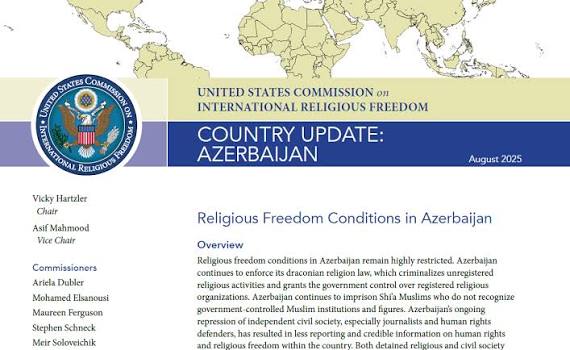
USCIRF Releases Report on Religious Freedom in Azerbaijan
The California Courier / 7 hours ago

AMAA Holds 107th Annual Meeting in Paramus, NJ
The California Courier / 7 hours ago
Ամերիկայի Հայ Աւետարանչական Ընկերակցութեան 107-րդ Տարեկան Ժողովը՝ Նիճ Ճըրզիի Մէջ
Hairenik Weekly / 12 hours ago