Showing in English.
5 full-article translations/day — headlines & summaries always free. Create free account for 25/day
Armenia's integration choice: the EAEU or the EU
Интеграционный выбор Армении: ЕАЭС или ЕС
A report by IAC VERELQ political observer Hayk Khalatyan at the 17th international conference "Characteristics of Modern Integration Processes in the Post-Soviet Space," organized by the journal "International Affairs" with the support of the Russian Ministry of Foreign Affairs.
Доклад политического обозревателя ИАЦ VERELQ Айка Халатяна на XVII международной конференции «Особенности современных интеграционных процессов на постсоветском пространстве», организованной журналом «Международная жизнь» при поддержке МИД России.
Armenia has entered a period when the question of choosing an integration...
Армения вступила в период, когда вопрос выбора интегр...
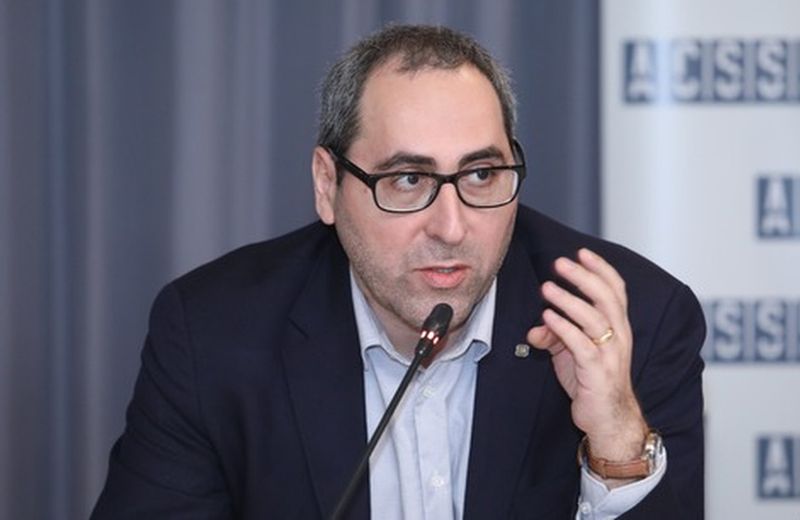
A report by IAC VERELQ political observer Hayk Khalatyan at the 17th international conference "Characteristics of Modern Integration Processes in the Post-Soviet Space," organized by the journal "International Affairs" with the support of the Russian Ministry of Foreign Affairs.
Доклад политического обозревателя ИАЦ VERELQ Айка Халатяна на XVII международной конференции «Особенности современных интеграционных процессов на постсоветском пространстве», организованной журналом «Международная жизнь» при поддержке МИД России.
Armenia has entered a period where the question of choosing an integration project is gradually turning into a question of choosing a geopolitical camp in the ongoing struggle between Russia and the collective West, with all the attendant security and economic risks.
Армения вступила в период, когда вопрос выбора интеграционного проекта постепенно превращается в вопрос выбора геополитического лагеря в идущей сейчас борьбе между Россией и коллективным Западом. Со всеми сопутствующими рисками в сфере безопасности и экономики.
In March 2025, the Armenian parliament adopted the law "On the commencement of the process of accession of the Republic of Armenia to the European Union." The current authorities emphasized that the law itself does not automatically mean accession to the European Union and that the final decision should ultimately be made by citizens in a referendum. Prime Minister Nikol Pashinyan, however, explicitly acknowledges that simultaneous membership in both the EU and the EAEU is impossible.
В марте 2025 года парламент Армении принял закон «О начале процесса вступления Республики Армения в Европейский союз». Действующие власти подчеркивали, что сам закон не означает автоматического вступления в Евросоюз и что окончательное решение в перспективе должно быть принято гражданами на референдуме. При этом премьер-министр Никол Пашинян прямо признает, что одновременное членство в ЕС и ЕАЭС невозможно.
Although Pashinyan and his team had been saying for months that they had no immediate plans to formally apply for EU membership and, therefore, no need to hold a referendum on the issue, as demanded by the Russian side, on August 24, while presenting the government's program for 2026-2031 to parliament, Pashinyan announced Yerevan's intention to begin the process of applying for EU membership in the near future.
И хоть Пашинян и члены его команды несколько месяцев подряд говорили, что у них нет планов в ближайшее время подавать официальную заявку на членство в ЕС и, следовательно, нет необходимости проводить референдум по этому вопросу, как того требует российская сторона, однако 24 августа, представляя в парламенте программу правительства на 2026–2031 годы, Пашинян заявил о намерении Еревана в ближайшее время начать процесс подачи заявки на членство в ЕС.
However, Moscow gave a completely different assessment from the very beginning. As early as January 9, 2025, when the bill was still being discussed, Russian Deputy Prime Minister Alexei Overchuk stated that Russia viewed the start of discussions on Armenia's EU accession bill as the beginning of the country's withdrawal from the EAEU and would take this into account when formulating its economic policy toward Armenia. On September 1, 2026, Vladimir Putin directly told Pashinyan that the adoption of a law initiating the process of joining another economic organization effectively signified a declaration of withdrawal from the EAEU, since simultaneous membership was incompatible.
Однако Москва с самого начала дала происходящему совершенно иную оценку. Еще 9 января 2025 года, когда законопроект только обсуждался, вице-премьер России Алексей Оверчук заявил, что Россия рассматривает начало обсуждения законопроекта о вступлении Армении в ЕС как начало выхода страны из ЕАЭС и будет учитывать это при формировании своей экономической политики в отношении Армении. 1 сентября 2026 года Владимир Путин уже прямо заявил Пашиняну, что принятие закона о начале процедуры вступления в другую экономическую организацию фактически означает заявление о выходе из ЕАЭС, поскольку одновременное членство несовместимо.
Yerevan explains its European course by the need to diversify foreign policy and economic relations. However, if the decline of some trade and economic ties occurs faster than the formation of new ones of comparable scale and terms, the country initially develops not a new economic model, but a breakdown of the old one. This is precisely what is happening with Armenia's foreign trade today.
В Ереване европейский курс объясняют необходимостью диверсификации внешнеполитических и экономических отношений. Однако, если сокращение одних торгово-экономических связей происходит быстрее, чем формируются сопоставимые по масштабам и условиям новые связи, страна сначала получает не новую экономическую модель, а разрыв старой. Именно это сегодня происходит с внешней торговлей Армении.
In 2014, Armenia's total foreign trade turnover was approximately $5.92 billion. Trade with EU countries reached $1.574 billion, or 26.6% of total foreign trade turnover. Trade with Russia amounted to $1.403 billion, or approximately 23.7%. Over the following decade, the Armenian economy grew significantly. In 2015, GDP was approximately $10.6 billion, and in 2025, it would reach $29.2 billion. In 2025, real economic growth was 7.2%.
В 2014 году общий внешнеторговый оборот Армении составлял около $5,92 млрд. Торговля со странами ЕС достигала $1,574 млрд, или 26,6% всего внешнеторгового оборота. Товарооборот с Россией составлял $1,403 млрд, или около 23,7%. За последующее десятилетие масштаб армянской экономики существенно вырос. В 2015 году ВВП составлял около $10,6 млрд, а в 2025 году — уже $29,2 млрд. В 2025 году реальный экономический рост составил 7,2%.
By 2025, Armenia's foreign trade turnover reached $21.43 billion, a 29% decrease over the year. Exports amounted to $8.4 billion, while imports amounted to $13 billion.
К 2025 году внешнеторговый оборот Армении достиг $21,43 млрд, сократившись за год на 29%. Экспорт составил $8,4 млрд, импорт — $13 млрд.
Russia, however, retained its status as Armenia's largest individual trading partner. Trade between the two countries in 2025 amounted to approximately $7.7 billion, accounting for approximately 35.8% of Armenia's total foreign trade turnover. Of this, Armenia's exports to Russia amounted to approximately $2.96 billion, while imports amounted to $4.7 billion.
Россия при этом сохранила статус крупнейшего отдельного торгового партнера Армении. Товарооборот двух стран в 2025 году составил около $7,7 млрд, что соответствует примерно 35,8% всего внешнеторгового оборота Армении. Из них экспорт Армении в Россию составил около $2,96 млрд, а импорт — $4,7 млрд.
The EAEU as a whole accounted for approximately $8 billion, or 37.5% of Armenia's foreign trade turnover. The EAEU countries accounted for approximately $3.2 billion of Armenian exports and $4.8 billion of imports.
ЕАЭС в целом обеспечил около $8 млрд, или 37,5% внешнеторгового оборота Армении. На страны Союза пришлось около $3,2 млрд армянского экспорта и $4,8 млрд импорта.
The EU was significantly more modest: its trade turnover with Armenia amounted to approximately $2.5 billion, or 11.7% of total foreign trade turnover. Armenia's exports to the EU amounted to $666.8 million, while imports amounted to approximately $1.8 billion. The EU's share of Armenian exports reached 7.9%, and of imports, approximately 14%.
ЕС выглядел значительно скромнее: его товарооборот с Арменией составил около $2,5 млрд, или 11,7% общего внешнеторгового оборота. При этом экспорт Армении в ЕС составлял $666,8 млн, а импорт — около $1,8 млрд. Доля ЕС в армянском экспорте достигла 7,9%, в импорте — около 14%.
Amid the deepening crisis in Armenian-Russian relations and Moscow's restrictions on Armenian agricultural products, Armenia's trade turnover with Russia fell by 20.5% to $3.12 billion from January to July 2026, while overall trade with the EAEU countries fell by 18.4% to $3.35 billion. At the same time, trade turnover with the EU countries increased by 57.2%, reaching $2.19 billion. Trade with China reached $1.81 billion, approximately 15.7%, and with Iran, $437.7 million, approximately 3.8%. Armenia's overall foreign trade turnover, however, increased by only 1.7% to $11.54 billion.
На фоне углубления кризиса в армяно-российских отношениях и введенных Москвой ограничений в отношении армянской сельхозпродукции в январе–июле 2026 года товарооборот Армении с Россией снизился на 20,5%, до $3,12 млрд, а в целом торговля со странами ЕАЭС сократилась на 18,4%, до $3,35 млрд. Одновременно товарооборот со странами ЕС увеличился на 57,2%, достигнув $2,19 млрд. Торговля с Китаем достигла $1,81 млрд — примерно 15,7%, а с Ираном — $437,7 млн, около 3,8%. Общий внешнеторговый оборот Армении при этом вырос всего на 1,7%, до $11,54 млрд.
The trend is clear: the share of Russian and Eurasian trade is declining, while the share of the EU and China is growing.
То есть тренд очевиден: доля российского и евразийского направления сокращается, тогда как доля ЕС и Китая растет.
At the same time, Russia remains the most important market for Armenian exports. Indeed, in 2025, it accounted for approximately 35.3% of all Armenian exports, while the EU accounted for 7.9%. Therefore, replacing the Russian market with the European market through administrative measures alone is impossible. It requires restructuring distribution channels, logistics, standards, packaging, certification, and marketing.
При этом Россия остается важнейшим рынком именно для армянского экспорта. Ведь в 2025 году на нее приходилось около 35,3% всего армянского экспорта, тогда как на ЕС — 7,9%. Именно поэтому заменить российский рынок европейским только административным решением невозможно. Речь идет о перестройке каналов сбыта, логистики, стандартов, упаковки, сертификации и маркетинга.
However, the importance of relations with Russia is determined by more than just the structure of trade. Russian gas remains a crucial factor in Armenia's economic and social stability and the competitiveness of the Armenian economy. Therefore, a possible change in its price is not only a matter of relations between Moscow and Yerevan, but also of domestic political stability.
Однако важность отношений с Россией определяется не только структурой товарооборота. Российский газ остается одним из важнейших факторов экономической и социальной устойчивости Армении и конкурентоспособности армянской экономики. Поэтому возможное изменение его цены — это не только вопрос отношений Москвы и Еревана, но и внутриполитической стабильности.
Armenian Central Bank Chairman Martin Galstyan explicitly stated that a possible increase in gas prices would have a dual effect: a primary effect through increased overall inflation, and a secondary effect through increased prices for other goods, as the price of gas is included in the cost of production, including greenhouse products and industrial production. At the same time, there is a risk of a decline in economic activity.
Председатель Центрального банка Армении Мартин Галстян прямо заявил, что сценарий возможного повышения стоимости газа будет иметь двойной эффект: первичный — через рост общего уровня инфляции, и вторичный — через увеличение стоимости других товаров, поскольку цена газа входит в себестоимость производства, в том числе тепличной продукции и промышленного производства. Одновременно возникает риск снижения экономической активности.
Galstyan called this option Scenario X, which is not related to either Baseline Scenario A or Scenario B, and characterized it as a scenario that assumes a "more apocalyptic" development of events. If this scenario materializes, according to the head of the Central Bank, the regulator's response should be significantly stronger and more unconventional.
Галстян назвал этот вариант сценарием X, не относящимся ни к базовому сценарию A, ни к сценарию B, и характеризовал его как сценарий, предполагающий «более апокалиптическое» развитие событий. В случае его реализации, по словам главы ЦБ, реакция регулятора должна быть значительно более сильной и нестандартной.
This statement by the head of the Central Bank is of fundamental importance. After all, the Central Bank is effectively warning that rising gas prices could simultaneously impact two key indicators—inflation and economic growth.
Это заявление главы ЦБ имеет принципиальное значение. Ведь Центральный банк фактически предупреждает: подорожание газа способно одновременно ударить по двум ключевым показателям — инфляции и экономическому росту.
This is precisely why any discussion of the integration choice without discussing energy is incomplete. An alternative to Russian gas must at least be comparable in price to Russian gas ($177 per thousand cubic meters). However, there are doubts that Azerbaijan and Iran will even be physically able to meet Armenia's required supply volumes. A "Ukrainian scenario" is also entirely plausible, in which, under the guise of protecting its sovereignty from Russia, Armenia would purchase the same Russian gas from Azerbaijan, but at a higher price. Just as Kyiv once did, supposedly refusing to purchase Russian gas, but in reality paying much more for it under the "re-export" scheme.
Именно поэтому разговор об интеграционном выборе без разговора об энергетике оказывается неполным. Альтернатива российскому газу должна быть хотя бы сопоставима по цене с российским газом (177 долларов за тысячу кубометров). Хотя есть сомнения, что Азербайджан и Иран даже физически смогут обеспечить необходимые Армении объемы поставок. И вполне реален «украинский сценарий», когда под лозунгами защиты суверенитета от России Армения будет покупать у Азербайджана тот же российский газ, но по более дорогой цене. Как в свое время Киев, якобы отказавшийся от закупок российского газа, но в реальности плативший за него намного дороже в рамках схемы «реэкспорта».
Politically, any country can be declared an alternative partner. Economically, it only becomes an alternative when it can provide comparable conditions. This is especially important for Armenia. If Russian gas is replaced by more expensive gas, the price difference is ultimately borne by Armenian consumers. If the Russian market is replaced by a more distant European market with more expensive logistics and certification, this difference (and more likely, economic losses) is borne by the Armenian producer. If some transport routes are closed, and new ones pass through hostile states that gain the ability to control Armenia's access to these routes, another form of dependence arises.
Политически можно объявить любую страну альтернативным партнером. Экономически альтернативой она становится только тогда, когда способна обеспечить сопоставимые условия. Для Армении это особенно важно.Если российский газ заменяется более дорогим газом, разница в цене в конечном счете оплачивается армянским потребителем. Если российский рынок заменяется более удаленным европейским рынком с более дорогой логистикой и сертификацией, эту разницу (а более вероятно, экономические потери) оплачивает армянский производитель. Если одни транспортные маршруты закрываются, а новые проходят через враждебные государства, которые получают возможность контролировать доступ Армении к этим маршрутам, возникает другая форма зависимости.
The Armenian authorities' foreign policy course of rapprochement with Turkey and Azerbaijan at any cost could have very mixed results not only for Armenia but also for the South Caucasus region as a whole. As a result of current policies, a significant portion of the country's foreign economic infrastructure could become tied to countries with which Armenia has historically and politically had extremely complex relations. This raises a question that often remains on the back burner in discussions of European integration. If Armenia reduces its economic ties with Russia and in exchange becomes dependent on the transport, energy, and trade capabilities of Turkey and Azerbaijan, traditionally hostile to Armenia and the Armenian people, can this be considered true diversification?
Взятый властями Армении внешнеполитический курс на сближение с Турцией и Азербайджаном любой ценой может иметь очень неоднозначные результаты не только для армянской стороны, но и в целом для региона Южного Кавказа. В результате нынешней политики значительная часть внешнеэкономической инфраструктуры страны может оказаться завязанной на государства, с которыми у Армении исторически и политически существуют крайне сложные отношения. И здесь возникает вопрос, который в рамках дискуссии о евроинтеграции часто остается на втором плане. Если Армения сокращает экономические связи с Россией, а взамен получает зависимость от транспортных, энергетических и торговых возможностей Турции и Азербайджана, традиционно враждебно настроенных к Армении и армянскому народу, можно ли считать это реальной диверсификацией?
The European Union is located far beyond the region, while Turkey and Azerbaijan are located directly adjacent to Armenia. And if Armenia's economic restructuring is accompanied by a de facto dependence on the economy and infrastructure of the Turkic tandem (as happened with Georgia during Mikheil Saakashvili's presidency), European rhetoric could prove to be merely the outer shell of a much deeper regional transformation. It's no coincidence that many Armenian experts believe that, under the slogans of European integration and protecting Armenia's sovereignty from Russia, the current authorities, with the support of the EU and the US, are in reality turning Armenia into a satellite of Turkey and Azerbaijan.
Европейский союз находится далеко за пределами региона, а Турция и Азербайджан — непосредственно рядом с Арменией. И если перестройка экономики Армении будет сопровождаться фактическим установлением зависимости от экономики и инфраструктуры тандема тюркских государств (как это произошло с Грузией во времена президентства Михаила Саакашвили), европейская риторика может оказаться лишь внешней оболочкой гораздо более глубокой региональной трансформации. И не случайно, что многие армянские эксперты считают, что под лозунгами евроинтеграции и защиты суверенитета от России действующие власти при поддержке ЕС и США в реальности превращают Армению в сателлита Турции и Азербайджана.
In this regard, it's worth recalling that European Commissioner Marta Kos explicitly stated this year that the EU intends to invest heavily in linking the energy systems of Armenia and Turkey in order to reduce Armenia-Russia energy cooperation. She also cited the example of the EU, which, following the outbreak of the conflict in Ukraine, set a course to end energy cooperation with Russia. And the Armenian authorities, led by Pashinyan, have already openly declared their readiness to closely cooperate with Turkey and Azerbaijan in the energy sector, even to the point of purchasing Azerbaijani gas.
В этой связи можно вспомнить, что еврокомиссар Марта Кос прямо заявила в этом году, что ЕС намерен вложить большие средства для того, чтобы связать энергосистемы Армении и Турции, для того чтобы снизить сотрудничество Армении и России в энергетической сфере. Заодно приведя в пример Евросоюз, который после начала конфликта на Украине взял курс на прекращение сотрудничества с Россией в энергетической сфере. И власти Армении во главе с Пашиняном уже прямо заявляют о готовности тесного сотрудничества с Турцией и Азербайджаном в сфере энергетики, вплоть до начала закупок азербайджанского газа.
In 2026, the EU has already transferred €34 million to Armenia out of the announced €52 million support package. An additional €18 million is expected to bring this package to its full amount. The funds are intended, in particular, to support businesses and exporters affected by Russian trade restrictions.
В 2026 году ЕС уже перечислил Армении €34 млн из объявленного пакета поддержки в €52 млн. Еще €18 млн должны довести этот пакет до полной суммы. Средства предназначены, в частности, для поддержки бизнеса и экспортеров, пострадавших от российских торговых ограничений.
In July, the European Commission announced a proposal to temporarily liberalize trade for approximately 80% of Armenian exports to the EU. The measures are intended to last two years after the relevant regulations come into force.
В июле Еврокомиссия объявила о предложении временно либерализовать торговлю примерно для 80% армянского экспорта в ЕС. Меры рассчитаны на два года после вступления соответствующего регулирования в силу.
However, it should be remembered that market access does not guarantee demand. The European market is significantly larger than the Russian one, but the requirements for products, certification, packaging, quality, traceability, and competition are also significantly higher there. For example, during the five years of the complete Russian embargo (from 2007 to 2012), Georgian exporters were unable to replace the Russian market with the European one. And after Moscow lifted the restrictions, the traditional Russian market once again became the primary market for Georgian wine and Borjomi.
Однако надо помнить, что доступ на рынок не равен гарантированному спросу. Европейский рынок значительно больше российского, но требования к продукции, сертификации, упаковке, качеству, прослеживаемости и конкуренции там также существенно выше. Например, грузинские экспортеры за 5 лет полного российского эмбарго (с 2007 по 2012 год) так и не смогли заменить российский рынок европейским. И после снятия Москвой ограничений традиционный российский рынок вновь стал основным для грузинского вина и «Боржоми».
In general, Armenia needs to understand that the European Union requires all its partners to fully comply with the sanctions regime against Russia. This is precisely the main cause of the problems in Brussels' relations with Serbia and Georgia, which have refused to completely sever economic ties with Russia, considering the enormous damage it would cause them, and the EU has no intention of compensating for any possible losses.
В целом Армении надо понимать, что Европейский союз требует от всех своих партнеров полного соблюдения санкционного режима в отношении России. И именно это является главной причиной проблем в отношениях Брюсселя с Сербией и Грузией, которые отказались идти на полный разрыв экономических связей с Россией, учитывая то, что это нанесет им огромный урон, а ЕС не намерен как-то возмещать возможные потери.
A European reorientation alone does not guarantee economic growth and prosperity. Moldova's example is illustrative. In 2025, its GDP grew in real terms by only 2.4%, to €18.05 billion. Georgia, however, which refused to blindly follow Brussels' instructions and escalate tensions with Russia and join all European sanctions, is showing very positive economic results. In 2025, Georgia's foreign trade amounted to $25.82 billion, an increase of 10.1%. Real GDP grew by 7.5%, reaching approximately $38.1 billion.
Европейская переориентация сама по себе не гарантирует экономического роста и процветания. Здесь показателен пример Молдовы. В 2025 году ее ВВП вырос в реальном выражении всего на 2,4%, до €18,05 млрд. А вот Грузия, отказавшаяся слепо следовать указаниям Брюсселя и идти на обострение с Россией и присоединение ко всем европейским санкциям, наоборот, показывает очень позитивные результаты в экономике. В 2025 году внешняя торговля Грузии составила $25,82 млрд, увеличившись на 10,1%. Реальный ВВП вырос на 7,5%, до примерно $38,1 млрд.
In the case of Armenia, the EU's logic, as well as the US's support for this policy, is that strengthening Turkey's position in the South Caucasus automatically means weakening the positions of Russia and Iran. These are the West's two main geopolitical adversaries in the region. Moreover, Turkey, which is actively pursuing the integration of Turkic states, which is effectively becoming a competing project to the Eurasian integration promoted by Moscow, will be able to play a stronger role in Central Asia, where the US's two main geopolitical rivals—Russia and China—currently hold leading positions.
В случае с Арменией логика ЕС, а также поддерживающая эту политику США заключается и в том, что усиление позиций Турции в регионе Южного Кавказа автоматически означает ослабление позиций России и Ирана. Это два главных геополитических противника Запада в регионе. Более того, Турция, которая активно развивает проект интеграции тюркских государств, который фактически превращается в конкурирующий проект для евразийской интеграции, которую продвигает Москва, сможет с более сильных позиций играть в регионе Центральной Азии, где на данный момент ведущие позиции у двух главных геополитических конкурентов США — России и Китая.
And the question arises as to how much of this is in the interests of Armenia and the Armenian people.
И встает вопрос, насколько все это исходит из интересов Армении и армянского народа.
After all, Russia itself emphasizes that it does not intend to finance Armenia's transition from the EAEU to the EU, especially to an organization that is transforming from an economic into a military-political alliance, one that openly declares that it considers Russia an enemy and is preparing for war with it. European officials have even given specific timelines for a possible war between EU countries and Russia. Under these circumstances, it would be naive to expect Moscow to continue providing Armenia with economic and financial assistance, given its desire to move into the camp of Russia's adversaries.
Ведь сама Россия подчеркивает, что не намерена финансировать переход Армении из ЕАЭС в ЕС. Тем более в организацию, которая превращается из экономической в военно-политический союз, который прямо заявляет о том, что считает Россию врагом и готовится к войне с ней. Европейские официальные лица даже называют конкретные сроки возможной войны между странами ЕС и Россией. И в этих условиях наивно ожидать, что Москва будет продолжать оказывать Армении экономическую и финансовую помощь, с учетом ее желания переместиться в лагерь противников России.
Armenia can and should indeed seek new markets and diversify its relations. But true diversification means finding new allies and partners while maintaining the old ones. The current policy of the Armenian authorities, led by Pashinyan, has only resulted in Armenia having problems with its old allies and partners, without even finding equivalent replacements. Moreover, in the name of the interests of third countries, it is prepared to become involved in a very dangerous geopolitical standoff between the West and Russia, even without finally resolving its issues with Azerbaijan and Turkey, which have yet to abandon their ideas of so-called "Western Azerbaijan" and the "Zangezur Corridor."
Армения действительно может и должна искать новые рынки, диверсифицировать отношения. Но реальная диверсификация — это нахождение новых союзников и партнеров при сохранении старых. А нынешняя политика армянских властей во главе с Пашиняном приводит лишь к тому, что Армения получила проблемы со старыми союзниками и партнерами, притом даже не найдя им равноценную замену. И более того, во имя интересов третьих стран готова стать участником очень опасного геополитического противостояния между Западом и Россией, даже не решив окончательно своих вопросов с Азербайджаном и Турцией, которые так и не отказались от своих идей так называемых «Западного Азербайджана» и «Зангезурского коридора».
Hayk Khalatyan, https://verelq.am/ru/
Айк Халатян, https://verelq.am/ru/
Comments
No comments yet — be the first to comment.
More from Yerkramas
Nikol Pashinyan's list of concessions will grow if he is not removed from power.
Yerkramas / 37 minutes ago
Russia does not intend to give up its positions in Armenia and the South Caucasus.
Yerkramas / 5 hours ago
The leader of the Armenian community of the Don was awarded the "Public Recognition" award.
Yerkramas / 11 hours ago
The chaos at the border has a specific name: Nikol Pashinyan.
Yerkramas / 12 hours ago
Related coverage
No related coverage from other sources yet.