Relations between Armenia and the Armenian diaspora continue to develop as communities abroad look for new ways to maintain cultural connections, support Armenia, and participate in its economic and social development. With Armenians living across Europe, North America, the Middle East, Latin America, Russia, and many other parts of the world, cooperation between Armenia and diaspora communities involves a wide range of institutions and activities.
The relationship is also changing. Traditional forms of engagement such as charitable donations, cultural events, and community organizations remain important, but newer approaches increasingly emphasize professional cooperation, youth programs, repatriation, investment, digital services, and direct participation in projects in Armenia.
The Armenian government's Office of the High Commissioner for Diaspora Affairs identifies areas including youth leadership, community organizing, professional engagement, repatriation, diaspora investment, and stronger connections between Armenian institutions and communities abroad as part of its work.
A More Structured Approach to Armenia–Diaspora Relations
The institutional relationship between Armenia and the diaspora has become more organized over the past several years.
The Office of the High Commissioner for Diaspora Affairs was established in 2019 and is responsible for coordinating a number of state efforts involving Armenians living outside Armenia. Its stated objectives include strengthening connections with the homeland, supporting youth leadership, involving diaspora professionals, assisting investors and philanthropists, encouraging repatriation, and keeping diaspora communities informed about developments in Armenia.
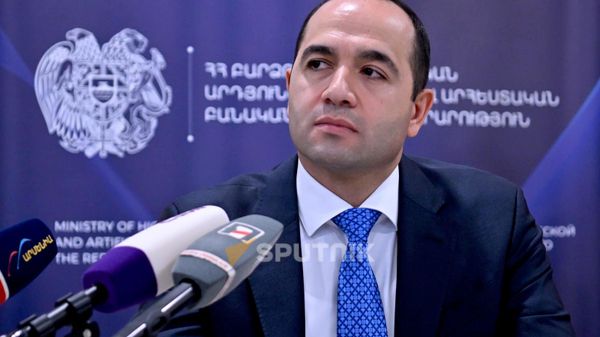
In April 2026, High Commissioner Zareh Sinanyan said that the office had been working to make Armenia–Diaspora relations more practical and based on concrete programs, while also emphasizing transparency and professional cooperation.
This approach represents an attempt to move beyond a relationship based mainly on symbolic connections. Instead, government programs increasingly seek specific forms of participation that can involve education, employment, professional expertise, investment, community development, or repatriation.
Youth Programs Strengthen Connections With Armenia
Young Armenians are one of the most important groups in the future of Armenia–Diaspora relations.
One example in 2026 was the “Step Towards Home” educational and cultural program. The first phase brought together 120 young Armenians from countries including Russia, Georgia, Spain, and the United States.
During the two-week program, participants learned about Armenian history and culture, improved their Armenian-language knowledge, visited important sites, and developed relationships with other young Armenians. A second group followed later in the summer.
Programs like this address a practical challenge for diaspora communities. Many young Armenians grow up speaking the language of their country of residence more frequently than Armenian. They may also have limited opportunities to meet Armenians from other countries or experience everyday life in Armenia.
A visit to Armenia can therefore provide something that online communication cannot completely replace: direct exposure to the country's institutions, communities, geography, history, and contemporary society.
At the same time, youth programs can create networks that continue after participants return home.
Professional Cooperation Is Becoming More Important
Another important area is professional engagement.
The iGorts program allows diaspora professionals to work in Armenia's public administration. Participants can bring experience gained in different countries and apply it to projects within Armenian institutions.
In August 2026, Prime Minister Nikol Pashinyan met with participants in the program and discussed developments related to repatriation and professional engagement. According to the government-reported figures, the program had also seen a substantial proportion of earlier participants remain in Armenia.
Professional cooperation can take many forms.
An Armenian engineer living abroad may contribute technical knowledge. A financial specialist may help develop institutional processes. A technology professional may participate in digital projects. A researcher may cooperate with an Armenian university. An entrepreneur may establish a business relationship with a company in Armenia.
This means that diaspora engagement does not necessarily require permanent relocation.
A person can live abroad while still contributing expertise, contacts, investment, mentorship, or other resources to Armenia.
Repatriation Has Become a Major Part of the Discussion
Repatriation is one of the clearest areas where diaspora relations intersect with migration policy.
In August 2026, Armenia's Ministry of Internal Affairs reported that Armenian citizens had again recorded a positive migration balance during the first half of the year. The ministry reported a balance of +1,347 for the first six months of 2026, while the full-year 2025 figure was +8,660. These figures concern border-crossing balances and should not automatically be interpreted as the number of permanent repatriations.
Prime Minister Pashinyan also said in August that Armenia had been experiencing stronger repatriation and immigration trends and stated that the number of Armenian citizens returning in 2025 exceeded the number leaving by more than 8,000.
The distinction between migration statistics and permanent repatriation is important. A person can enter or leave Armenia for many reasons, including work, study, family visits, tourism, or temporary residence.
For someone actually moving to Armenia permanently, however, practical issues become much more significant.
These can include housing, employment, schooling, documentation, healthcare, taxation, banking, transportation, and adapting to local institutions.
Services for Repatriates and Diaspora Armenians
The Armenian government has been working to make administrative processes easier for people moving between Armenia and other countries.
The Migration and Citizenship Service has been undergoing digital transformation. In August 2026, the Ministry of Internal Affairs said that all directions of the Migration and Citizenship Service were planned to be digitized by the end of the year.
The government has also announced changes concerning residence-status applications. Starting November 1, 2026, applications and related procedures for obtaining residence status are scheduled to move to a newly implemented electronic system.
These changes matter for diaspora Armenians as well as foreign residents because people moving to Armenia often need to interact with migration and citizenship institutions.
Digital services can potentially reduce unnecessary visits to government offices and make procedures easier to understand, although the practical experience will depend on how the systems operate after implementation.
Diaspora Investment and Business Connections
Economic cooperation is another important part of the relationship.
Armenians living abroad can contribute to Armenia through direct investment, business partnerships, professional networks, tourism, property purchases, and support for local companies.
The government's diaspora policy explicitly includes assisting diaspora investors and philanthropists with projects in Armenia.
Investment relationships can also create connections between Armenia and the countries where diaspora Armenians live.
For example, a business owner in France may have access to European customers, while an Armenian company may have production or technical capabilities. Cooperation between the two can create a relationship that benefits both sides.
However, diaspora investment is not automatic. Investors still consider issues such as regulations, market size, financing, infrastructure, workforce availability, taxation, and political and economic conditions.
For that reason, effective diaspora economic engagement requires practical information and reliable institutional support rather than simply encouraging people to invest.
Cultural Identity Remains Central
Economic and professional cooperation has become more visible, but cultural identity remains at the heart of Armenia–Diaspora relations.
Armenian schools, churches, cultural organizations, dance groups, choirs, language programs, museums, newspapers, and community centers continue to provide spaces where Armenian identity is maintained.
The challenge is particularly significant for younger generations.
A child born in the United States, France, Argentina, Lebanon, or another country may grow up speaking the local language more frequently than Armenian. Maintaining Armenian-language skills therefore often requires organized education and support from families and community institutions.
Programs that bring young people to Armenia can complement local education by giving participants direct experience with Armenian culture and everyday life.
The Role of Community Organizations
Armenia–Diaspora relations do not take place only between the Armenian government and individual people.
Large international organizations, local associations, churches, schools, charitable foundations, professional groups, youth organizations, and cultural institutions all play roles.
This makes the diaspora highly diverse.
Different organizations can have different views about Armenian domestic politics, foreign relations, community priorities, and the relationship between diaspora institutions and the Armenian state.
The Armenian government itself has acknowledged the importance of cooperation with diaspora institutions and individuals as part of its broader diaspora policy. Its strategic framework includes preserving identity in Armenian communities, promoting repatriation, and involving diaspora communities in Armenian and pan-Armenian issues.
Understanding this diversity is important because there is no single organization that represents every Armenian living outside Armenia.
Improving Communication With Diaspora Communities
Communication is another area of development.
For people living thousands of kilometers from Armenia, access to reliable information can be difficult. Government decisions, administrative procedures, investment opportunities, education programs, and migration rules can change over time.
The Office of the High Commissioner for Diaspora Affairs lists keeping diaspora communities informed about developments in Armenia and diaspora communities as one of its strategic directions.
Better communication can reduce confusion, particularly for people considering a move to Armenia or planning a business or educational project.
It can also make community organizations more aware of programs that they can offer to their members.
Migration Policy and the Diaspora
Migration policy has become increasingly connected with Armenia's broader development agenda.
In June 2026, Armenian officials described migration management as an important part of the country's development priorities. The Ministry of Internal Affairs highlighted institutional resilience, citizen-centered services, and digital transformation as major areas of reform.
For diaspora Armenians, migration policy can affect several practical questions.
Someone considering Armenian citizenship may need information about documentation and procedures. A person planning to live in Armenia temporarily may need residence-related services. A family moving permanently may need assistance with education and integration.
As Armenia's migration systems become more digital, these services could become easier to access from abroad and after arrival.
Armenia–Diaspora Relations Are Not One-Way
It is easy to think of diaspora relations as Armenia receiving assistance from Armenians abroad. In reality, the relationship is more complicated.
Diaspora communities also gain from maintaining connections with Armenia.
They can access educational opportunities, cultural programs, professional networks, investment possibilities, tourism, and opportunities for their children to experience Armenian society.
Young Armenians abroad can build international friendships with people who share similar backgrounds.
Professionals can develop relationships with colleagues in Armenia.
Businesses can find partners and markets.
Families can maintain connections with relatives and cultural institutions.
This makes the relationship potentially beneficial in both directions.
Digital Technology Is Changing Diaspora Engagement
Technology has created new possibilities for connecting communities.
Video conferences allow diaspora organizations in different countries to meet without traveling. Online education allows people to study Armenian language and culture remotely. Digital government services can reduce administrative barriers. Social media allows local organizations to communicate with members immediately.
Technology is particularly relevant for smaller Armenian communities.
A community with only a small number of local members may not have the resources to organize large events regularly. Digital connections can allow those members to participate in international programs and communicate with larger Armenian networks.
However, online activity does not completely replace local community life.
Schools, churches, cultural centers, sports teams, youth groups, and community events continue to provide personal relationships that are difficult to reproduce online.
The Importance of Integration for Repatriation
Encouraging Armenians to return to Armenia is only one part of repatriation policy.
Successful long-term integration also matters.
A returning family may have expectations shaped by life in another country. It may face differences in workplace culture, bureaucracy, education, housing, transportation, and social life.
Children may also need time to adjust to Armenian-language education or a new school environment.
This is why repatriation programs increasingly involve more than simply providing information about moving to Armenia. Practical integration services can determine whether a person feels able to establish a stable life after relocating.
The government's diaspora policy explicitly identifies smooth integration of repatriates as one of its strategic areas.
What the Future May Bring
Several issues are likely to shape Armenia–Diaspora relations in the coming years.
Stronger Youth Participation
Young Armenians will remain central to the future of diaspora communities. Programs that combine culture with education, technology, leadership, and international networking can provide new forms of engagement.
More Professional Cooperation
Professional networks may become increasingly important as Armenia seeks expertise and diaspora professionals look for practical ways to contribute without necessarily relocating.
Continued Repatriation
Migration trends will remain closely watched, but long-term repatriation will depend on employment, housing, education, public services, and people's personal circumstances.
Digital Government Services
Improved digital services could make it easier for diaspora Armenians to interact with Armenian institutions from abroad and during the process of relocation.
Cultural Preservation
Armenian-language education and cultural institutions will continue to play an important role in maintaining identity among younger generations.
Greater Institutional Coordination
The effectiveness of Armenia–Diaspora cooperation will partly depend on communication between government institutions, international organizations, local community groups, businesses, and individual Armenians.
Conclusion
Armenia and the diaspora continue to develop a relationship that is broader than traditional cultural and charitable connections. Current efforts involve youth education, professional programs, repatriation, investment, migration services, cultural preservation, and digital communication.
The 2026 developments show several directions at once. Young Armenians are being brought closer to Armenia through educational programs, diaspora professionals are participating in Armenian institutions, migration and citizenship services are being modernized, and government officials continue to focus on practical cooperation with communities abroad.
At the same time, the diaspora remains diverse. Armenian communities in different countries have their own histories, institutions, priorities, and challenges. A successful relationship therefore requires flexibility rather than a single model for every community.
The future of Armenia–Diaspora relations will depend on how effectively these different parts of the Armenian world can communicate and cooperate while respecting the distinct circumstances of communities abroad. Youth participation, professional exchange, cultural education, repatriation, and practical institutional services are likely to remain central to that process.