Showing in English.
5 full-article translations/day — headlines & summaries always free. Create free account for 25/day
It became known why NASA's mission to find water on the moon failed
Стало відомо, чому місія NASA з пошуку води на місяці провалилася
NASA’s Lunar Trailblazer mission to the moon failed almost immediately after launch, Gizmodo reports.
Місячна місія NASA під назвою Lunar Trailblazer завершилася провалом практично одразу після старту, повідомляє Gizmodo.
The $72 million satellite, designed to map water on the moon’s surface, failed on its first day of flight.
Супутник вартістю $72 млн, покликаний картографувати воду на поверхні Місяця, вийшов з ладу вже в перший день польоту.
Lunar Trailblazer launched in February 2025 from Kennedy Space Center as part of Intuitive Machines’ IM-2 mission aboard a Falcon […]
Lunar Trailblazer стартував у лютому 2025 року з космодрому Kennedy Space Center у межах місії IM-2 компанії Intuitive Machines на ракеті Falcon […]
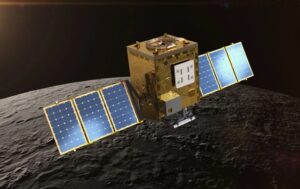
NASA’s Lunar Trailblazer mission to the moon failed almost immediately after launch, Gizmodo reports. The $72 million satellite, designed to map water on the moon’s surface, failed on its first day of flight.
Місячна місія NASA під назвою Lunar Trailblazer завершилася провалом практично одразу після старту, повідомляє Gizmodo. Супутник вартістю $72 млн, покликаний картографувати воду на поверхні Місяця, вийшов з ладу вже в перший день польоту.
Lunar Trailblazer launched in February 2025 from Kennedy Space Center as part of Intuitive Machines’ IM-2 mission aboard a SpaceX Falcon 9 rocket. It separated from the rocket normally, and initially contact was established with the spacecraft. However, contact was lost the next day.
Lunar Trailblazer стартував у лютому 2025 року з космодрому Kennedy Space Center у межах місії IM-2 компанії Intuitive Machines на ракеті Falcon 9 від SpaceX. Відокремлення від ракети відбулося штатно, і спочатку зв’язок із апаратом встановили. Однак уже наступного дня контакт зник.
The agency has since formed a special investigation team to investigate the incident. According to its report, obtained by reporters through a Freedom of Information Act request, the software that was supposed to point the spacecraft’s solar panels at the Sun instead turned them 180 degrees in the opposite direction.
Після інциденту агентство створило спеціальну комісію з розслідування. Згідно з її звітом, отриманим журналістами через запит на підставі закону про свободу інформації, програмне забезпечення, яке мало орієнтувати сонячні батареї апарата на Сонце, розгорнуло їх на 180 градусів у протилежний бік.
As a result, the spacecraft went into “cold mode,” with minimal power consumption and loss of orientation control. Communication with ground services was completely lost, and numerous erroneous automatic actions of the fault management system only worsened the situation. The report notes that individual problems could be eliminated, but their combination became fatal.
У результаті супутник перейшов у «холодний режим» із мінімальним енергоспоживанням і втратою контролю орієнтації. Зв’язок із наземними службами було повністю втрачено, а численні помилкові автоматичні дії системи керування несправностями лише погіршили ситуацію. У звіті зазначається, що окремі проблеми могли бути усунені, однак їхня комбінація стала фатальною.
Attempts to restore control lasted for several months, but were abandoned in July. The mission was officially closed in August, recognizing that without two-way communication it was impossible to either diagnose the problem or keep the satellite on the planned trajectory.
Спроби відновити керування тривали кілька місяців, але в липні від них відмовилися. Офіційно місію закрили в серпні, визнавши, що без двостороннього зв’язку неможливо ані діагностувати проблему, ані утримувати супутник на запланованій траєкторії.
The developer of the device was Lockheed Martin, which NASA selected back in 2020. The report notes that before launch, a full-fledged end-to-end testing of the solar array phasing was not carried out. Such a check could have detected an error in the program code even before launch and prevented one of the key anomalies.
Розробником апарата виступила компанія Lockheed Martin, яку NASA обрало ще у 2020 році. У звіті зазначається, що перед запуском не було проведено повноцінного наскрізного тестування фазування сонячних панелей. Така перевірка могла б виявити помилку в програмному коді ще до старту та запобігти одній з ключових аномалій.
Lunar Trailblazer belonged to the low-cost class D missions, which are characterized by an increased level of risk in exchange for a reduction in cost.
Lunar Trailblazer належав до недорогих місій класу D, для яких характерний підвищений рівень ризику в обмін на зниження вартості.
Despite the failure, the findings from the investigation could be critical to future lunar programs, including initiatives related to a long-term human presence on the Moon. Lockheed Martin said it has already incorporated the lessons learned to improve the architecture of small satellites.
Попри провал, отримані під час розслідування висновки можуть стати критично важливими для майбутніх місячних програм, зокрема для ініціатив, пов’язаних із довгостроковою присутністю людини на Місяці. У Lockheed Martin заявили, що вже врахували отримані уроки для вдосконалення архітектури малих супутників.
As previously reported, an unmanned module from the Japanese company Ispace crashed on the Moon.
Нагадаємо, раніше повідомлялося, що на Місяці розбився безпілотний модуль японської компанії Ispace.
Comments
No comments yet — be the first to comment.
More from AnalitikaUA

Explosion in Moscow, Kremlin hides death toll: series of heavy blows and many losses
AnalitikaUA / Oct 3

Estonia has banned grain transit from Russia and Belarus
AnalitikaUA / Oct 3

The US begins mass production of naval drones
AnalitikaUA / Oct 2

Denmark prepares drones to monitor Russian fleet in the Arctic
AnalitikaUA / Oct 1
Related coverage
No related coverage from other sources yet.