Showing in English.
5 full-article translations/day — headlines & summaries always free. Create free account for 25/day
Hakob Melkumyan, the Armenian commander who led Enver Pasha to his end
Hakob Melkumyan, el comandante armenio que llevó a Enver Pashá hasta su final
On August 4, 1922, in the mountains of present-day Tajikistan, Ismail Enver, one of the main political and military leaders of the Armenian Genocide, was assassinated.
El 4 de agosto de 1922, en las montañas del actual Tayikistán, cayó asesinado Ismail Enver, uno de los principales responsables políticos y militares del Genocidio Armenio.
He had escaped from the Ottoman Empire after the defeat [...]
Había escapado del Imperio otomano después de la derrota [...]
Read more >>
Leer más >>
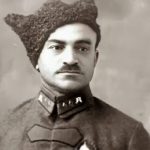
On August 4, 1922, in the mountains of present-day Tajikistan, Ismail Enver, one of the main political and military figures responsible for the Armenian Genocide, was killed.
El 4 de agosto de 1922, en las montañas del actual Tayikistán, cayó asesinado Ismail Enver, uno de los principales responsables políticos y militares del Genocidio Armenio.
He had escaped the Ottoman Empire after its defeat in World War I and sought refuge in Germany. He passed through Moscow and eventually reached Central Asia, where he attempted to lead a rebellion and revive his Pan-Turkic project.
Había escapado del Imperio otomano después de la derrota en la Primera Guerra Mundial y se había refugiado en Alemania. Pasó por Moscú y finalmente llegó a Asia Central, donde intentó ponerse al frente de una rebelión y retomar su proyecto panturquista.
The forces that defeated him were commanded by an Armenian born near Shushi: Hakob Arshaki Melkumyan, known in the Red Army as Yakov Arkadievich Melkumov.
Las fuerzas que lo derrotaron estaban comandadas por un armenio nacido cerca de Shushí: Hakob Arshaki Melkumyan, conocido en el Ejército Rojo como Yakov Arkadievich Melkumov.
More than a century later, Enver's figure continues to be invoked by those who support policies of violence against Armenians. During the 44-day war against Artsakh in 2020, an image circulated of an Azerbaijani military patch bearing his portrait and an inscription directed at Armenians: “Armenian, don’t run. You will die anyway, but exhausted.” The patch also featured the flags of Turkey and Azerbaijan and the initials EOD, used by explosive ordnance disposal units.
Más de un siglo después, la figura de Enver continúa siendo reivindicada por quienes sostienen políticas de violencia contra los armenios. Durante la guerra de los 44 días contra Artsaj, en 2020, circuló la imagen de una insignia militar azerbaiyana con su retrato y una inscripción dirigida a los armenios: “Armenio, no corras. De todos modos morirás, pero agotado”. El parche llevaba también las banderas de Turquía y Azerbaiyán y las siglas EOD, utilizadas por las unidades especializadas en desactivación de explosivos.
His image thus became an emblem once again during a war against Armenians, one hundred years after the Genocide. In 2025, Azerbaijan also named a street in Stepanakert, the capital of Artsakh, after Enver Pasha, a city occupied and emptied of its Armenian population.
Su imagen volvía así a convertirse en emblema durante una guerra contra los armenios, cien años después del Genocidio. En 2025, Azerbaiyán también dio el nombre de Enver Pashá a una calle de Stepanakert, la capital de Artsaj ocupada y vaciada de su población armenia.
Carlos Boyadjian recounted this episode in an article published by Diario ARMENIA and recalled that Enver had died during an operation led by Melkumyan. There are different versions surrounding his final moments, but all place Hakob Melkumyan and his men at the center of the outcome.
Carlos Boyadjian reconstruyó ese episodio en una nota publicada por Diario ARMENIA y recordó que Enver había muerto durante una operación dirigida por Melkumyan. En torno de sus últimos momentos existen distintas versiones, pero todas ubican a Hakob Melkumyan y a sus hombres en el centro del desenlace.
Melkumyan was born on December 24, 1885, in Kherkhan, a village in the Shushi district. After his father's death, he moved with his mother to Ashgabat, also in Artsakh, where an uncle lived. There he learned Turkmen and became a skilled horseman.
Melkumyan nació el 24 de diciembre de 1885 en Kherkhan, una aldea del distrito de Shushí. Después de la muerte de su padre se trasladó con su madre a Ashgabat, también en Artsaj, donde vivía un tío suyo. Allí aprendió turcomano y se convirtió en un hábil jinete.
In 1907, he joined the Imperial Russian Army and later studied at the Nikolaev Cavalry School in St. Petersburg. During World War I, he commanded a machine gun unit in the 4th Cavalry Division. After the Russian Revolution, he joined the Red Army and spent much of his career in Central Asia.
En 1907 ingresó al Ejército Imperial ruso y luego estudió en la Escuela de Caballería Nikoláiev de San Petersburgo. Durante la Primera Guerra Mundial comandó una unidad de ametralladoras de la Cuarta División de Caballería. Después de la Revolución rusa se incorporó al Ejército Rojo y desarrolló gran parte de su carrera en Asia Central.
In 1920, he assumed command of a cavalry brigade in the Turkestan Division. He participated in the capture of Bukhara and in the campaigns against the Basmachi movement, comprised of various groups resisting the advance of Soviet power in the region.
En 1920 asumió el mando de una brigada de caballería de la División de Turquestán. Participó en la toma de Bujará y en las campañas contra el movimiento basmachí, integrado por distintos grupos que resistían el avance del poder soviético en la región.
Enver arrived in Central Asia in 1921. Initially, he offered his services to the Bolsheviks, but later switched sides and took command of a faction of the Basmachi. Besides fighting Soviet power, he aimed to rebuild, from the ruins of the Ottoman Empire, a project that would unite the Turkic peoples from Anatolia to Central Asia.
Enver llegó a Asia Central en 1921. Al principio había ofrecido sus servicios a los bolcheviques, pero luego cambió de bando y se puso al frente de una parte de los basmachíes. Además de combatir al poder soviético pretendía reconstruir, desde las ruinas del Imperio otomano, un proyecto que uniera a los pueblos túrquicos desde Anatolia hasta Asia Central.
Along with Talaat and Djemal, he had been one of the three men who governed the Ottoman Empire during World War I and orchestrated the extermination of the Armenian population. He had also spearheaded military campaigns in the Caucasus and supported the advance of the Islamic Army on Baku and Karabakh in 1918.
Había sido, junto con Talaat y Djemal, uno de los tres hombres que gobernaron el Imperio otomano durante la Primera Guerra Mundial y organizaron el exterminio de la población armenia. También había impulsado campañas militares en el Cáucaso y respaldado el avance del Ejército Islámico sobre Bakú y Karabaj en 1918.
The French journalist and researcher Jacques Derogy dedicated a chapter of his book on Operation Nemesis to Enver's fate. He titled it “Enver: That Night in Samarkand.” Although the former Ottoman minister was not among those executed in the operation, his fate became intertwined with the story of the main perpetrators of the Genocide who were pursued after the war.
El periodista e investigador francés Jacques Derogy dedicó al destino de Enver uno de los capítulos de su libro sobre la Operación Némesis. Lo tituló “Enver: esa noche en Samarkanda”. Aunque el exministro otomano no integró la lista de los ajusticiados por la operación, su suerte quedó vinculada a la historia de los principales responsables del Genocidio perseguidos después de la guerra.
Hakob Melkumyan was not part of Operation Nemesis, nor did its organizers order him to assassinate Enver. History, however, ultimately placed the former Ottoman minister face to face with this Armenian commander who knew perfectly well who he was and what crimes he had committed.
Hakob Melkumyan no perteneció a la estructura de la Operación Némesis ni recibió de sus organizadores la misión de ajusticiar a Enver. La historia, sin embargo, terminó colocando al antiguo ministro otomano frente a este comandante armenio que conocía perfectamente quién era y qué crímenes llevaba sobre sus espaldas.
In the summer of 1922, the brigade commanded by Melkumyan was tasked with attacking Enver's forces. According to an account attributed to the Armenian officer himself, Enver had approximately 17,000 cavalrymen, while Melkumyan commanded 1,500 cavalry and 800 infantry.
En el verano de 1922, la brigada comandada por Melkumyan recibió la misión de atacar a sus fuerzas. De acuerdo con un relato atribuido al propio militar armenio, Enver disponía de alrededor de 17.000 jinetes, mientras que Melkumyan contaba con 1.500 hombres de caballería y 800 soldados de infantería.
According to conversations recorded by the writer Hayk Hayrapetyan, Melkumyan decided to launch an attack at dawn, under cover of thick fog. As it began to clear, his men spotted Enver's tent, identified by a green flag with a golden crescent.
Según las conversaciones recogidas por el escritor Hayk Hayrapetyan, Melkumyan decidió lanzar un ataque al amanecer, protegido por una espesa niebla. Cuando comenzó a despejarse, sus hombres divisaron la tienda de Enver, identificada por una bandera verde con una medialuna dorada.
In the midst of preparations, an order arrived from the Soviet command: Enver was to be captured alive. Melkumyan reportedly then called his intelligence chief and told him in Armenian, "I only need Enver dead."
En medio de los preparativos llegó una orden del mando soviético: Enver debía ser capturado con vida. Melkumyan habría llamado entonces a su jefe de inteligencia y le habría dicho en armenio: “A Enver lo necesito solamente muerto”.
The artillery opened fire and broke the resistance of his troops. According to the same account, Enver left the area barefoot and without his robes and fled into the mountains. "You will not escape, bloodthirsty one: the blood of my people is on your conscience," Melkumyan is said to have declared as he ordered the pursuit. His men advanced for about 25 kilometers to Chagan. There, on August 4, 1922, the man who, just a few years earlier, had been one of the most powerful figures in the Ottoman Empire died.
La artillería abrió fuego y quebró la resistencia de sus tropas. De acuerdo con el mismo relato, Enver abandonó el lugar descalzo y sin su túnica y huyó hacia las montañas. “No escaparás, sanguinario: sobre tu conciencia está la sangre de mi pueblo”, habría expresado Melkumyan al ordenar la persecución. Sus hombres avanzaron durante unos 25 kilómetros hasta Chagan. Allí, el 4 de agosto de 1922, murió quien pocos años antes había sido uno de los hombres más poderosos del Imperio otomano.
Accounts differ regarding what happened in the final minutes. One maintains that Enver fell under machine-gun fire near a mosque. Another claims that Melkumyan personally killed him with his saber.
Las versiones difieren sobre lo ocurrido en los últimos minutos. Una de ellas sostiene que Enver cayó bajo fuego de ametralladora cerca de una mezquita. Otra afirma que Melkumyan lo mató personalmente con su sable.
An article published in 2021 by the Armenian newspaper Hayastani Hanrapetutyun asserted that the commander had proudly declared that he himself had killed Enver. The publication did not specify the source of this statement. The account transmitted by Hayk Hayrapetyan, for its part, attributes to Melkumyan the decision not to capture him alive, but does not allow for a definitive reconstruction of who inflicted the final wound.
Un artículo publicado en 2021 por el diario armenio Hayastaní Hanrapetutyun aseguró que el comandante había declarado con orgullo haber acabado él mismo con Enver. La publicación no precisó de dónde provenía esa declaración. El relato transmitido por Hayk Hayrapetyan, por su parte, le atribuye a Melkumyan la decisión de no capturarlo vivo, pero no permite reconstruir con certeza quién produjo la herida final.
There is also insufficient evidence to claim that Enver begged for his life. It is documented, however, that he died during the operation led by Melkumyan and that the Armenian commander received his second Order of the Red Banner for the defeat of his forces.
Tampoco existe respaldo suficiente para afirmar que Enver imploró por su vida. Sí está documentado que murió durante la operación dirigida por Melkumyan y que el comandante armenio recibió su segunda Orden de la Bandera Roja por la derrota de sus fuerzas.
According to the account attributed to Melkumyan, his men had not killed the self-proclaimed commander of the armies of Islam, but “simply the executioner Enver.” The officer kept his personal seal and surrendered his Quran and a gold-embroidered robe to the authorities.
Según el relato atribuido a Melkumyan, sus hombres no habían matado al autoproclamado comandante de los ejércitos del islam, sino “simplemente al verdugo Enver”. El militar conservó su sello personal y entregó a las autoridades su Corán y una túnica bordada en oro.
He continued his career in the Red Army, but years later he was caught up in the Stalinist purges. In November 1937, he was arrested and accused of participating in an alleged anti-Soviet organization. In 1940, he received a death sentence, which was later commuted to fifteen years in prison and another five years of deprivation of civil rights.
continuó su carrera en el Ejército Rojo, pero años después fue alcanzado por las purgas stalinistas. En noviembre de 1937 fue detenido y acusado de participar en una supuesta organización antisoviética. En 1940 recibió una condena a muerte, luego conmutada por quince años de prisión y otros cinco de privación de derechos civiles.
After Stalin's death, he was released in 1954 and rehabilitated the following year. He was reinstated as a major general and received his decorations. In 1960, he published his memoirs, Turkestantsy. He died in Moscow on July 3, 1962, and was buried in the Novodevichy Cemetery.
Después de la muerte de Stalin, recuperó la libertad en 1954 y fue rehabilitado al año siguiente. Le restituyeron su rango de general de división y sus condecoraciones. En 1960 publicó sus memorias, Turkestantsy. Murió en Moscú el 3 de julio de 1962 y fue enterrado en el cementerio Novodévichi.
Today, Enver Pasha appears on Azerbaijani military insignia, and a street in Stepanakert bears his name. But the man used to threaten Armenians ended his days fleeing through the mountains of Central Asia, pursued by a brigade commanded by an Armenian born in Artsakh.
Hoy Enver Pashá aparece en insignias militares azerbaiyanas y su nombre fue impuesto a una calle de Stepanakert. Pero el hombre utilizado para amenazar a los armenios terminó sus días huyendo por las montañas de Asia Central, perseguido por una brigada al mando de un armenio nacido en Artsaj.
Comments
No comments yet — be the first to comment.
More from Diario Armenia
Nikol Pashinyan questioned the mother who lost three fingers defending her children from an Azerbaijani soldier: “It’s a normal criminal situation, they should have waited for the police to arrive.”
Diario Armenia / 6 hours ago
Former German intelligence chief August Hanning was arrested for alleged links to Azerbaijani intelligence.
Diario Armenia / 22 hours ago
Nikol Pashinyan's government escalates its attacks against the Armenian diaspora: "Stay away from our country, shut your mouths."
Diario Armenia / 23 hours ago
Iran again warns Yerevan about third-country interference
Diario Armenia / Oct 6
Related coverage
No related coverage from other sources yet.